Panicum turgidum
9.50ر.س
Product description
Panicum turgidum is a perennial herbaceous plant belonging to the grass family (Poaceae). It is considered one of the most important native grazing plants in the desert environments of Saudi Arabia and the Arabian Peninsula. It is characterized by its high tolerance to drought, heat, wind, and shifting sands, and it forms dense clumps that help stabilize the soil and protect desert vegetation.
General Description
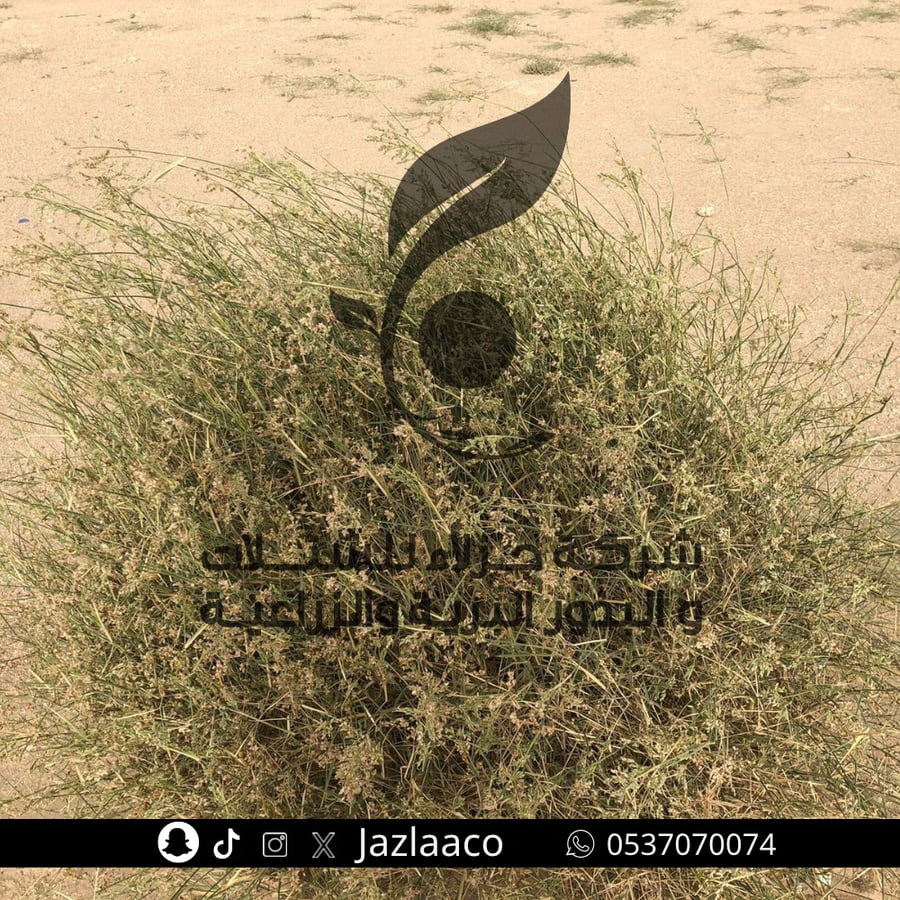
It grows as a dense perennial grass, forming multiple upright shoots and stems from the base of the plant, and its height usually reaches about 50–100 cm. Its stems are characterized by their rigidity, while the vegetative parts form a dense mass that helps the plant survive in harsh desert conditions.
Papers
Its leaves are long, narrow, and relatively rough, emerging closely together from the stems. They are characterized by their ability to withstand drought and heat, and their narrow shape helps to reduce water loss from the leaf surface.
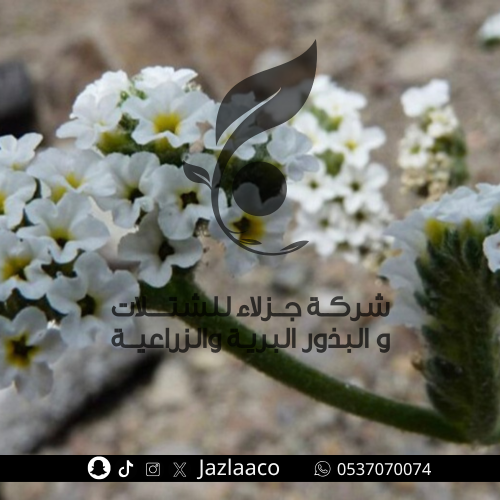
Inflorescences and flowers
It produces branching, clustered inflorescences consisting of numerous small spikelets, which appear above the stems during the flowering season. The spikelets produce seeds that help the plant spread and regenerate in its natural habitat.
Fruits and seeds
It produces small grains within the spikelets, and the seeds are an important means of plant reproduction and dispersal. The plant can also regenerate vegetatively through suckers and basal parts, which helps it form stable clumps in sandy areas.
Endurance and suitability
The *Thamam* plant is highly tolerant of drought, heat, and low rainfall, and can grow in sandy and gravelly soils and open desert environments. Its strong roots and basal branching help anchor the plant in the sand and withstand wind and dune encroachment.
Uses
It is an important grazing plant, beneficial to camels, cattle, and wild animals, especially during periods of abundant green growth. It also has significant environmental importance in stabilizing sand dunes and reducing soil erosion, and can be utilized in vegetation restoration projects and the rehabilitation of rangelands and desert environments.
natural spread
Panicum turgidum is naturally distributed in the desert regions of North Africa, the Middle East, and the Arabian Peninsula, and is widespread in Saudi Arabia. It is particularly associated with sandy environments, dunes, and arid desert areas.
Preservation status
Panicum turgidum is not currently known to be globally threatened and is characterized by its wide distribution and good adaptability to desert environments. Conserving its natural populations remains important due to its role in stabilizing sand dunes and supporting grasslands and native vegetation.