Paper - Donkey's Ear - Moricandia sinaica
9.50ر.س
Product description
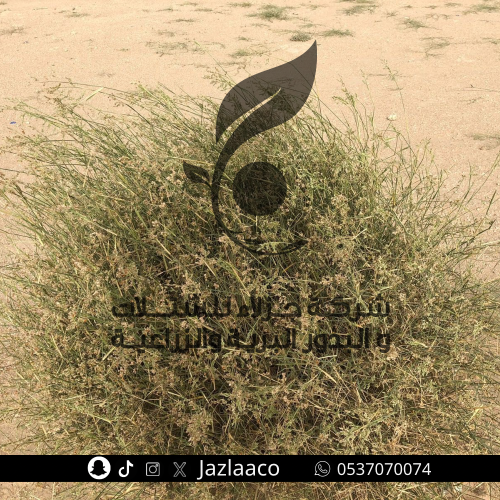
Warqa (Moricandia sinaica) is a perennial herbaceous plant of the Brassicaceae family. It is a desert wild plant adapted to drought and heat, and is characterized by its smooth leaves and purple to pink flowers.
General Description
It grows as an upright, branching herbaceous plant, typically reaching a height of about 30–80 cm, and may become more widespread and branching when moisture is present. The stems are upright and branch out from the base or lower parts.
Papers
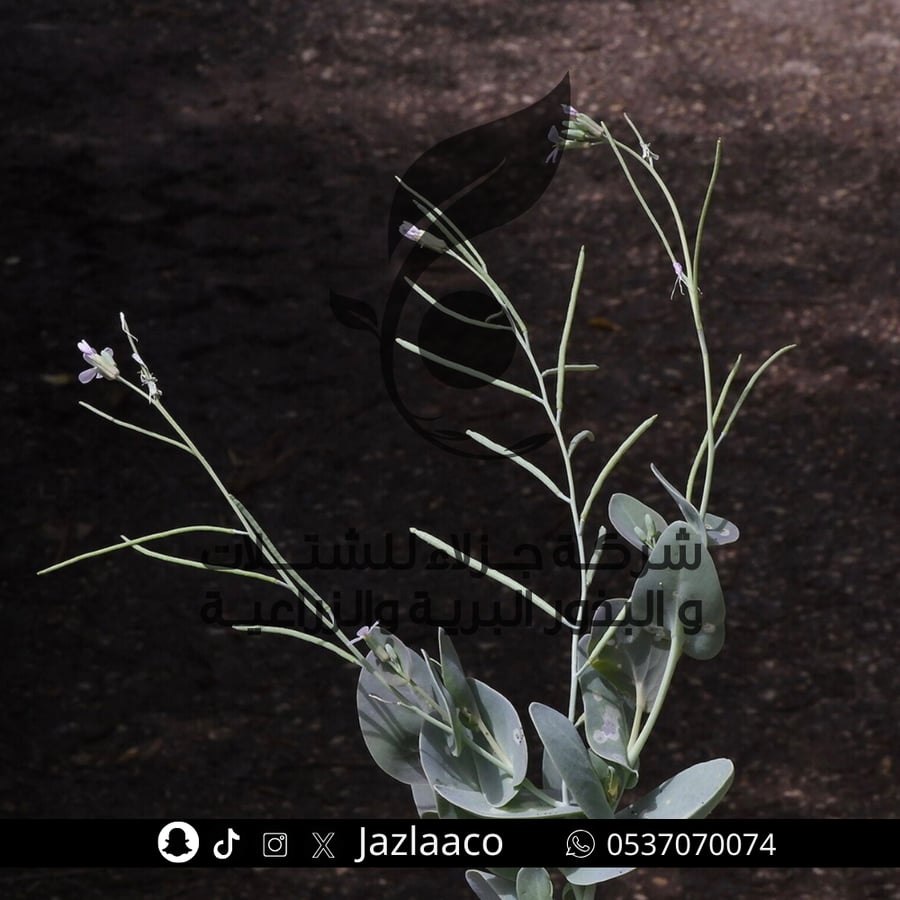
The leaves are simple and relatively thick, green to bluish-green, smooth, and may be oblong or ovate. The lower leaves are larger, while the upper leaves become smaller and closer to the stem.
flowers
It produces conspicuous flowers of a purple or pinkish-purple hue, appearing at branch tips in widely spaced clusters. The flowers have four petals, a common characteristic in the Brassicaceae family, and attract insects and pollinators.
Fruits and seeds
It produces long, thin pods containing numerous small seeds. The pods dry out upon maturity and split open to release the seeds, helping the plant to regenerate and spread.
Endurance and suitability
It tolerates drought and heat well, and grows in sandy and gravelly soils, as well as in plains, deserts, and valleys. It benefits from seasonal rainfall for growth, flowering, and seed production.
Uses
It has ecological importance as a desert wild plant, as its flowers provide a source of nectar and pollen for insects, and it contributes to plant diversity and soil cover. Some wild animals can also benefit from it.
natural spread
Moricandia sinaica is widespread in parts of the Arabian Peninsula, Egypt, the Levant and adjacent desert regions, and is associated with desert and semi-desert environments, valleys, and sandy and gravelly areas.
Preservation status
Moricandia sinaica is not known to be globally threatened and is well-adapted to arid environments. Its density may vary locally depending on rainfall, habitat degradation, and grazing pressure.