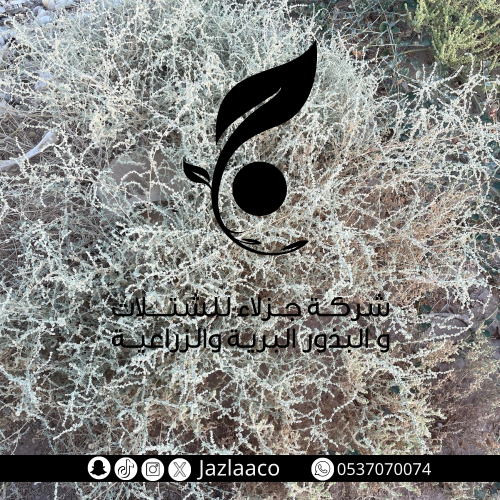
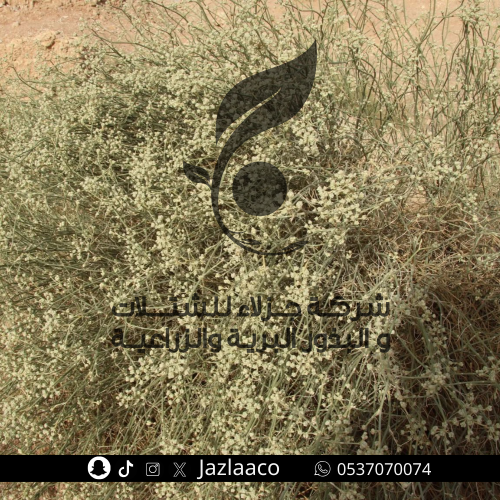
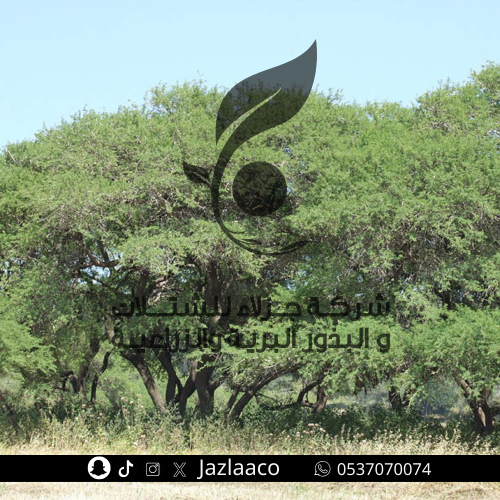
Hishor - Camel's Jaw - Echinops mandavillei
9.50ر.س
Product description
The Arabian wildflower (Echinops mandavillei) is a perennial herbaceous plant belonging to the Asteraceae family. It is a distinctive wild plant found in the arid and semi-arid environments of the Arabian Peninsula. It is characterized by its spiny leaves and spherical, blue to purple inflorescences, and is well-adapted to harsh desert conditions and water scarcity.
General Description
It grows as a perennial herbaceous plant, with its leaves emerging from the base of the plant and the flowering stems branching upwards, and it may reach a height of about 50–80 cm. The vegetative parts of the plant are characterized by the presence of distinct thorns, a trait that helps it adapt to dry environments and reduces its exposure to grazing.
Papers
Its leaves are relatively large and deeply lobed, with spiny edges and sharp points, while the leaves are covered with fine hairs that give them a rough appearance. The lower leaves cluster around the base of the plant, while the leaves gradually decrease in size towards the upper parts of the stem.
flowers
It features spherical inflorescences composed of numerous small flowers clustered in a single spherical head. The inflorescences range in color from blue to violet or purple and appear at the ends of the flowering stems, giving the plant a distinctive decorative appearance.
Fruits and seeds
It produces small, dry, drupe-like fruits, each containing a single seed. The fruits ripen inside the inflorescences after flowering has ended, and their structures then aid in seed dispersal and plant regeneration in the natural environment.
Endurance and suitability
The heath is characterized by its ability to withstand drought, heat, and intense sunlight, and it grows in desert, semi-desert, and rocky areas. Its relatively deep roots and drought-adapted leaves also help it survive periods of low humidity.
Uses
It possesses distinct aesthetic value due to its spherical inflorescences, which are blue or purple, and can be utilized in natural gardens, native plant conservation projects, and the rehabilitation of vegetation in arid environments. Its flowers also provide a source of nectar and pollen for a number of insects and pollinators.
natural spread
Echinops mandavillei is naturally distributed in parts of the Arabian Peninsula, and is associated with arid environments, rocky areas, slopes, and open lands. In Saudi Arabia, it is found among the wild plants adapted to desert and semi-desert conditions.
Preservation status
Echinops mandavillei has a relatively limited natural distribution, therefore habitat conservation is important for the continuation of its wild populations. No specific category should be included on the IUCN Red List without reference to the most recent official assessment available for this species.