
Stipagrostis drarii
9.50ر.س
Product description
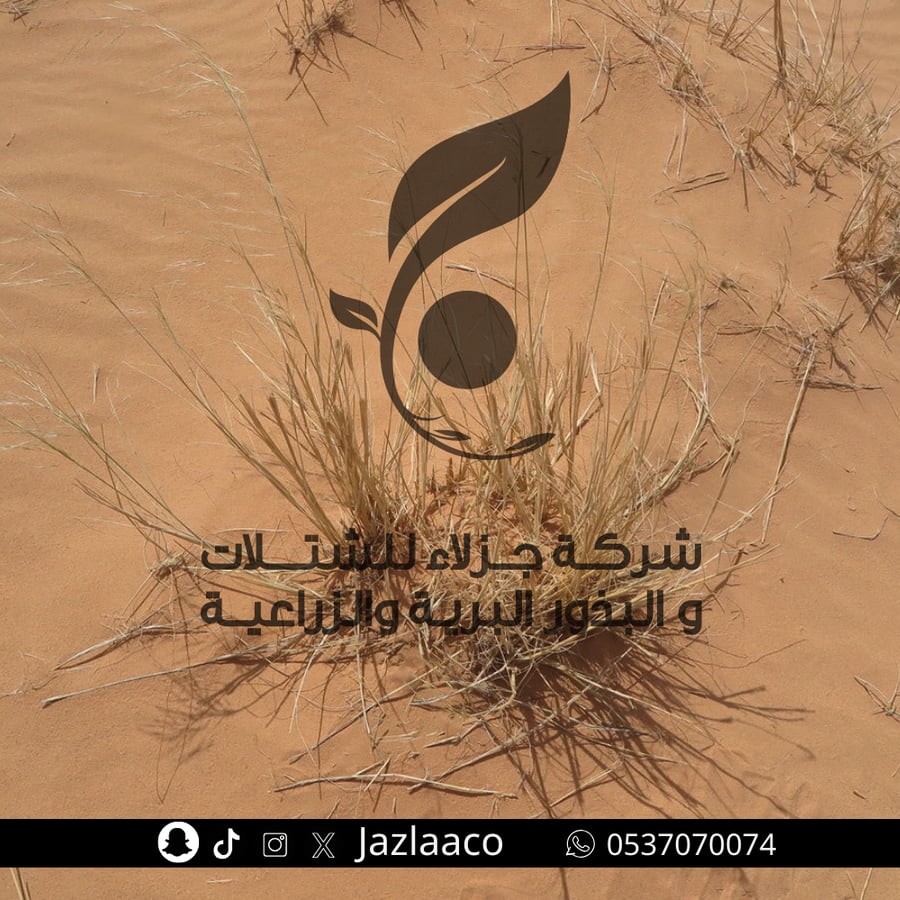
Stepagrostis drarii is a perennial herbaceous plant from the grass family (Poaceae). It is an important desert grass adapted to drought, heat, and shifting sands, and is considered one of the plants characteristic of sandy environments and dunes in desert regions.
General Description
It grows as a perennial herb, often in relatively dense clumps or masses, and usually reaches a height of about 30–70 cm. The stems and leaves grow from the base of the plant, and its roots help to anchor it in the sand and take advantage of the limited moisture.
Papers
The leaves are long, narrow, and thread-like, ranging in color from green to gray-green, and are curled or bent to varying degrees. Their narrow shape helps to reduce the surface area exposed to sun and wind, thus minimizing water loss.
Inflorescences and flowers
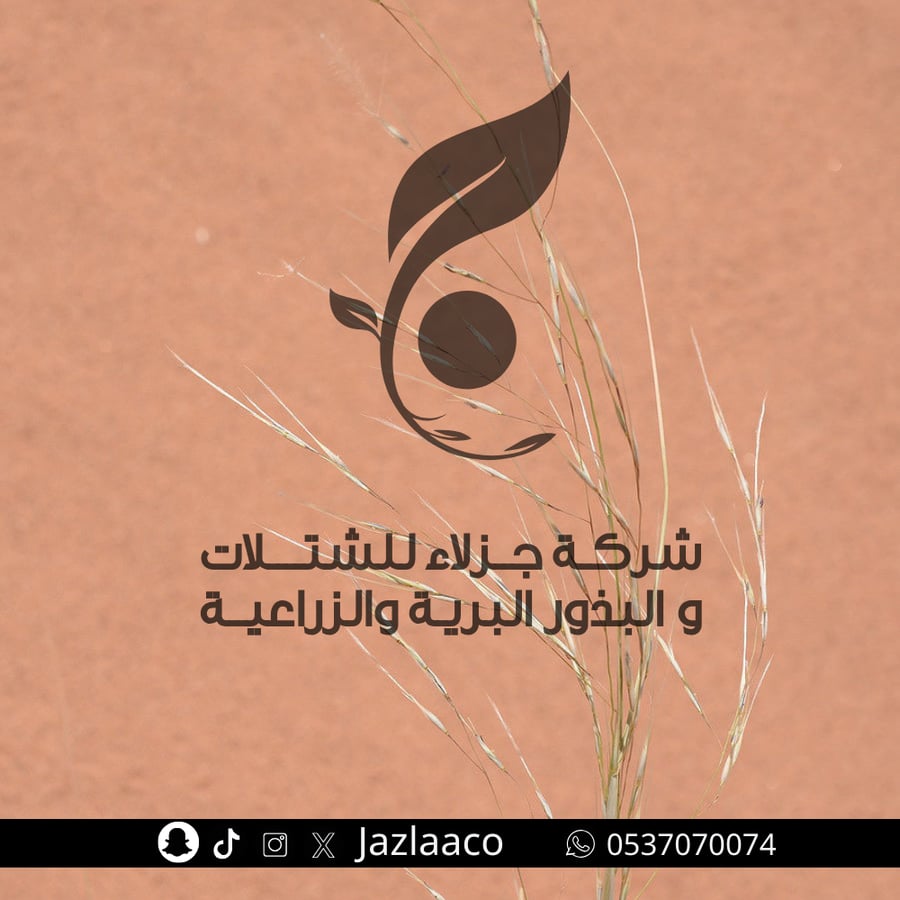
It produces fine, feathery spikes or inflorescences on upright stems, and Stipagrostis plants are characterized by long, prominent awns attached to the spikelets. These structures help the seeds to be dispersed by the wind and to be fixed in the sand.
Fruits and seeds
It produces small seeds within spikelets, attached to feathery structures and long awns that aid in dispersal and movement with the wind. When adequate moisture is available, the seeds germinate relatively quickly during the suitable growing season.
Endurance and suitability
The plant *Sabt* is highly tolerant of drought, heat, wind, and shifting sands, and can even withstand parts of the plant being buried in sand. It is considered a grass capable of colonizing dunes and sandy, arid environments.
Uses
It has environmental and pastoral importance, as it provides food for some grazing animals and wildlife, and contributes to stabilizing sand dunes and reducing dune movement and erosion. It can also be utilized in desert vegetation restoration projects and combating desertification.
natural spread
Stipagrostis drarii is found in areas of North Africa, the Middle East and the Arabian Peninsula, and is associated with sandy deserts, dunes, sandy plains and very hot dry areas.
Preservation status
Stipagrostis drarii is not known to be globally threatened, however its local density may be affected by overgrazing, habitat degradation, vehicle movement and human disturbances in sandy environments.
