

Product description
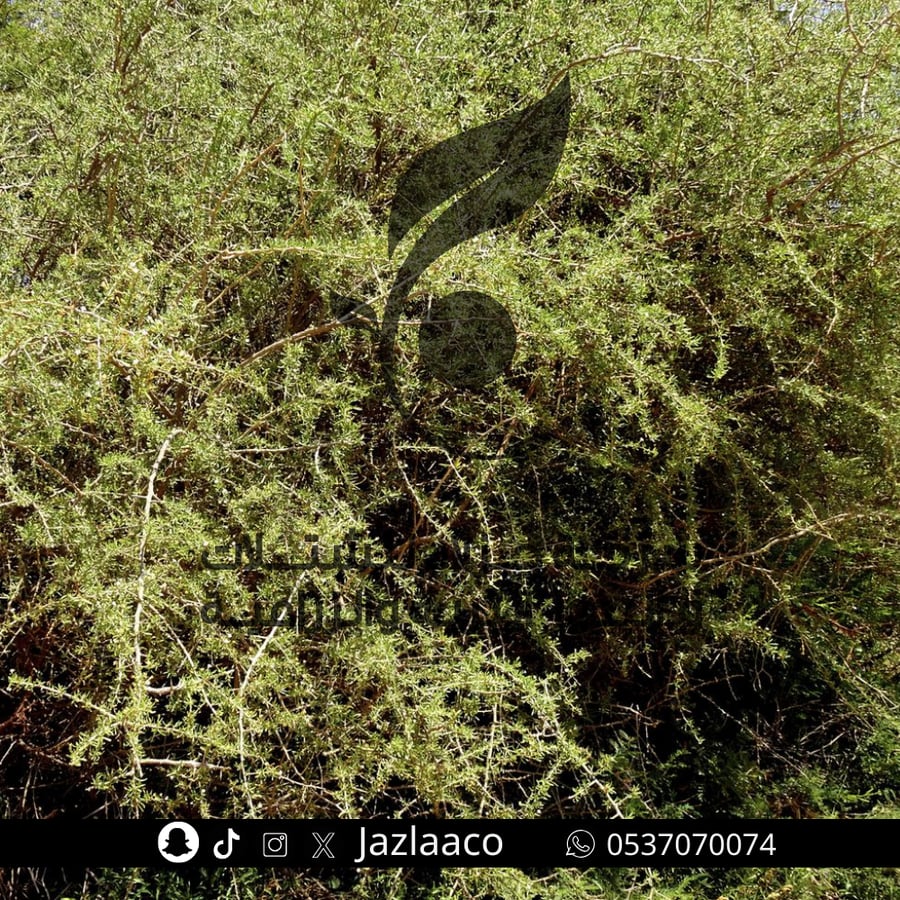
Lycium shawii is a perennial desert shrub of the nightshade family (Solanaceae). It is a wild plant adapted to drought, heat, and salinity, and is characterized by its tangled branches, thorns, purple or violet flowers, and red fruits.
General Description
It grows as a dense, highly branched shrub, typically reaching a height of 1–2 meters, with branches extending laterally for greater distances. It is characterized by sharp thorns on some branches, which help protect it from grazing.
bark and stem
Older stems are woody, with gray to gray-brown bark that may become rough and cracked with age. Newer branches are green to gray, and some develop sharp thorns.
Papers
Its leaves are small to medium, simple and relatively thick, green to gray-green, ovate or lanceolate in shape, and appear singly or in small groups on the branches.
flowers
It produces tubular or funnel-shaped flowers, ranging in color from purple to lilac or pinkish-purple, with a lighter or darker center. The flowers appear singly or in pairs in the leaf axils and attract bees and pollinating insects.
Fruits and seeds
It produces small, fleshy fruits, oval to oblong, which turn red or orange-red when ripe. The fruit contains numerous small seeds, which are consumed by birds and wildlife, thus aiding in the plant's dispersal.
Endurance and suitability
It is characterized by its good tolerance to drought, heat, and salinity, and grows in sandy, gravelly, and clay soils, as well as in plains, valleys, and desert and semi-desert regions. It can also survive in arid conditions.
Uses
It has significant environmental importance, as its fruits provide food for birds and wildlife, and the shrub itself offers shelter and protection for small creatures. It also helps stabilize the soil and reduce erosion, and can be used to restore vegetation cover in arid regions.
natural spread
Lycium shawii is widespread in the Arabian Peninsula and parts of the Middle East and North Africa, and is associated with desert and semi-desert environments, valleys, plains, and sandy and gravelly areas.
Preservation status
Lycium shawii is not known to be globally threatened and is well-adapted to hot and dry environments. Its local populations may be affected by habitat degradation, grazing, and human activities.