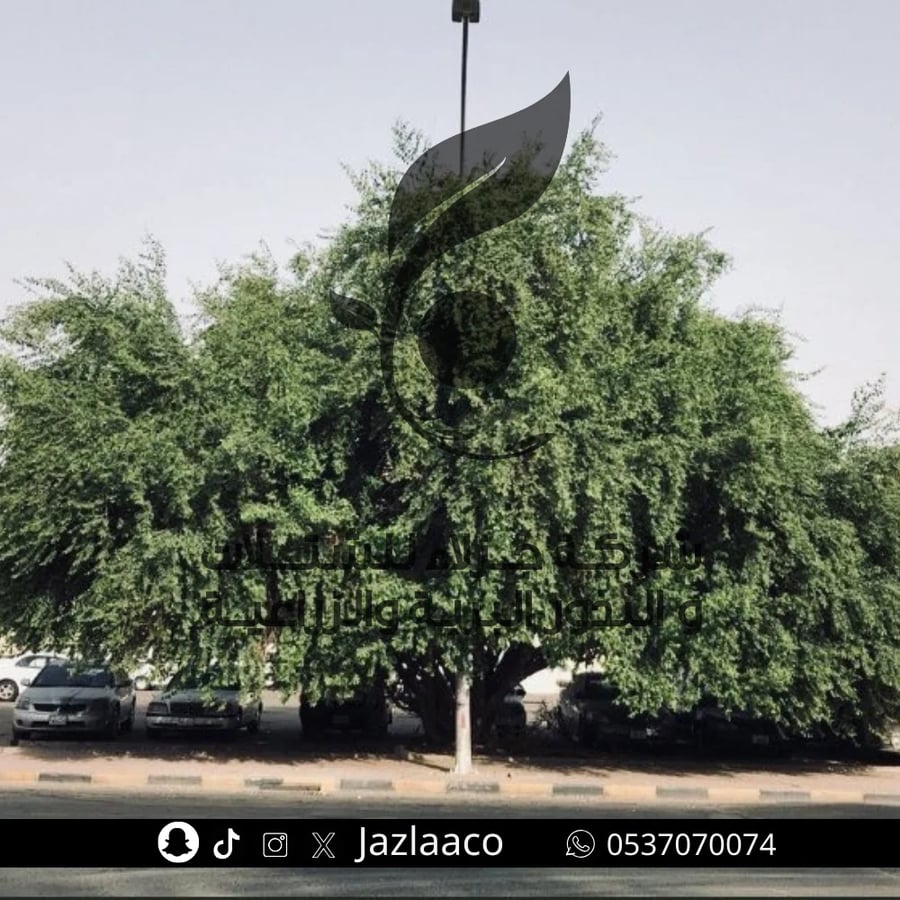
Ziziphus spina - Ziziphus spina - Ziziphus spina
9.50ر.س
Product description
The common jujube (Ziziphus spina) is a perennial tree belonging to the buckthorn family (Rhamnaceae). It is a well-known tree in Arab environments, distinguished by its high tolerance to heat, drought, and harsh environmental conditions. It provides edible fruit and is of significant environmental and agricultural importance.
General Description
It grows as a small to medium-sized tree, usually reaching a height of about 5–10 meters, and may become larger under suitable conditions. It is characterized by a dense, branching crown and strong branches, and may have thorns at the base of the leaves, a trait that helps it resist grazing.
Papers
Its leaves are simple and alternate, oval to round in shape, with three distinct veins emanating from the leaf base. The upper surface is relatively glossy green, while the underside may be lighter in color.
flowers
It produces small, yellowish-green or pale yellow flowers that appear in small clusters in the leaf axils. The tree produces large numbers of flowers during the flowering season and is an important source of nectar for pollinating insects.
Fruits and seeds
It produces fruits known as buckthorn, which start out green and turn yellow or reddish-brown when ripe. The fruits are fleshy and sweet, and contain a single hard kernel that holds the seed. Animals and birds can help disperse the seeds.
Endurance and suitability
It is highly tolerant of drought, heat, and relatively low salinity, and can grow in various soil types, including sandy, gravelly, and clay soils. It also tolerates pruning and urban conditions well, making it suitable for afforestation in arid regions.
Uses
It is used as a fruit-bearing and ornamental tree, and its fruit is eaten fresh or dried. It is also used in some traditional food products. The tree provides shade, food, and shelter for wildlife, and can be utilized in afforestation projects, soil conservation, and vegetation rehabilitation in arid regions.
natural spread
The jujube tree is widespread across the Middle East, the Arabian Peninsula, Northeast Africa, and South Asia, growing in valleys, agricultural areas, and arid and semi-arid locations. It is widely cultivated in various regions of Saudi Arabia.
Preservation status
The common jujube tree is not known to be globally threatened with extinction, and it enjoys widespread distribution and a high degree of adaptability. The status of its wild populations varies locally depending on grazing, logging, and changes in land use.
