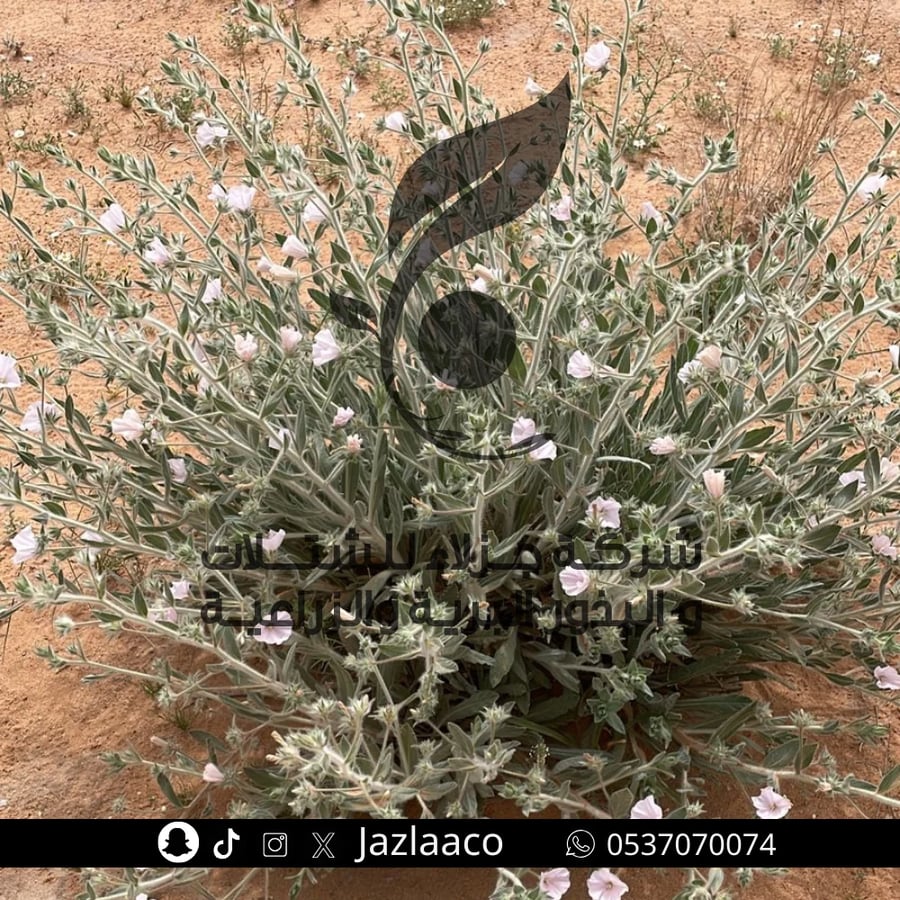
Marbled - Convolvulus buschiricus
15ر.س
Product description
Marble (Convolvulus buschiricus) is a perennial herbaceous plant of the ivy family (Convolvulaceae), which grows in dry and semi-desert environments, and is characterized by its funnel-shaped flowers, spreading branches, and ability to adapt to harsh environmental conditions.
General Description
It grows as a creeping or spreading herbaceous plant, with stems branching from the base and extending over the soil surface. Its growth habit helps it cover areas of soil and take advantage of the moisture available in the surface layers.
Papers
Its leaves are simple and alternate, and their shape and size vary depending on their position on the stem and environmental conditions. They are green and may be covered with fine hairs to varying degrees, which helps reduce water loss in arid environments.
flowers
It produces funnel-shaped flowers, a characteristic feature of the genus Convolvulus. The flowers appear on branches during the growing season and provide a source of nectar and pollen for a number of insects and pollinators.
Fruits and seeds
It produces small dry fruits containing seeds. The seeds are an important means of plant reproduction and spread in its natural habitats, and can remain in the soil until suitable conditions for germination are available.
Endurance and suitability
Marble is well-adapted to arid and semi-desert conditions, preferring sunny locations and well-drained soil. Its spreading nature and root system help it take advantage of limited moisture and tolerate periods of drought.
Uses
It can be used in projects to conserve local wild plants and rehabilitate vegetation cover in arid regions, and it also contributes to providing low vegetation cover and supporting some insects and pollinators.
natural spread
Convolvulus buschiricus is widespread in the arid regions of Central Asia and surrounding areas, and is associated with open, semi-desert environments and sandy and gravelly soils.
Preservation status
Convolvulus buschiricus is not currently known to be globally threatened, and natural populations exist within its range. Its density varies locally depending on climatic conditions and the state of its natural habitat.
