
Harsha - Harisha - Brassica tournefortii
9.50ر.س
Product description
Brassica tournefortii is an annual herbaceous plant of the Brassicaceae family. It is a fast-growing wild plant that is widespread in desert and semi-desert regions, and is characterized by its lobed basal leaves and bright yellow flowers.
General Description
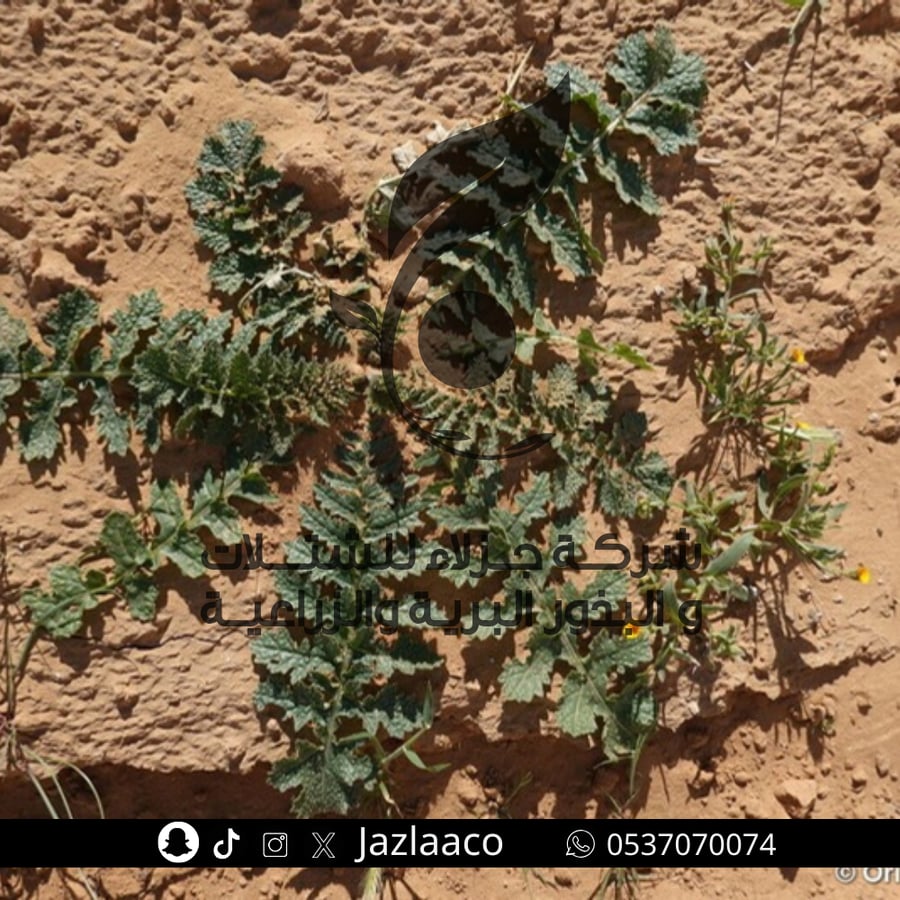
It grows as an upright herbaceous plant, and usually reaches a height of about 20–80 cm. It often begins with a basal rosette of leaves, then a branching flowering stem emerges, above which the flowers rise.
Papers
The lower leaves are relatively large, green, rough or covered with scattered hairs, and deeply lobed into irregular lobes. The upper leaves are smaller and simpler, surrounding the stem or attached to it.
flowers
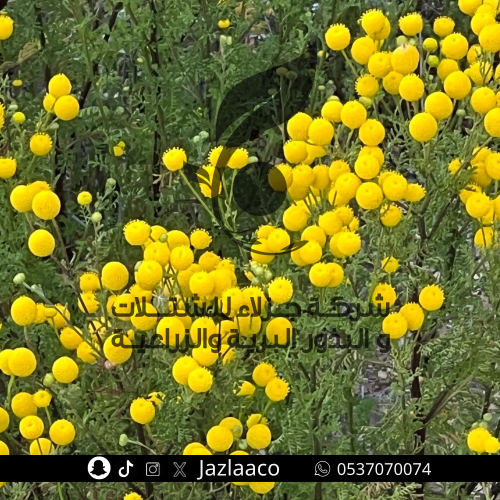
It produces bright yellow, four-petaled flowers that appear in clusters at the tips of the stems. It typically blooms during the wet growing season, and the flowers attract bees and pollinating insects.
Fruits and seeds
It produces long, thin pods containing rows of small, round seeds. The pods turn brown when mature and split open to release the seeds.
Endurance and suitability
It tolerates drought and heat and grows in sandy, gravelly, and light clay soils, and it can quickly benefit from seasonal rainfall. It is also characterized by its ability to complete its life cycle and produce seeds within a relatively short period.
Uses
It has ecological importance as a seasonal wild plant, providing sustenance for some insects and wildlife, and it also contributes to soil cover during the wet season. However, Brassica tournefortii is also known for its ability to spread beyond its native range and has become an invasive species in some areas, particularly in disturbed desert environments.
natural spread
Its original habitat is parts of North Africa, the Mediterranean basin and the Middle East, and it later spread to other parts of the world, including Australia and parts of North America.
Preservation status
It is not an endangered species; rather, in some areas it is considered an invasive species that can form dense populations and affect native plants.