
Ochradenus baccatus - Alendra - Jardi Tutiya
9.50ر.س
Product description
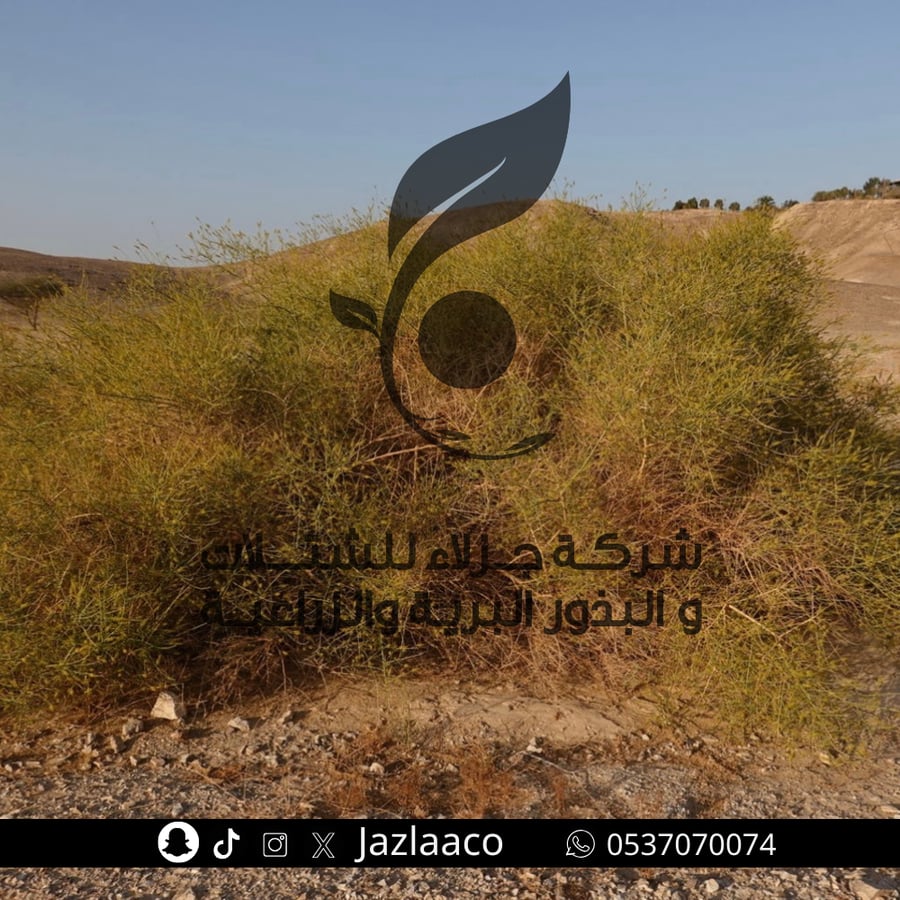
Ochradenus baccatus is a perennial desert shrub of the Resedaceae family. It is a wild plant adapted to dry and semi-dry environments, and is characterized by its dense branches, small leaves, and spherical fruits that resemble berries.
General Description
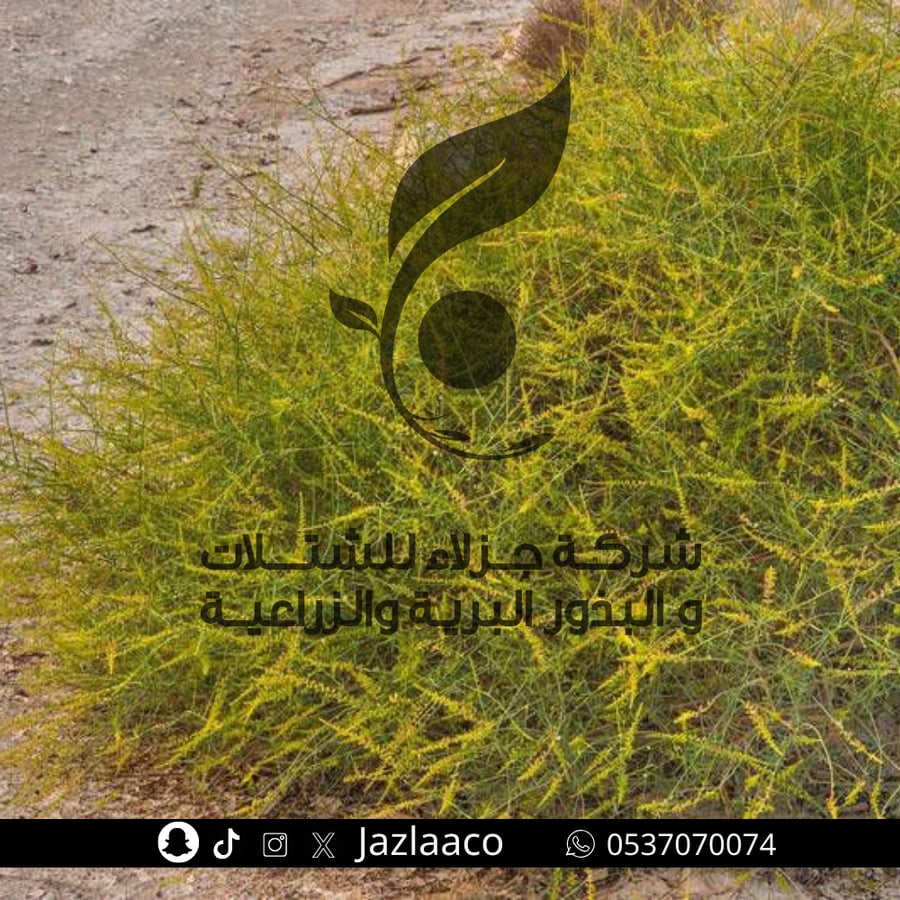
It grows as a dense, branching shrub, typically reaching a height of 30–100 cm, with branches spreading laterally to form a relatively wide vegetative mass. It is characterized by its branching stems and its ability to survive in harsh desert conditions.
Papers
Its leaves are small and simple, ovate to oblong in shape, green in color, and distributed along the branches. The small size of the leaves helps to reduce water loss and adapt to heat and drought.
flowers
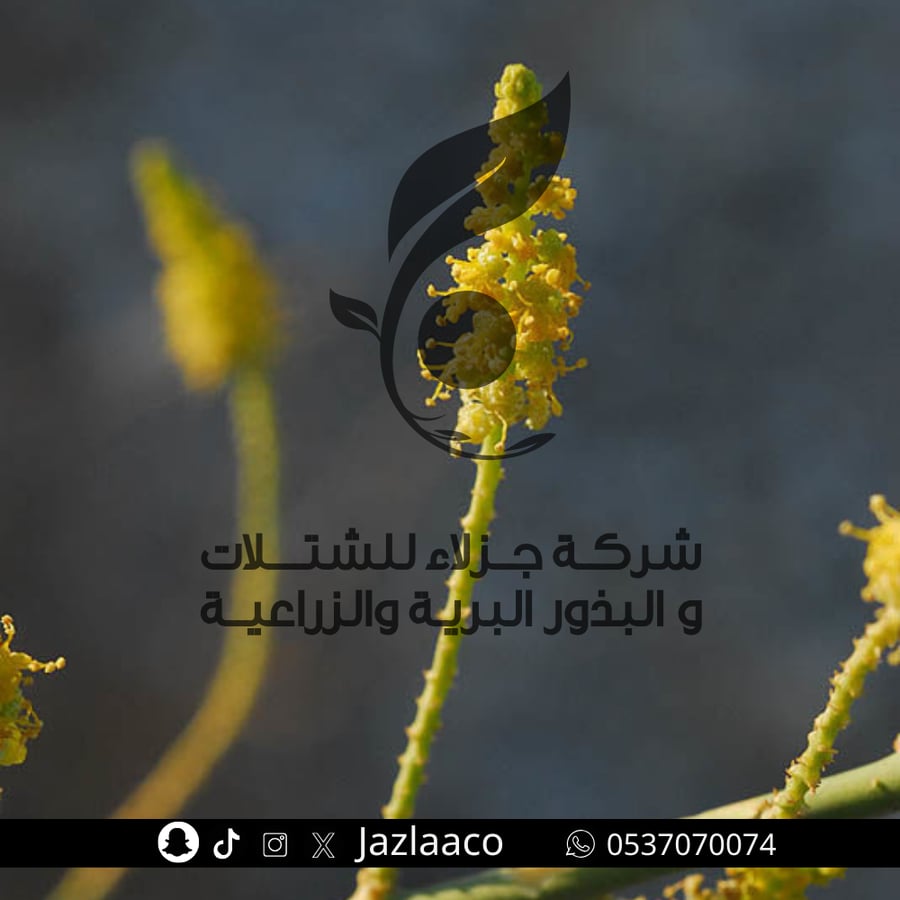
It produces small yellow or greenish-yellow flowers, clustered in racemes or spikes at the ends of branches. These appear during the flowering season and attract some insects and pollinators.
Fruits and seeds
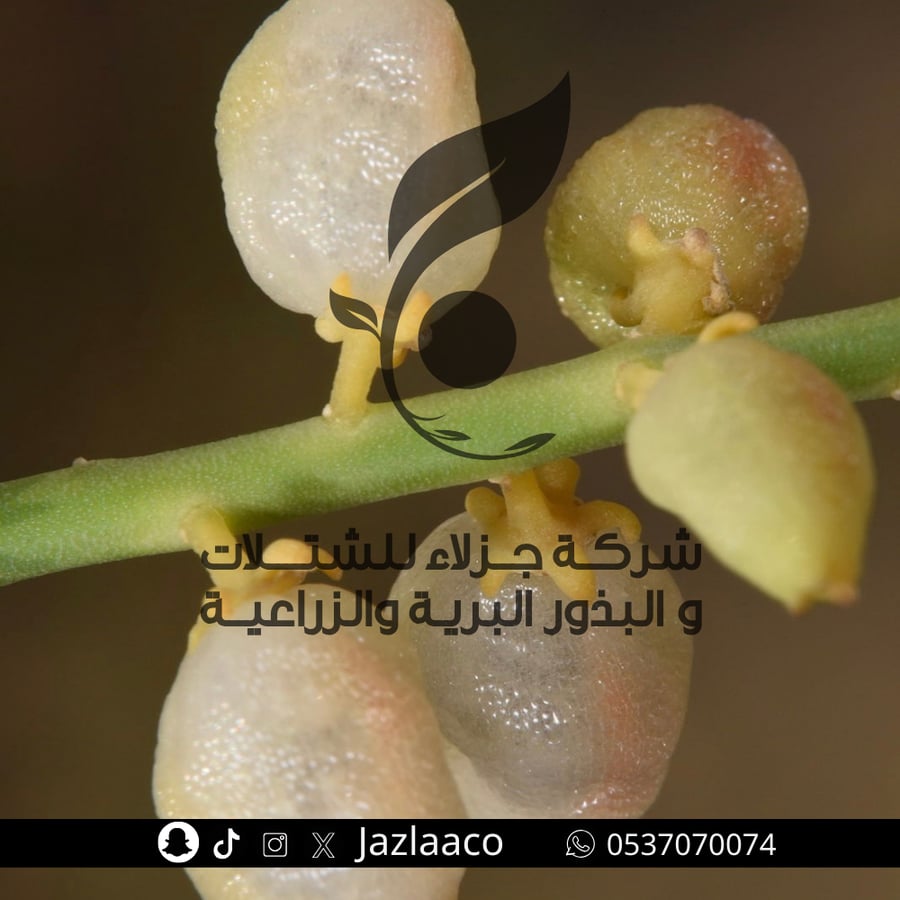
It is characterized by its small, spherical fruits, which are white or creamy white when ripe and resemble berries, hence the adjective baccatus, which refers to the fruit's appearance. The fruits contain small seeds that aid in the plant's reproduction and dispersal.
Endurance and suitability
The Qardhi plant is highly tolerant of drought and heat, thriving in sandy, gravelly, and clay soils, as well as open areas and even in nutrient-poor locations. Its growth habit and small leaves help it adapt to desert conditions.
Uses
It has ecological importance within the desert vegetation, providing cover and shelter for some organisms and insects, and its flowers contribute to providing food for pollinators. It can be utilized in projects for the conservation of wild plants, the rehabilitation of arid regions, and the restoration of native vegetation.
natural spread
Ochradenus baccatus is widespread in the Middle East, the Arabian Peninsula and North Africa, and is found in desert and semi-desert environments, plains and sandy and gravelly areas.
Preservation status
Ochradenus baccatus is not currently known to be globally threatened, and it has a wide natural distribution and good adaptability to arid environments. Its density varies locally depending on climatic conditions and the state of its natural habitat.
