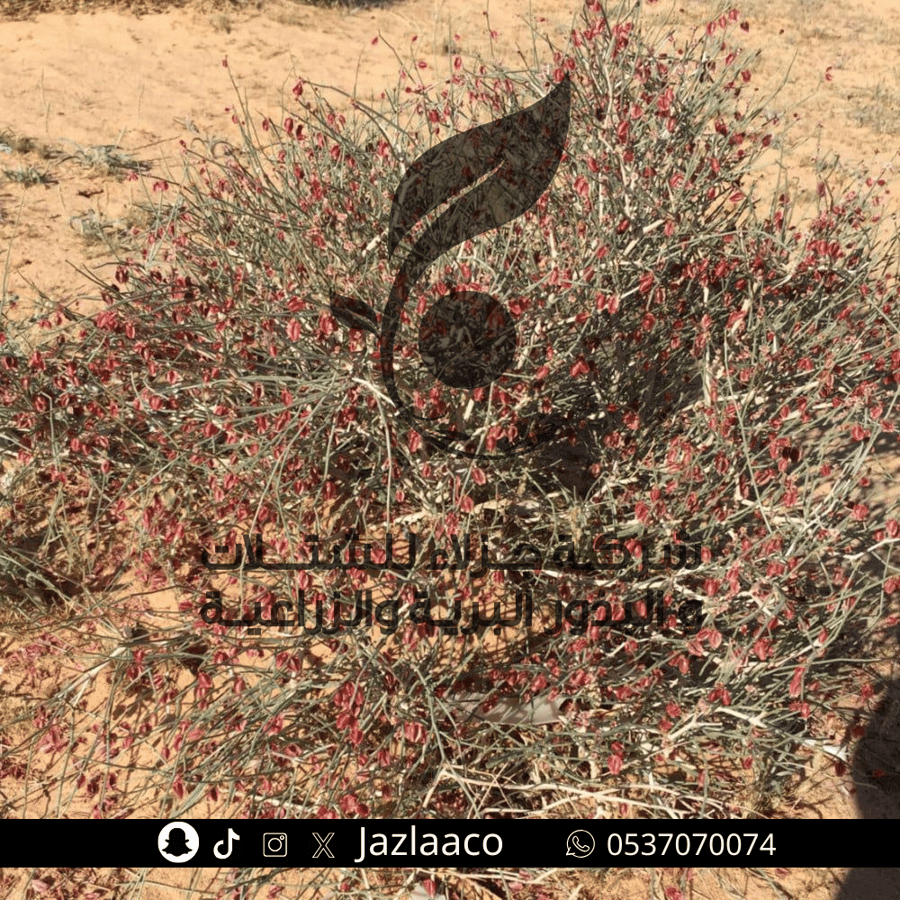
Calligonum tetrapteum
9.50ر.س
Product description
Calligonum tetrapterum is a perennial desert shrub belonging to the Polygonaceae family. It is an important plant in sandy and desert environments. It is characterized by its fine green branches, sparse leaves, and high tolerance to drought, heat, wind, and sand movement. It also contributes to stabilizing sand dunes and protecting the soil.
General Description
It grows as a relatively dense, branching shrub, typically reaching a height of 1–3 meters, with branches that can extend horizontally for greater distances. It is characterized by thin, green stems that play a vital role in photosynthesis, while the leaves are very small and fall quickly—a clear adaptation to the desert environment.
Papers
Its leaves are very small and simple, appearing briefly on new growth and then falling off, while the green stems continue to perform photosynthesis. This adaptation helps to reduce water loss during periods of drought and extreme heat.
flowers
It produces small, white to pink or reddish flowers, appearing singly or in small clusters on the branches. The flowers have a light, fragrant scent at certain stages of blooming and attract a number of insects and pollinators.
Fruits and seeds
It produces distinctive, four-winged fruits, a key characteristic of Calligonum tetrapterum. The fruit contains a single seed, and the appendages on the fruit aid in its dispersal by wind and sand movement.
Endurance and suitability
The *Arta naqawi* plant is highly tolerant of drought, heat, wind, and shifting sands, and thrives in sand dunes, sandy plains, and poor, well-drained soils. Its strong root system also helps stabilize sand and reduce soil erosion and dune encroachment.
Uses
It has significant environmental importance in stabilizing sand dunes, combating desertification, and rehabilitating degraded sandy lands. It also provides cover and shelter for some desert organisms and can be utilized in projects to restore local vegetation and protect sandy habitats.
natural spread
Calligonum tetrapterum is naturally distributed in parts of the Arabian Peninsula and surrounding desert regions, and is particularly associated with sandy environments, dunes, and open desert areas. It is found within the desert vegetation of various regions in Saudi Arabia.
Preservation status
Calligonum tetrapterum is not currently known to be globally threatened and is well-adapted to sandy and arid environments. Conserving its natural habitat remains important due to its role in stabilizing sand dunes and maintaining desert vegetation.