The youthful bag
100ر.س
Product description
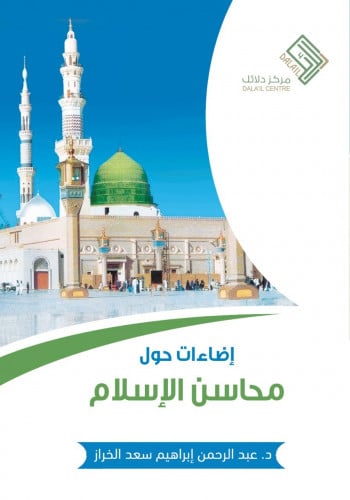
The bag includes the following books: 1- Psychological Fragility: Subtitle: Why have we become weaker and more susceptible to breaking? Author: Dr. Ismail Arafah Series: Intellectual Theses Book size: 14 by 21 cm Number of pages: 200 pages To download a brief PDF file about the book: click here Summary: The book reviews one of the modern phenomena, which is psychological fragility and the weakness that accompanies it in facing the least problems of life that we did not consider anything before, but today it can destroy the psyche of many or push some to suicide, as the author mentions some evidence of the phenomenon abroad and its impact on our societies today and offers solutions. Contents: Introduction: Welcome to the world of psychological fragility Chapter One: Introduction: The Snowflake Generation Chapter Two: The Psychology of Psychiatry Chapter Three: Emotional Void or Existential Void? Chapter Four: Social Media: The Root of All Evil Chapter Five: Do Not Judge Others! Chapter Six: Your Inner Feelings: The Worst Judgment in Your Life? Chapter Seven: Passion Drugs Chapter Eight: The Key to Salvation: I am Mentally Ill, Therefore I Do What I Want Conclusion References 2- Media and Atheism: Subtitle: Cinema and the Unconscious: The Popular Discourse of Atheism Author: M. Ahmed Hass Series: Intellectual Theses Book size: 14 by 21 cm Number of pages: 128 pages - Color To download a brief PDF file about the book: click here Summary: In this book, M. Ahmed Hassan presents many examples of media tools and logical fallacies used in today's global media (from movies, series, cartoons, and social media sites) to promote popular atheism or amateur atheism as we call it, which does not rely on discussion or dialogue between equals, but on influence from one side through scenes, images, words, and emotions, with the other side absent of response or clarification. Understanding these tools and knowing how to defend against them is one of the most important ways of protection that should be taught to the youth and introduced to them. Contents: - First Chapter: The Battle of the Unconscious The importance of visual media in the media Marginalized and Deviant Groups Why focus on cinematic films in this study? The impact of imitating cinematic films in changing concepts and beliefs - Second Chapter: How are atheistic ideas propagated in the media? First: Exploiting the gaps in the psyche, mind, and imagination! Second: Excessive display of lust, nudity, and promoting fornication and betrayal! Third: Depicting existence and life as absurd, nihilistic, and meaningless! Fourth: Exaggerating science fiction to diminish the Creator's abilities! Fifth: Exploiting the irrationalities of Christianity and distorted religions as a pretext for atheism! Sixth: Indirectly portraying God to impose atheistic visions! Seventh: Exploiting lies about evolution as a gateway to atheism! Eighth: Denying intelligence to artificial intelligence. Recommendations 3- Missing Foundations: Subtitle: 25 Issues in the Problem of Evil with an Introductory Approach to the Most Famous Western Responses and Commentary Author: M. Ahmed Hass Series: Intellectual Theses Book size: 14 by 21 cm Number of pages: 263 pages To download a brief PDF file about the book: click here Summary: In this book, M. Ahmed Hassan presents 25 common issues related to the problem of evil, specifically the existence of pain and suffering in the world, and how ignorance of Islamic responses to them is a missing foundation that can unfortunately influence some Muslims. He also dedicates nearly half the book to an introduction about the problem of evil, the most famous Western responses to it, and a comparison with Islam, through discussing the responses of three prominent Western thinkers: Alvin Plantinga, C.S. Lewis, and William Lane Craig. Contents: C.S. Lewis Alvin Plantinga William Lane Craig Chapter One: Introduction to the Problem of Evil 1- The origin of the issue is non-religious* A simple comparison* Muslim scholars and the problem of evil* Alvin Plantinga and the problem of evil 2- What Alvin Plantinga said* Mrs. Jones* Evaluation* Unjustified evil problem* The invisible mosquito argument* The natural evil problem* Plantinga's explanation 3- The Islamic perspective on the problem of evil* Proving God's perfection* Are angels better or righteous people?* Why did God not create the righteous directly in Paradise?* Why do we say that God is the Creator of everything, including evil?* Natural evil in Islam* Final cause and efficient cause* Natural evil as punishment for people* Examples from the Quran and Sunnah* What about animals? 4- C.S. Lewis's arguments* The problem of evil and the death of loved ones* Where does the atheist get the distinction between good and evil?* The problem of evil as an argument for believers 5- William Lane Craig* The materialist approach and evolution generalize evil* William Lane Craig's view on the problem of evil Chapter Two: Missing Foundations 1- Religious ignorance 2- Ignorance that this world is a test and trial 3- Excessive idealism 4- Exaggerating the trial of the righteous; you or others 5- Exaggerating some bad situations of committed believers 6- Exaggerating some opinions and stances of scholars and preachers 7- Questions about the death and illness of children and innocents 8- What about disabled and deformed children? 9- The difference between tenderness and compassion 10- The difference between mercy and compassion 11- Viewing scenes of torture for believers 12- Will everyone who does not enter Islam be in Hell? 13- Eternal punishment in Hell, and limited disbelief in this world! 14- Why did God create the disbeliever knowing he will not believe? 15- Why does God prolong the disbelievers' disbelief? 16- The limit of apostasy, is it coercion to believe? 17- The misconception of bloodthirstiness and brutality in Islam 18- The distorted view of supplication 19- The state of slaves in Islam 20- The state of concubines in Islam 21- The Muslim woman and moments of doubt 22- Despair of some righteous people 23- Influence of Muslim delays and conflicts 24- Exaggeration of sins 25- Cruelty and limits Conclusion 4- Illuminations on the Virtues of Islam: 128 pages, 14 by 21 cm (2 colors) To download the summary: here Author: Dr. Abdul Rahman Ibrahim Saad Al-Khuzar In this book, we explore the construction of Islam and discover together its pearls of virtue and beauty. Islam is all goodness and beauty; words cannot describe its true virtues. Its goodness is enough to be a religion chosen by the Lord of the worlds. Talking about the virtues of Islam dispels doubt, enlightens ignorance, and you will find the sweetness of faith and strength and resilience in your religion. 5- The Man in the Red Pants: Subtitle: A Rational Dialogue from Atheism and Secularism to Islam Author: Abdul Rahim Green Translation: Dala'il Center - Special thanks to Dr. Karam Islam Series: Translations Book size: 14 by 21 cm Number of pages: 88 pages To download a brief PDF file about the book: click here Summary: In this book, we will experience a unique and light dialogue between the British writer (Abdul Rahim Green) and the dear reader, where he sequentially discusses with simple logical, scientific, and rational steps the journey to prove the existence of the Creator, then proving the correctness of Islam.

From Riyadh