
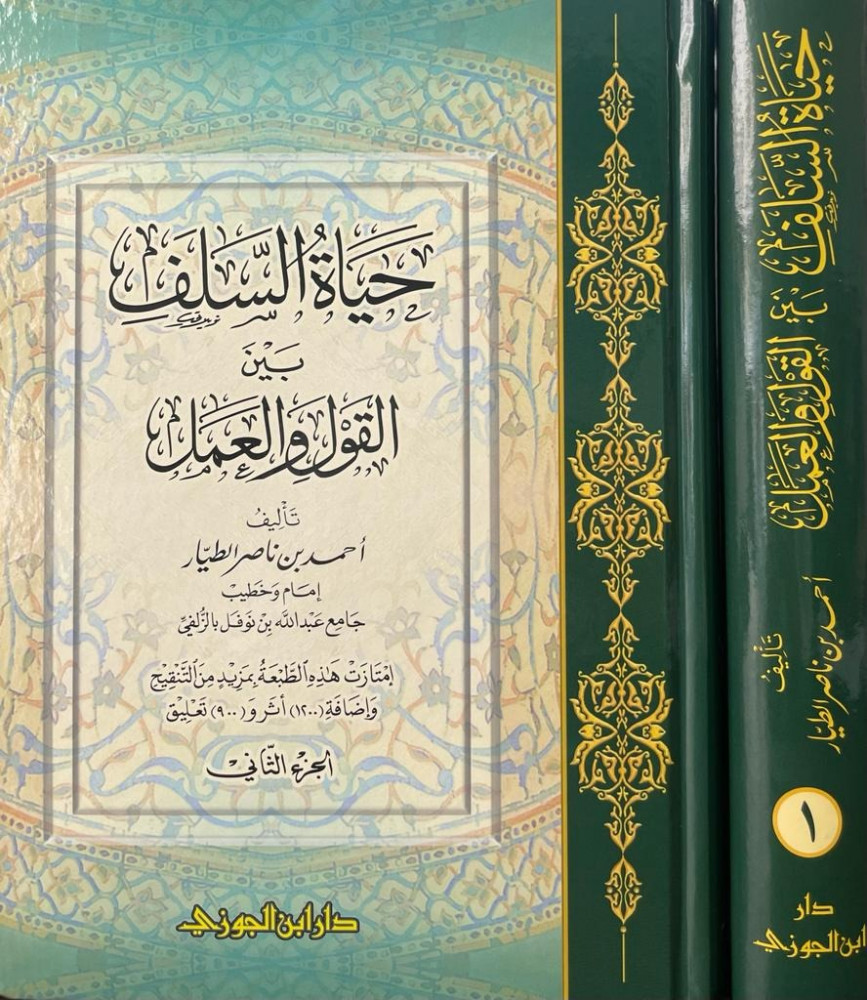


The life of the predecessors between speech and action 1/2
115ر.س
Product description
This new edition distinguished itself with more editing and the addition of 1200 sayings and 900 comments. The lives of the predecessors are among the ideal models for an integrated life in all its scientific and practical aspects, and what has been transmitted about their sayings and actions reflects the extent of that integration in their lives, which we have lacked in our lives, to the point that the side of speech dominates over the side of action, and there has become a disconnection and separation between what we say and theorize about and what we do and implement in our practical reality.
This week's book sheds light on the lives of the predecessors between speech and action; the author aimed through it to present the lives of the predecessors as they are, far from deception and lying, and free from exaggerations in speech and action, so that the Muslim can live that life with all its morals, dealings, worship, sincerity of the heart, and others. All of this forms a living model for emulation and following.
The author divided his book into topics and comprehensive titles, under which he lists everything that can fall under them or that the title encompasses from sayings, and if the branches of the title increase, he makes it include more than one element.
As for the arrangement of these sayings, he organized them according to centuries, starting with the century of the Companions, then the century of the Tabi‘un, then their Tabi‘un, and so on. If the transmitted speech contains several topics, he segments it and places each part under the appropriate titles, relying in attribution on one or two sources for each narration to avoid increasing the size of the book without benefit.
He relied on selecting authentic sayings from the book of Zuhd by Imam Ahmad, based on the work of his researcher, who distinguished between authentic and weak sayings; thus, the author limited himself to the sayings he verified or improved, leaving weak sayings.
Regarding his method in choosing the material, he based it on the books of biographies, translations, histories, creed, literature, and he was keen to select what benefits the Muslim in matters of religion and worldly life, and what is beneficial for the heart, state, morals, and conduct, avoiding anything that damages or contradicts creed, opposes the Qur'an and Sunnah, or reason and reality, such as exaggerations, nonsense, and what is of no expected benefit.
He chose what relates to the lives of the predecessors from the Companions, Tabi‘un, and their successors, sometimes touching on those who came after them if it adds to the benefit, and he also excluded jurisprudential issues, fatwas, and exegeses transmitted from them.
He did not neglect comments on these sayings, so he transmitted some important comments that are either clarifications, or remarks, or replies, or guidance, etc., along with mentioning Imam Al-Dhahabi’s comments in his book "Siyar A‘lam al-Nubala’" on some of the sayings.
To maximize benefit and include the greatest possible number of sayings, he included in the book some topics not covered by its title, such as: the states of the hypocrites, anecdotes, and rare stories.
Below are some of the prominent titles included in the book:
- Creed
- Adherence to the Qur'an, Sunnah, and the effect, and condemning opinion-based reasoning
- Condemnation of innovations, the innovators, and the desires and their people
- Debate and argumentation
- Knowledge and scholars
- Acting upon knowledge and conveying it
- The state of the predecessors with the rulers
- High ambition
- Truthfulness with Allah
- Condemnation of laziness
- Women of the predecessors
- Children of the predecessors
- Jihad and sacrifice for the sake of Allah
- Calling to Allah
- Enjoining good and forbidding evil
- Worship of the predecessors
- Moderation in worship, and condemning extremism and overdoing
- The state of the predecessors with the Qur'an
- The care of the predecessors for the heart
- The saints
- Sincerity, and condemning hypocrisy and showing off
- Expectation of reward (Hisab)
- Allah’s elevation of the believers and the righteous
- Allah’s protection of the righteous, and mentioning some of their virtues
- Relief after hardship
- Concealment and hiding good deeds
And other titles that this book is rich with, under which a group of sayings from the righteous predecessors are included.

Questions you might have


