

Product description
Common name: Shiqari herb
Scientific name: Matthiola longipetala
Other names: Shiqar, Shiqara
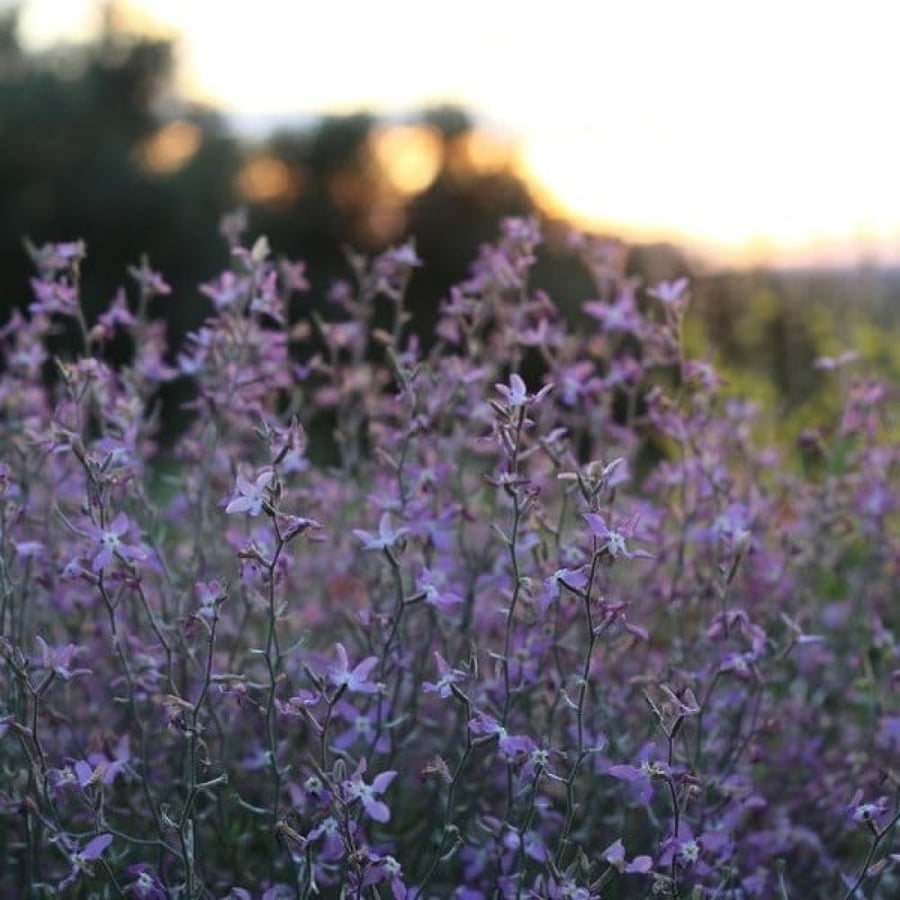
A wild annual flowering herb from the Brassicaceae family, it has multiple stems that rise upward reaching about 60 cm in height. Its leaves are basal and divided, resembling the leaves of the mustard plant. It is a spring plant seen in plains and sandy lands. In addition to the beauty of its flowers, it is considered one of the distinctive rangeland plants for camels. The poet says:
Its scent is sweet as if from musk,
They tied it to its young to boast,
And it departed from a place with a strong aroma.
What is the shape of the Shiqari flower?
Its flowers are dense, purple with a yellowish tinge, and have four petals. It blooms in the spring.
What is the shape of the Shiqari seeds?
Its seeds are tiny, oval, and dark-colored.
When is the season for germinating Shiqari?
October and November are considered the best months for germinating Shiqari seeds. It can also be cultivated throughout the year in controlled environments and regions with a moderate climate.
What is the suitable climate and soil for cultivating Shiqari?
Shiqari herb needs sunlight and moderate weather; it thrives in easy and sandy soils.
What is the method of cultivating Shiqari?
Since the seeds are very small, it is better to mix 0.5 grams of seeds with 50 grams of sand to facilitate scattering and proper distribution. It should also be watered continuously throughout the germination period.
What are the benefits and uses of Shiqari?
It is cultivated for the beauty of its flowers and is also one of the rangeland plants, especially for camels.
Where is the native habitat of Shiqari?
Saudi Arabia and the Levant.

From Buraydah