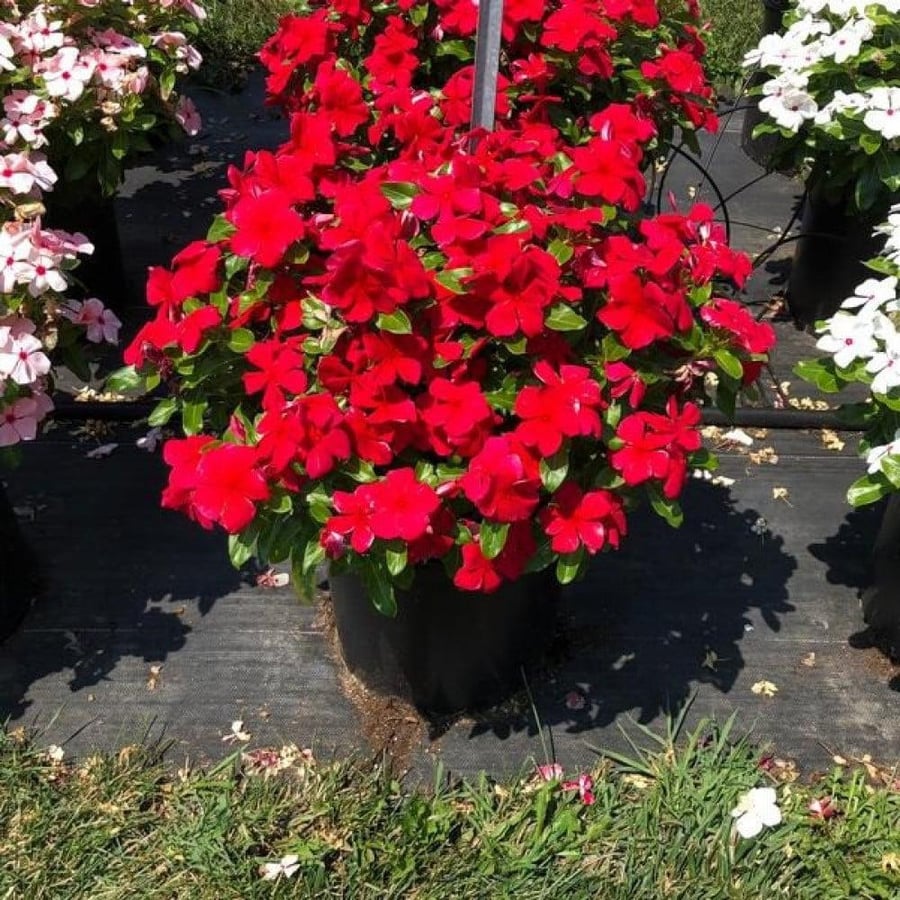
Red periwinkle seeds - Vinca - Alonca (Catharanthus roseus)
65ر.س
Out of Stock
Product description
Number 5000 seeds
Common name: Vinca flower - Red periwinkle
Scientific name: Catharanthus roseus
Also known as: Bright eyes - Pink sea snail
Vinca or periwinkle is considered one of the strongest outdoor resistant plants, belonging to the Apocynaceae family and therefore it is toxic. It is evergreen and lives for years. Its branched stems reach a height of up to 80 cm. Its leaves are thick, green, and oval-shaped. It is considered an easy-to-propagate plant and resistant to insects. It has been successfully cultivated in the central region of Saudi Arabia, where it spreads densely in gardens because it tolerates hot and dry weather.
Vinca flower or red periwinkle: flowers with five star-shaped, flat petals in a deep red color, arranged in opposite pairs, with a size between 2.5 cm – 3.5 cm. It blooms most days of the year.
Vinca seeds or red periwinkle: seeds are inside small pods about 3 cm in size, and are small, black, oval-shaped.
Germination season: in spring and late winter, and it can also be cultivated year-round in agricultural greenhouses and enclosed or plastic places where temperature can be controlled and sunlight reaches, or where the plant receives adequate lighting.
Suitable climate and soil for cultivating Vinca or red periwinkle: The periwinkle plant is resistant to frost and extreme heat. It prefers sunny locations, tolerates moderate salinity and dryness. It does not require much watering except on very hot days in summer, when it needs daily watering. It grows in most soil types.
How to cultivate Vinca or red periwinkle: It propagates easily through seeds planted at a depth of 1 cm from the soil surface. It can be fertilized with organic fertilizer at least once during flowering. It does not require much care.
Its benefits and uses: Used to beautify gardens and decorate empty spaces in agricultural beds. It also has some medicinal uses.
Original habitat: Its original habitats are Brazil, Madagascar, Southeast Asia, from where it spread to many regions around the world.

From Buraydah