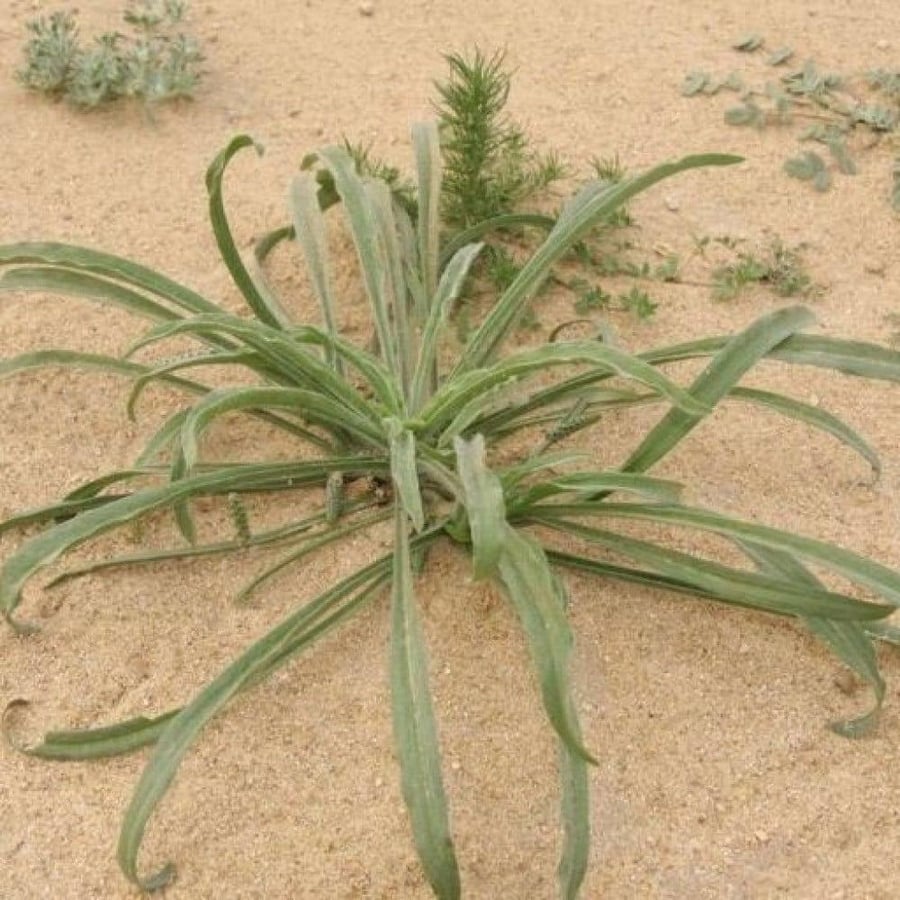


Seeds of the Plantago ovata herb
6ر.س
Product description
Common name: Plantago ovata
Scientific name: Plantago ovata
Other names: Daqees, Yanam, Qareeta, Laghmat Al-Na'jah
A small herbaceous plant with many strip-like leaves of parallel lengths connected at the base of the stem. The color of the leaves in Plantago ovata tends toward grayish green, and small hairs usually grow on them, covering them. It is considered one of the most famous pasture plants in the Saudi Arabian desert. It was mentioned in ancient folk poetry, where the poet says:
"Vegetables of the veins beneath your transparent skin, clusters of Rabil, no one surpasses it."
Flower of Plantago ovata: Its small white flowers gather above each other in an oval-shaped cluster, blooming in spring.
Fruit and seeds of Plantago ovata: Its small fruits contain two seeds in each fruit.
Season for germination of Plantago ovata: It is planted in spring, and can also be cultivated year-round in agricultural reserves, enclosed or plastic-covered areas where temperature can be controlled, sunlight is accessible, or proper lighting is available.
Suitable climate and soil for Plantago ovata: It grows in moderate to cool temperatures and thrives in loose sandy soil. It is resistant to frost and drought, and is irrigated regularly.
Method of cultivating Plantago ovata: It reproduces through seeds planted at a depth of 1 to 2 cm from the soil surface. It can also be fertilized with organic fertilizer at least once.
Its benefits and uses: It has medicinal uses, as the plant contains a high percentage of mineral substances such as calcium, phosphorus, and the Saucic acid compound, among others. It is also used in some countries as a healthy food by cooking its leaves or adding them to green salads, as it contains many beneficial nutrients.
Original habitat of Plantago ovata: Its original habitat is in the Arab world, notably the Levant and the Maghreb countries. It also spreads in sandy areas in Saudi Arabia and the Gulf countries.

From Buraydah
Questions you might have