

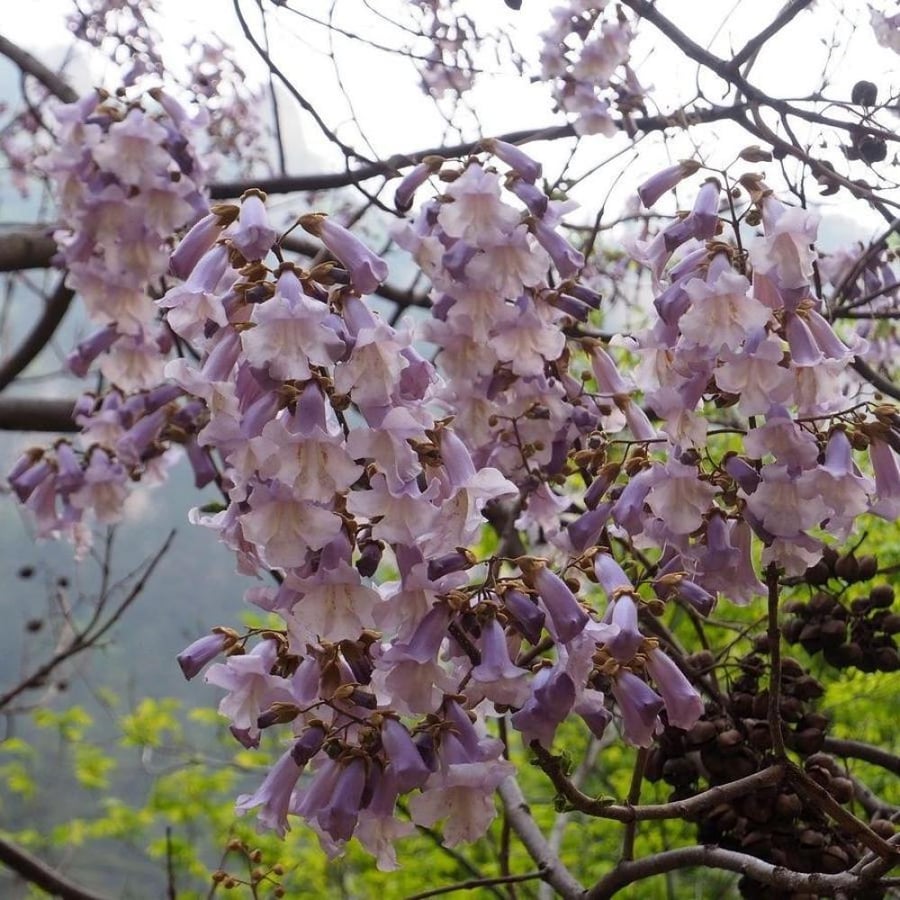
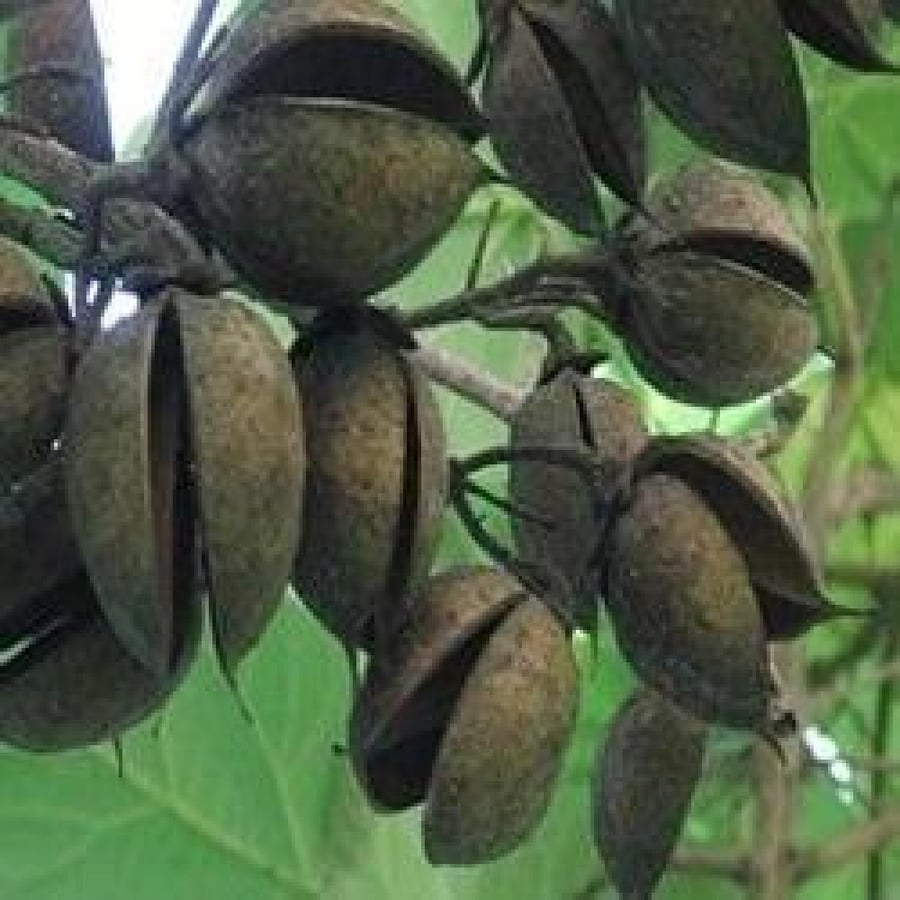
A sentence 1000 seeds of seeds of the tree of the princess bauhinia
39ر.س
80ر.س-51%Out of Stock
Product description
Paulownia tree is a deciduous, fast-growing, honey-producing tree, characterized by its abundant fragrant flowers, its hardwood that has great value used in furniture manufacturing, musical instruments, and many other things. Scientific name: Paulownia. Origin of its name: It is called the Paulownia or Paulownia tree in honor of Princess Anna Pavlovna (1795-1865), daughter of Emperor Paul I of Russia. Other names: Paulownia, Princess tree, Empress tree, and Pavlovnia. Family: The Paulownia plant belongs to the Pavlovnia family. Native habitat: Its original habitat is central and western China. Order: The order of the Scrophulariales. Varieties: This tree has 6 to 17 varieties and is one of the fastest-growing and most widespread trees because of its hardwood. Height: up to 20 meters. Width: from 8 to 12 meters. Cultivation of the Paulownia tree: Preferred soil: Any type of soil, as long as it is well-drained. Exposure: Needs a very sunny area for your tree to grow well. Growth of the Paulownia tree: Rapid. Foliage: Deciduous. Flowering time: Flowers appear in spring, just before the leaves, followed by oval-shaped fruits. Propagation: By seeds or cuttings, seed planting occurs in autumn, and root cuttings are done in late summer. It is enough to plant the seeds in a container, exposed to light and protected from frost. When to plant? Seed planting can be done in autumn or spring, but it is preferable to plant in autumn to facilitate growth. You can also plant in spring, but then you will need more care. Diseases and problems that the tree may face: The Paulownia tree is resistant and strong, not prone to disease or attack by insects and various pests. Benefits of the Paulownia tree: - The wood of the Paulownia is among the finest types of wood and most marketed, used in furniture manufacturing. - The flowers of the Paulownia produce some of the best honey in the world. - The tree is resistant, so it is widely cultivated in areas with strong winds as it forms an excellent windbreak.

From Buraydah
Questions you might have