


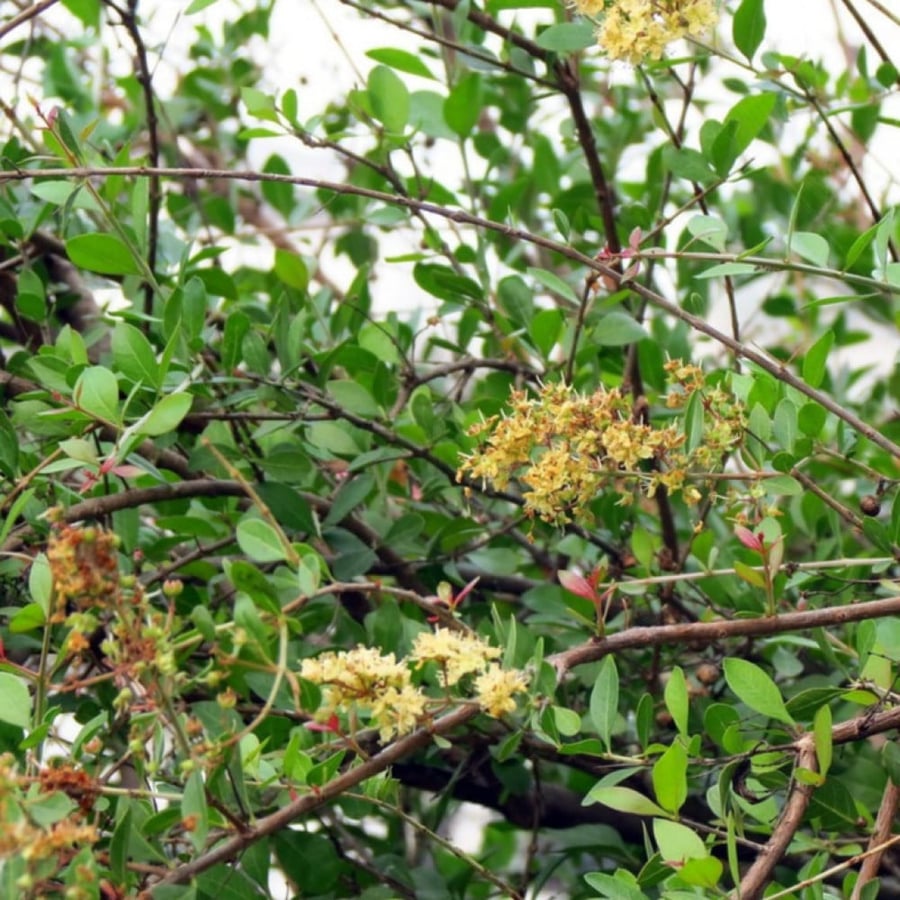
Henna tree seeds
7ر.س
Product description
The henna tree is of medium height, highly branched, evergreen, henna has been used for thousands of years and is considered one of the oldest cosmetic preparations in the world, and it has also been used in traditional medicine. Scientific name: Lawsonia Inermis. Other names: Henna, Al Yarna, Riqan, Riqoon. Original habitat: Asia, West India, Central Africa, Middle East. Flowers and flowering season: Its flowers are clustered, tubular, come in red and creamy colors, with an attractive fragrant scent, bloom in summer. Leaves: Green, opposite, oval-shaped, dried and ground for cosmetic uses. Height: Usually reaches up to 6 meters. Henna cultivation and environmental conditions: Grown in tropical and subtropical areas, drought-tolerant, and can also be cultivated in any moderate climate conditions such as greenhouses. It is preferable to prune the henna tree in spring. It is recommended to soak the seeds for several days before planting to accelerate the growth process. Soil: Fertile, well-drained soil, adaptable to many types of soil, whether sandy or clayey, and fertilized twice with organic fertilizer. Watering method: The soil should be moist, watered daily and regularly. Sun exposure: Full sun exposure. Propagation: By seeds. Planting time: During suitable weather times and areas, and it can be planted at any time of the year in other weather and climate conditions inside greenhouses. Benefits and uses of henna: Its leaves are used after drying and grinding to color nails, paint hands and feet, and dye hair. It is planted as windbreaks and garden fences. Oil can be extracted from its flowers and used as an essential oil for perfumes. The bark and fiber of its branches are used to make various household tools.

From Buraydah