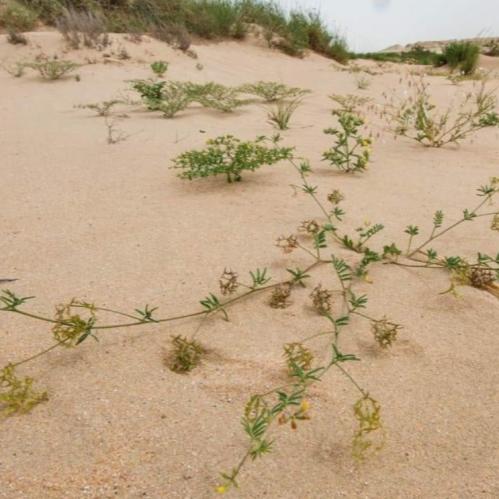
Stipagrostis plant seeds
6ر.س
Product description
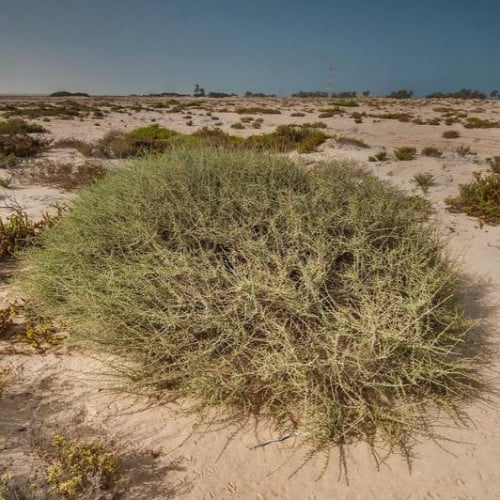
Common name: Nasi Scientific name: Stipagrostis Nasi is a wild summer grass from the Poaceae family, growing in dense clumps up to 60 cm tall. The stem branches densely at its base, and the plant has a smooth, upright grass sheath reaching up to 30 cm in height. The leaf blade is soft, silvery, and curly, up to 15 cm long, with dense hairs at the point where the leaf meets its sheath. The feathery spikelets at the bases of the spikelets remain for a long time. The plant is more prevalent in spring when it is heavily grazed by animals and then disappears. Nasi flower: Its flowers are silvery, appearing most of the year on a compound spike up to 15 cm long, blooming in spring. Nasi seeds: They are small, yellow in color. Nasi germination season: It is planted at the end of winter and in spring, and can also be cultivated throughout the year in agricultural reserves and enclosed or plastic-covered areas where temperature can be controlled, with sunlight exposure or adequate lighting for the plant. Suitable climate and soil for Nasi: The plant grows on shallow, stable sands and sandy loam soils, with high salt tolerance. It has very high drought tolerance, and after establishment, it may need watering when there is a need to improve its green appearance. Nasi cultivation method: It propagates through seeds planted at a depth of 1 cm from the soil surface. It can be fertilized with organic fertilizer at least once to accelerate its growth and development. Its benefits and uses: It is an important grazing plant recommended for soil improvement and desert forage resource restoration. It has great importance in resisting soil erosion. Original habitat of Nasi: Kingdom of Saudi Arabia.