


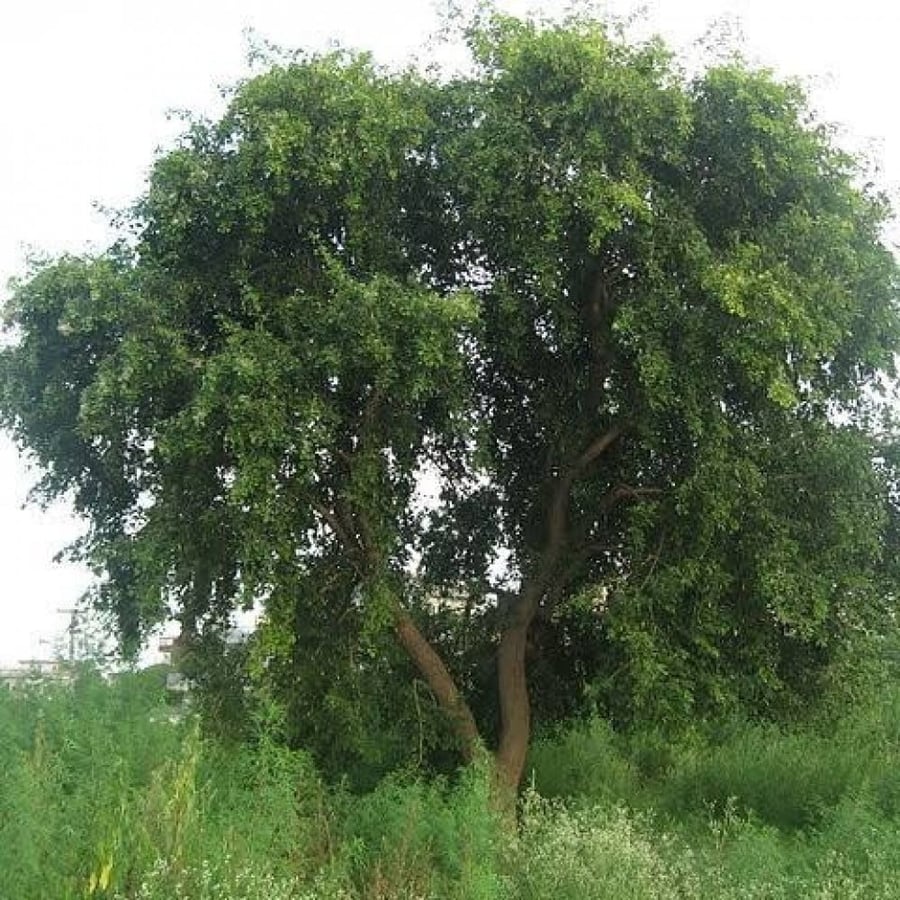
Seeds of the Sissoo tree
7ر.س
Product description
Common name: Sersou - Sisam
Scientific name: Dalbergia sissoo
Other names: Sisam
Sersou - Sisam is a perennial tree from the genus Sasm, family Fabaceae, height 25 meters with a circumference of 180 cm at the base of the trunk. Its leaves are deciduous, arranged in a spiral pattern, interlaced in an incomplete manner, and evergreen.
- Flower of the Sersou - Sisam tree: Its small yellow flowers bloom in summer.
- Fruit and seeds of the Sersou - Sisam: Its fruit is pod-shaped, with each fruit containing one brown seed with a rectangular shape.
- Sowing season for the Sersou - Sisam tree: It is planted in spring, and can also be cultivated year-round in agricultural nurseries, enclosed or plastic-covered places where temperature can be controlled, sunlight reaches the plant, or where adequate lighting is available.
- Suitable climate and soil for the Sersou - Sisam: It grows well in sandy and alluvial soils and near rivers, but does not grow in heavy clay soils. It tolerates a wide range of temperatures: 0–50 degrees Celsius. It needs sunlight and shade, is resistant to frost and drought, and is watered regularly.
- Method of cultivating the Sersou - Sisam: It propagates through seeds, which are soaked in water for two days before planting at a depth of 0.5 cm from the soil surface. It can be fertilized with organic fertilizer at least once to accelerate growth and development.
- Its benefits and uses: From the tree, rosewood oil is extracted, which has effective properties for cell growth and tissue regeneration. It is used to remove wrinkles and treat acne, as well as in some perfumes. Its wood is used for making household furniture.
- Native habitat of the Sersou - Sisam: Its original habitat is India. It is cultivated in Saudi Arabia and many Arab countries.

From Buraydah
Questions you might have