
Okra plant seeds (Abelmoschus esculentus)
5ر.س
Product description
Common name: Okra
Scientific name: Abelmoschus esculentus
Also known as: Bamia - Qanawiya
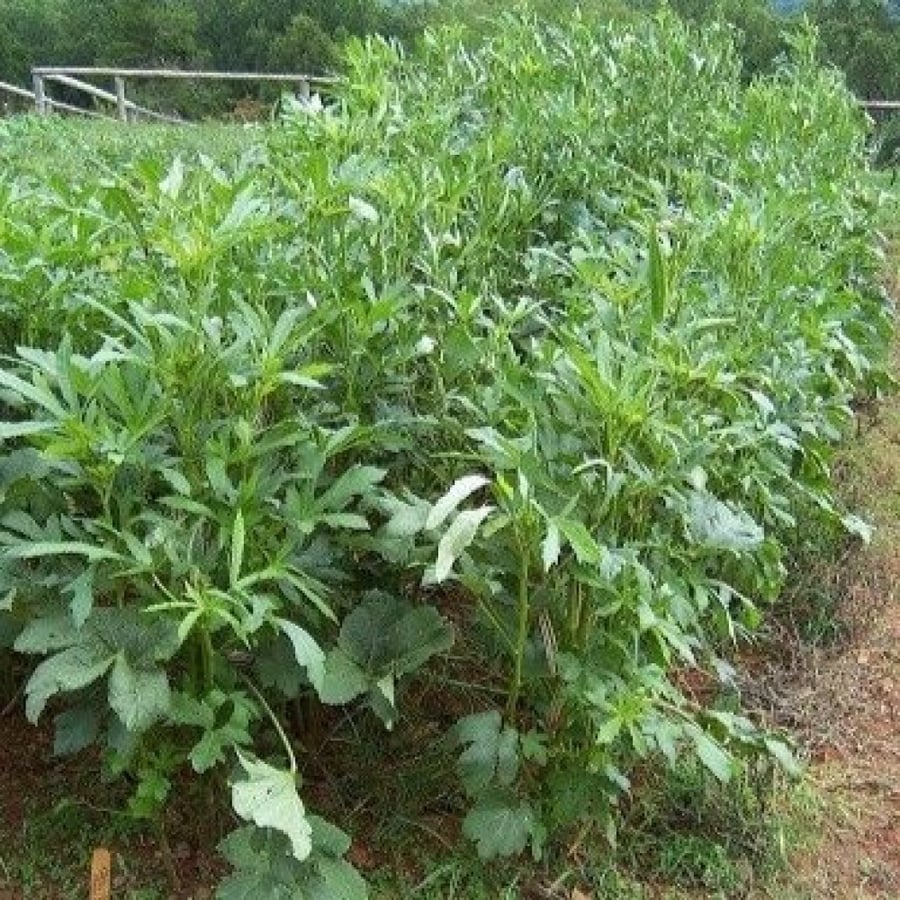
Okra is a plant species belonging to the genus Abelmoschus of the Malvaceae family, and its green fruits are edible. It is an annual or biannual type. The plant reaches up to 2 meters in height. The leaves are broad, measuring between 10 to 20 cm in length. They are lobed with 5 to 7 sections.
• Okra flower:
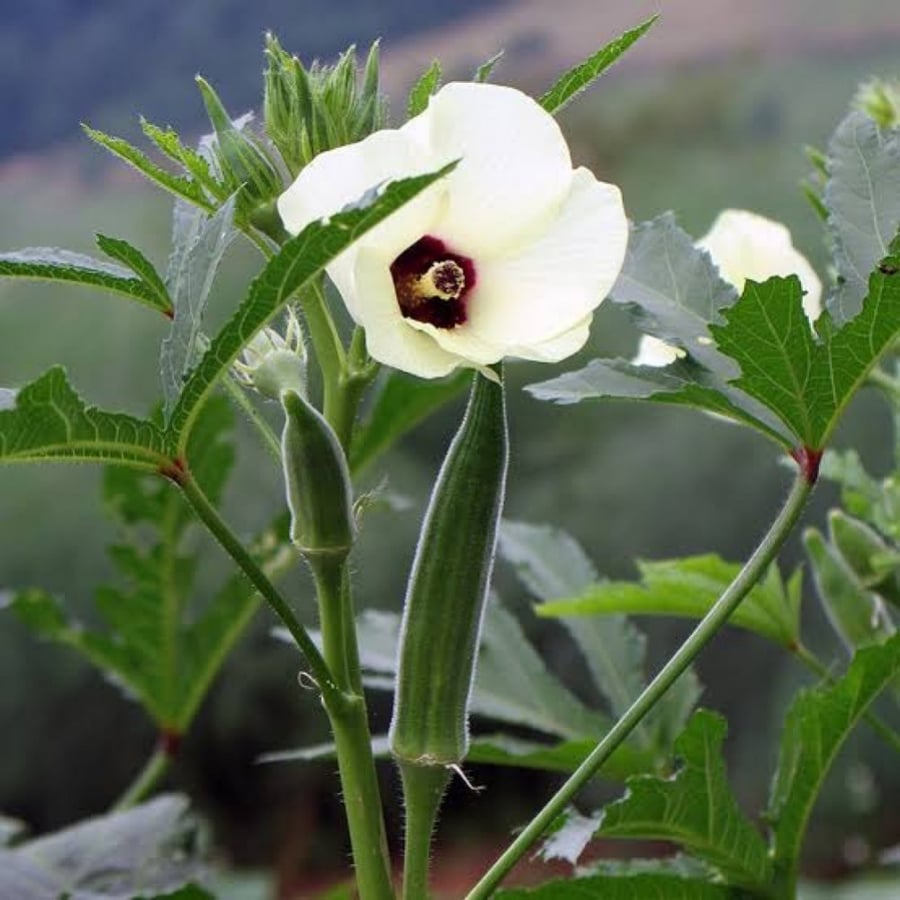
The flowers have a circumference ranging from 4 to 8 cm. Each flower consists of 5 petals that range in color from white to yellow with purple spots at the base of each petal.
• Okra fruit and seeds:
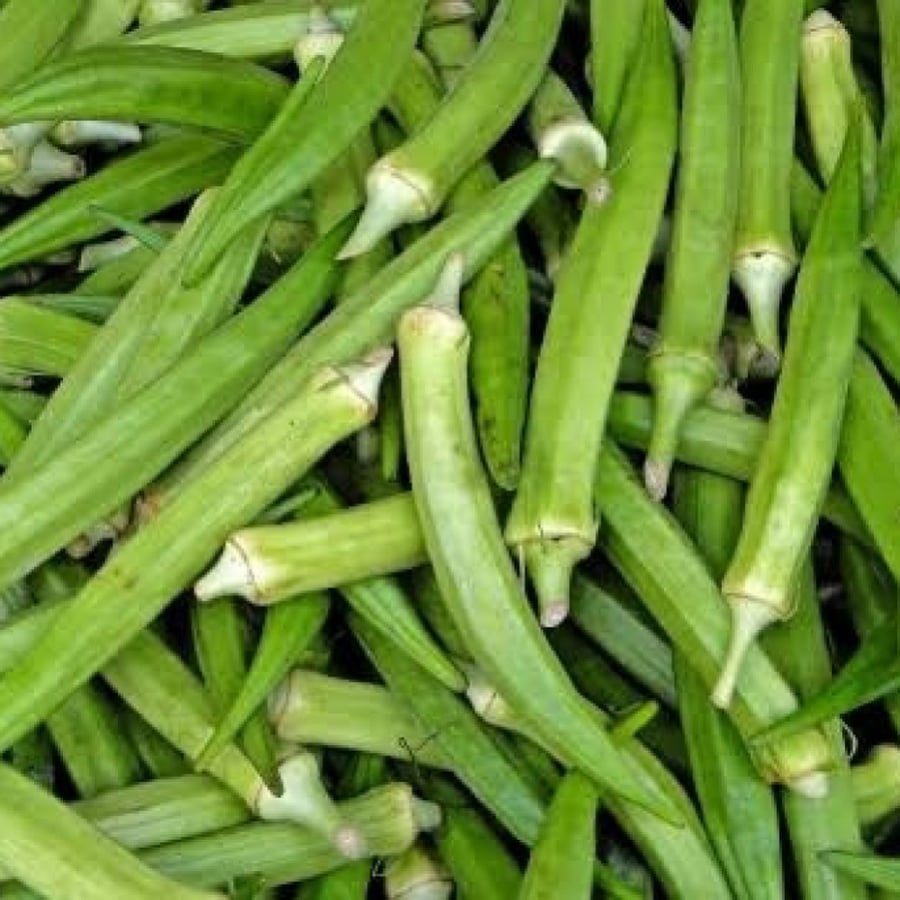
Its fruits are cooked and are long green pods covered with soft fuzz, reaching up to 20 cm in length.
• Okra planting season:
Seeds are planted in January and February in warm regions.
• Suitable climate and soil for growing okra:
Okra needs at least eight hours of sunlight daily. It is preferred that the soil is loose, fertile, and slightly alkaline. If the soil is acidic, some lime is added several months before planting, along with appropriate fertilizer. It is sensitive to frost and drought and should be watered regularly.
• How to grow okra:
It propagates through seeds planted 1 cm deep in the soil surface. Organic fertilizer can be added at least once to accelerate growth and development. It can also be propagated by seedlings.
• Benefits and uses:
It is used for food and has multiple health benefits. A type of fiber is extracted from its stems and ripe fruits, which is used in textile and paper manufacturing.
• Original habitat of okra:
Okra originated in tropical Africa and has been cultivated in the Middle East and India for a long time. In the 19th century, wild okra plants were observed along the White Nile in Sudan. Its cultivation is widespread in Saudi Arabia and most Arab countries.

From Buraydah
Questions you might have