

Yellow Shami corn seeds hybrid (Zea mays subsp)
6ر.س
Product description
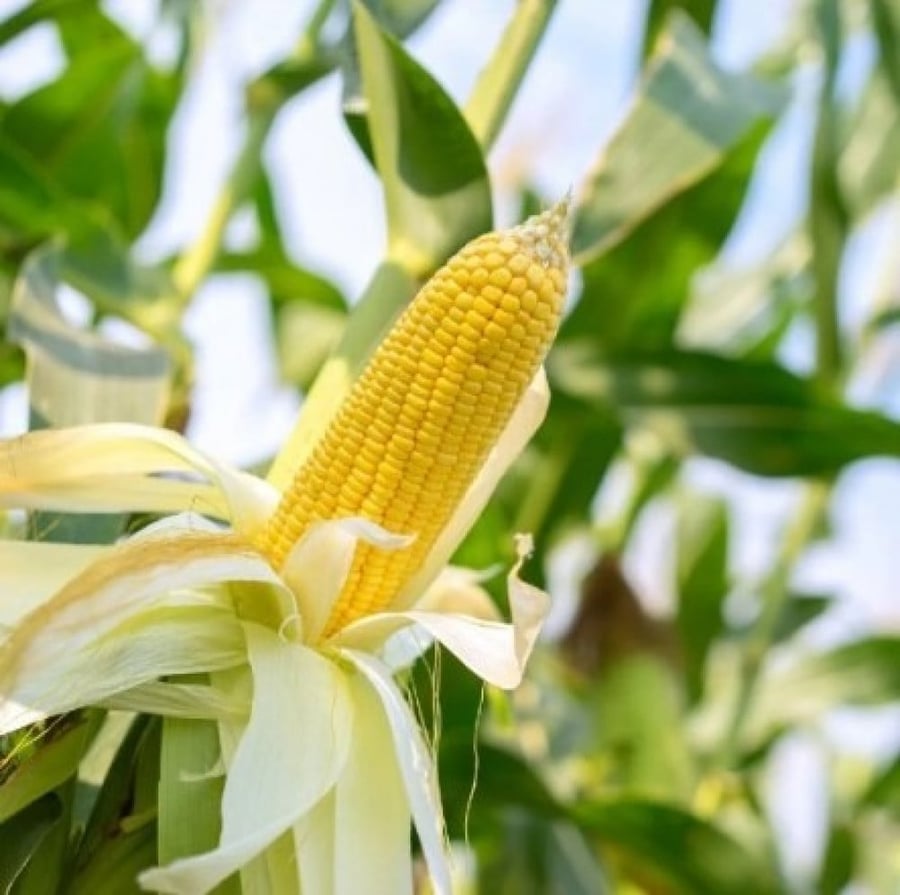
Common name: Yellow Hybrid Shami Corn
Scientific name: Zea mays subsp
Other names: Sweet corn - Sugar corn
Shami corn plant: A mature plant consisting of roots, stem, leaves, cobs, and husks — there are special leaves called coverings that contain the cob inside, with silk-like threads at the top of the coverings. There are thousands of varieties of Shami corn, which have arisen naturally; nowadays, all new varieties have been developed by scientists.
• Hybrid Yellow Shami Corn Flower: Has separate male and female flowers, with male flowers carried in inflorescences at the top of the plant, while female flowers appear at the leaf axils. It blooms in spring.
• Hybrid Yellow Shami Corn Seeds: The seeds are smooth, round, and non-wrinkled, rich especially in starch.
• Germination season for Hybrid Yellow Shami Corn: Early planting is necessary to obtain the highest grain yield from Shami corn. Early summer planting in late April and during May is the most suitable time for planting. It is also recommended not to delay planting beyond mid-June to prevent reduced yield, weak growth, and decreased production.
• Suitable climate and soil for planting Hybrid Yellow Shami Corn: Shami corn is a summer crop suitable for high temperatures, with optimal germination temperatures between 32-35°C. The grains can germinate after 5-10 days under suitable conditions, but cannot germinate at temperatures below 5°C or above 45°C. It grows well in well-drained alluvial soils that are slightly acidic to neutral. It does not tolerate cold or frost and should be irrigated regularly.
• Method of planting Hybrid Yellow Shami Corn: Reproduces via seeds planted at a depth of 2.5 to 5.1 cm underground. It should be fertilized with organic fertilizer at least once during flowering.
• Benefits and uses: Shami corn has many uses; the grains, which are the corn seeds, can be simply cooked and eaten. These grains can also be used in breakfast cereals, baked goods, salad dressings, and many other foods. Large quantities of Shami corn grains and other parts of the plant are also used as animal feed.
• Native habitat of Hybrid Yellow Shami Corn: Southern Mexico and Guatemala.

From Buraydah