Coastal hibiscus seeds
8ر.س
Out of Stock
Product description
Common name: Coastal Hibiscus
Scientific name: Hibiscus Tiliaceus
Also known as: Coastal Khutmi - Tasbeesia
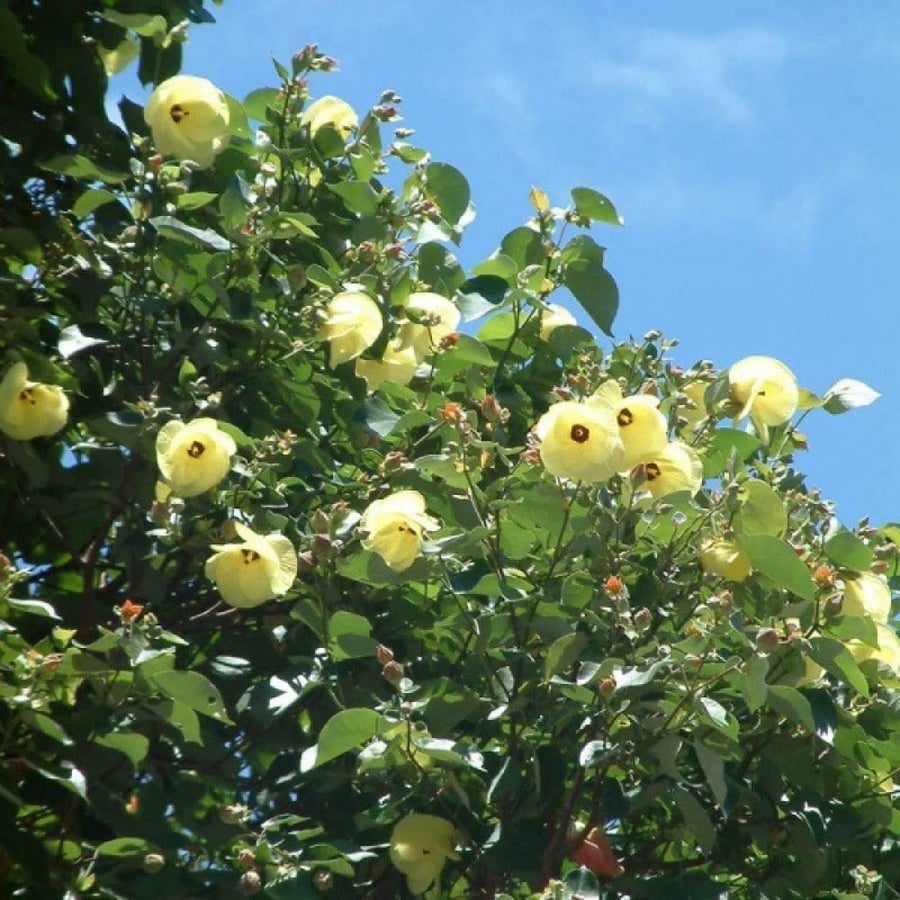
The coastal Khutmi plant is from the Malvaceae family, and it is an ornamental tree that reaches a height of up to 10 meters, grows quickly, has heart-shaped leaves that do not fall off, which gives the tree a dense crown.
• Coastal Khutmi flower: consists of light yellow petals, the flower is pod-shaped, 15 cm wide, and has a long, protruding, crimson-colored pistil from the center of the flower. The flowers fall after one or two days of blooming, so this tree is not suitable for planting in pedestrian walkways. The color of the flower often turns to orange or red before falling.
• Coastal Khutmi seeds: small-sized, brown, with sharp edges.
• Coastal Khutmi germination season: planted in spring, and can also be cultivated year-round in agricultural reserves, enclosed or plastic places where temperature can be controlled, sunlight reaches the plant, or where adequate lighting is available.
• Suitable climate and soil for Coastal Khutmi: Coastal Khutmi naturally grows in the southern coastal subtropical regions of Asia. Since it originates near watercourses, it tolerates stagnant water better than others, and withstands high salinity and hard water. It grows quickly in many types of soil and tolerates drought to some extent, but is affected by low relative humidity accompanied by long-term soil dryness and frost. It is watered regularly.
• How to cultivate Coastal Khutmi: propagated through seeds soaked in water for 24 hours before planting. It can be fertilized with organic fertilizer at least once during flowering to accelerate growth and development. Stem cuttings also grow easily and can be used to preserve the traits of the mother plant. Trees grown from cuttings flower earlier compared to those grown from seeds.
• Benefits and uses: planted for decoration in homes, gardens, and streets.
• Original habitat of Coastal Khutmi: Southeast Asia and the Pacific Islands. It is also cultivated in Saudi Arabia and Gulf countries due to its ability to withstand harsh climatic conditions.

From Buraydah