
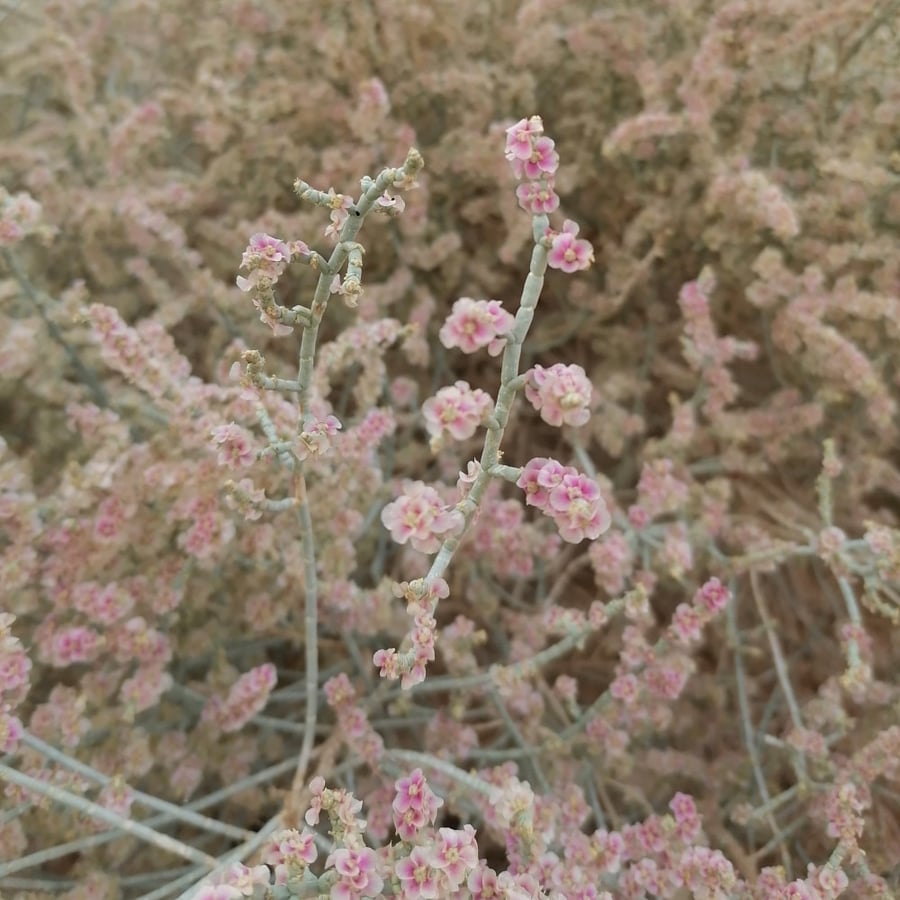


Wild Rhamnus tree seeds
5ر.س
Product description
Common name: Wild Rhamnus seeds
Scientific name: Haloxylon Salicornicum
Family: Qatifia
The Rhamnus shrub is a wild acidic plant, perennial, evergreen, tolerates desert conditions and drought. Its cultivation increases when the weather is suitable, and it coexists and reproduces with many different types of soil. It is planted between March and April, and its height ranges approximately from 10 cm to 30 cm. Rhamnus is considered one of the finest pasture plants. It has many green branches and a pleasant scent when burned and honey.
What is the shape of the wild Rhamnus tree seeds Haloxylon salicornicum?
The external shape of wild Rhamnus seeds tends to be simple and small, usually brown or black in color. The seeds are small and often pointed at the tip.
When is the planting season for wild Rhamnus tree seeds Haloxylon salicornicum?
The planting season for wild Rhamnus seeds is affected by local climatic factors, usually in spring, after a period of rain when the weather conditions are suitable for plant growth.
What is the suitable climate and soil for wild Rhamnus tree seeds Haloxylon salicornicum?
The suitable climate and soil for wild Rhamnus seeds tend to be dry and desert-like, where shrubs grow well in well-drained soil containing a good proportion of sand and gravel.
How to cultivate wild Rhamnus tree seeds Haloxylon salicornicum?
Cultivating wild Rhamnus seeds is usually done by planting them directly in the soil in spring after the rain. The seeds can be evenly scattered on the soil surface, then covered with a thin layer of soil and gently watered.
What are its benefits and uses?
Wild Rhamnus seeds have many benefits. They are commonly used as pasture plants in dry and desert areas, providing food for grazing animals. They are also considered a good source of honey, sometimes used in desertification control, and are used in some traditional medicinal applications.
What is the original habitat of wild Rhamnus tree seeds Haloxylon salicornicum?
The Arabian Peninsula, the Levant, and Sinai.

From Buraydah