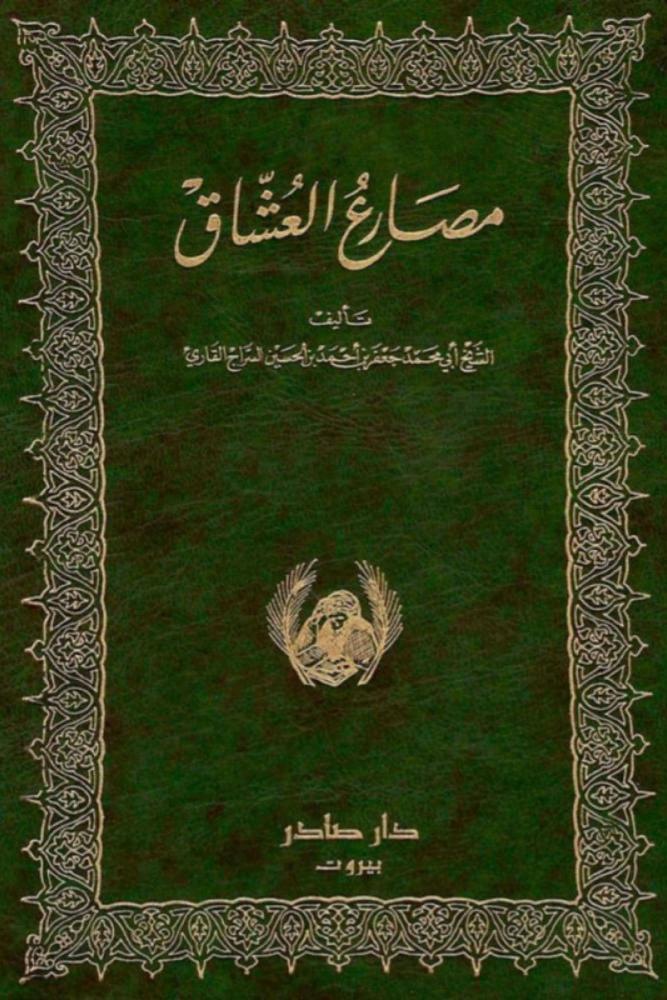
Lovers' Arena 2/1
110ر.س
Out of Stock
Product description
A brief about the book "Masa'ar al-'Ushaq" (The Deaths of Lovers), two volumes: The compiler of this book is Jaafar ibn Ahmad ibn al-Hussein al-Sarraj, his nickname is Abu Muhammad, and his title is Al-Qari. He was born in Baghdad and died on the 21st of Safar. He was a scholar of his time and had many remarkable writings, including the book "Masa'ar al-'Ushaq." He narrated from many and took from many, and he had good poetry which he also included in this book, "Masa'ar al-'Ushaq." In it, he followed the approach of the ancients in their aims and meanings and mentioned the stations of the Arabs. The fact that he attributed each narration he narrated to several narrators and informants indicates his extensive knowledge and care to make his reader confident in the authenticity of what he reports. He collected in his book all the narrations related to lovers who were struck down by love in various ways, and perhaps today we find in it what the mind cannot accept, such as the narration of the Zagh (a bird) that was "from its middle to its top a man, and from its middle to its bottom a Zagh with a tail and a man," and the little crow that eloquently recited poetry describing itself, saying: "I am the Zagh, Abu 'Ajwah... etc." The stories include the deaths of lovers of jinn, the mountain spirit that indicated with two lines of poetry the place where the lovers died and their traces disappeared, and other incidents of rapid death following a gasp from the lover or the loveress. His narrations are a mixture of pre-Islamic, Islamic, Umayyad, and Abbasid, all pure, characterized by chastity, fear of God, and the punishment of the Hereafter. Even those with a hint of moral laxity end with repentance to God and seeking His forgiveness, Glorious and Exalted be He. The spiritual and Sufi tendencies dominate many of the stories, as they are in the stories of the deaths of God's lovers, mentioning their miracles, the deaths of lovers of paradise, and others. The poetic narration is entirely pure, except for four verses, one of which describes something similar to the description of Al-Nabigha of the unclothed. This book originally was copied in twenty-two volumes, each introduced by its author with a poetic excerpt of love poetry he composed.
