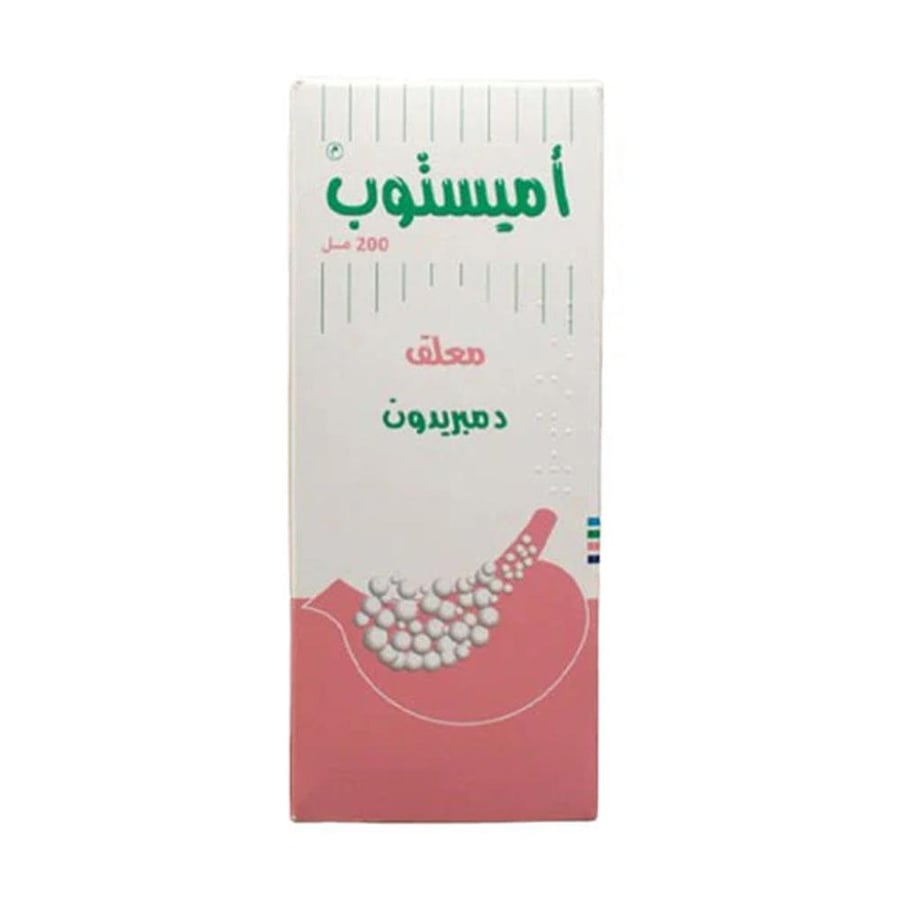
Amistop Sus 200 ml
9.35ر.س
Product description
Amistop suspension 200ml
Scientific name: Domperidone
Uses: to alleviate symptoms of chronic gastritis. To reduce symptoms of nausea and vomiting. To relieve symptoms of gastroparesis associated with diabetes. To control nausea and vomiting related to Parkinson's disease treatments.
Method of use:
For nausea and vomiting treatment:
Adults and children > 35 kg: 10 mg three times daily.
Children under 35 kg: 0.25 mg/kg three times daily for one week.
It is recommended to take the Amistop suspension before meals.
If the medication is taken after meals, absorption may be delayed.
Side effects: dry mouth, headache, changes in menstrual cycle, increased breast size in men, itching, general fatigue, skin rash.
Warnings and precautions:
Dopamine should not be used without consulting a specialist doctor in the following cases:
Hypersensitivity to the active substance or any other component of the medication.
Obstructions, perforations, or bleeding in the gastrointestinal tract.
Presence of a tumor that stimulates prolactin secretion in the body.
Heart disorders, notably QT prolongation, Torsade de Pointes, and bradycardia.
The medication significantly affects the heart and its rhythms, especially if the patient is over 60 years old and taking more than 30 mg/day.
Electrolyte disturbances, mainly hypokalemia or hyperkalemia, and hypomagnesemia.
Concurrent use with ketoconazole.
Moderate to severe liver disorders.
Children under 12 years old.
Domperidone should be used with caution and under medical supervision in the following cases:
Patients with a history or family history of breast cancer.
Patients with liver disorders.
Diabetic patients, as it contains lactose.
Pregnancy and breastfeeding periods.
Patients with a family history of long QT syndrome or Torsade de Pointes.
Patients receiving treatment should have an ECG before starting and during treatment.
Patients over 60 years old.
Electrolyte imbalance; it is recommended to adjust electrolyte and mineral levels before using the medication.
Malabsorption syndrome of glucose and galactose.
Hereditary fructose intolerance and lactose intolerance.
Severe renal impairment, requiring a lower dose than the recommended dose for these patients.

From Taif