
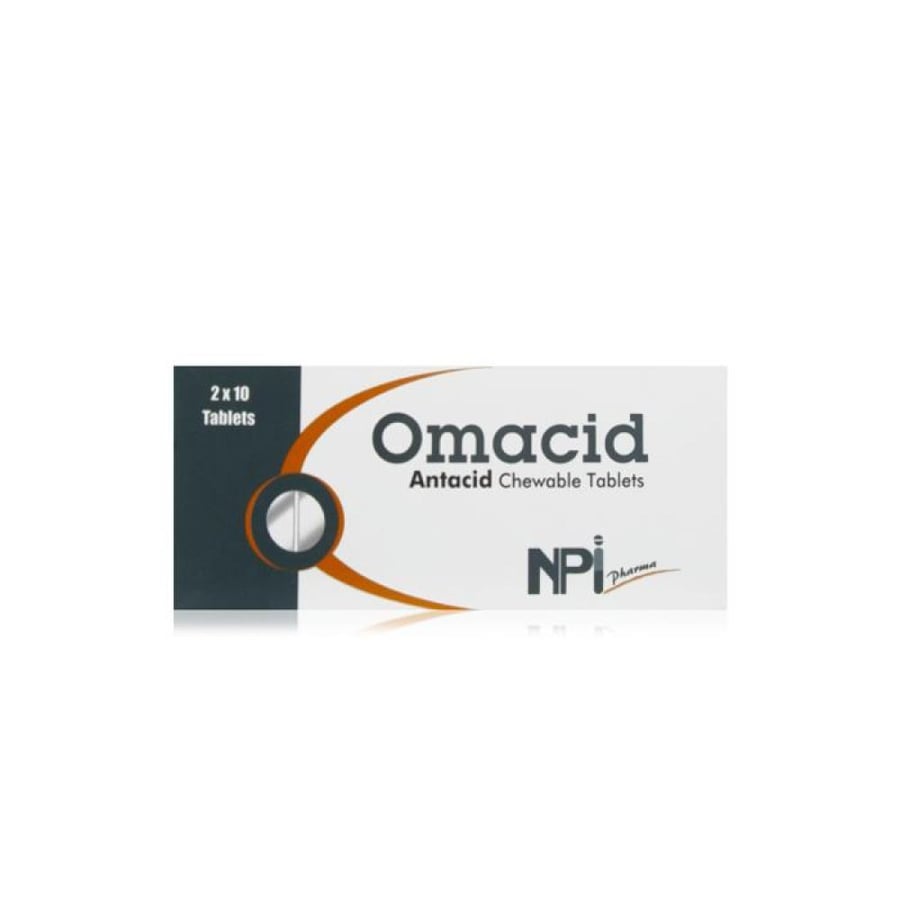
Omacid Chewable Tablets - 20 Tablets
2.95ر.س
Product description
Product Name
- Omacid chewable tablets
Scientific name
- Aluminum hydroxide and magnesium hydroxide
Omacid Chewable Tablets belongs to
- antacids
How to make aluminum hydroxide and magnesium hydroxide
- Antacids work by neutralizing stomach acid.
Medical uses of Omacid Chewable Tablets
- Gastroesophageal reflux (GERD), symptoms of which include: a bitter taste in the throat, a persistent dry cough, pain when lying down, and difficulty swallowing
- Heartburn, a burning sensation in your chest or throat caused by acid reflux
- Indigestion, which is pain in your upper intestine that can feel like gas or bloating
- A gastric or duodenal ulcer is an ulcer that affects the lining of the stomach, small intestine, or esophagus.
How to use Omacid chewable tablets
- The dosage depends on your condition.
- In most cases, it should be taken after meals and before bedtime.
- Tell your doctor if symptoms persist or worsen.
- Doses may be changed under special circumstances, so always follow your doctor or pharmacist's instructions.
- If you take more than you should, talk to a doctor or go to the hospital immediately.
- If you miss a dose, take it as soon as you remember unless it is almost time for your next dose.
- Do not take a double dose (two doses at the same time) to make up for a missed dose.
Side effects of Omacid Chewable Tablets
- Diarrhea or constipation.
- swelling
- Stomach cramps.
- Feeling nauseous or vomiting.
- fatigue or weakness
Use of Omacid chewable tablets during pregnancy and breastfeeding
- If you are pregnant or breastfeeding, think you may be pregnant or are planning to have a baby, ask your doctor or pharmacist for advice before taking this medicine.
Helpful Tips to Relieve Acidity Pain
- Eat moderately and slowly
- Avoid certain foods that may trigger acid reflux more than others, including mint, fatty foods, spicy foods, tomatoes, onions, garlic, coffee, tea, and chocolate.
- Don't drink soft drinks, drink water instead.
- Stay awake after eating
- Don't move too fast
- Raise the head of the bed when sleeping
- weight loss
- If you smoke, quit because nicotine can relax the esophageal sphincter.
- Check your medications: Some medications, including estrogen, tricyclic antidepressants, and anti-inflammatory pain relievers, can relax the sphincter, while others can irritate the esophagus.

From Jeddah