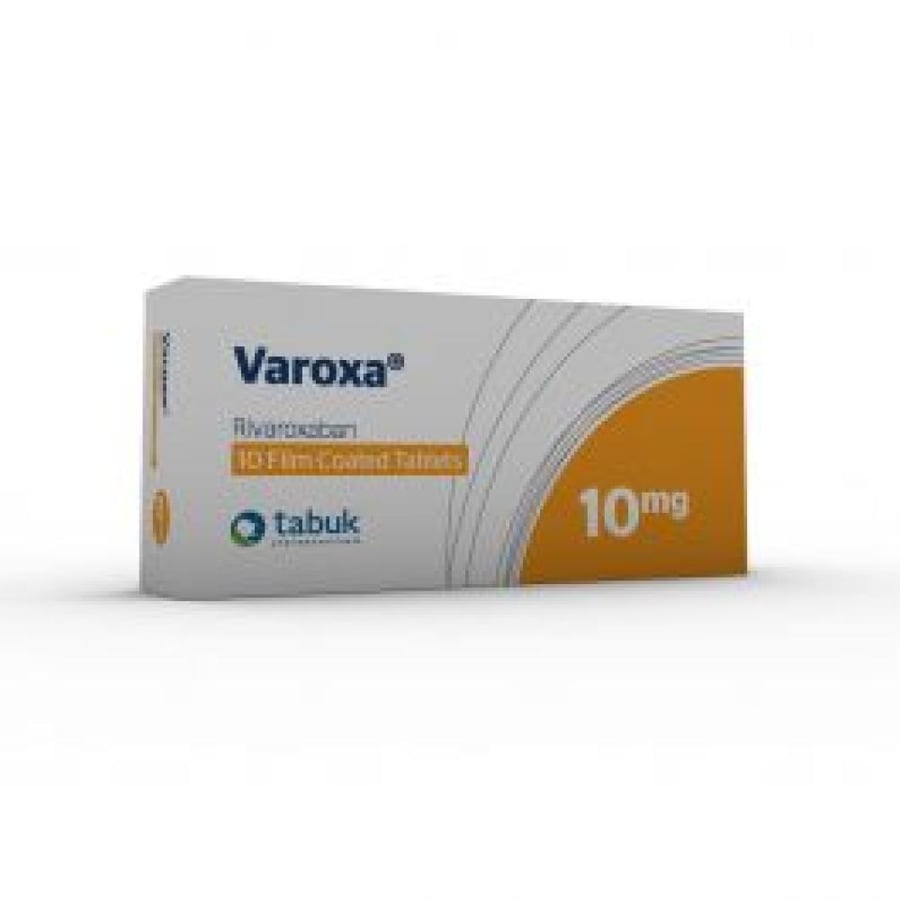
Faroxa 10 mg 30 tablets
237.60ر.س
Out of Stock
Product description
Rivaroxaban 10 mg coated tablets
What is Rivaroxaban and what is it used for?
- Rivaroxaban is used in adults for:
- Prevent blood clots in your brain (stroke) and other blood vessels in your body if you have a form of irregular heartbeat called nonvalvular atrial fibrillation.
- Treat blood clots in the veins of your legs (deep vein thrombosis) and in the blood vessels of your lungs (pulmonary embolism),
- To prevent recurrence of blood clots in the blood vessels of your legs and/or lungs.
Do not take rivaroxaban:
- If you are allergic to rivaroxaban or any of the other ingredients of this medicine
- If you are bleeding heavily
- If you have a disease or condition in any part of your body that increases your risk of serious bleeding (such as a stomach ulcer, injury or bleeding in the brain, or recent brain or eye surgery)
- If you are taking blood thinning medications (such as warfarin, dabigatran, apixaban, or heparin), except when changing anticoagulant therapy or while receiving heparin through an IV or arterial line to keep it open.
- If you have liver disease that increases your risk of bleeding
- If you are pregnant or breastfeeding
Warnings and Precautions:
- Take special care with rivaroxaban.
- If you have an increased risk of bleeding, as in certain conditions (such as severe kidney disease, lung disease, if you have an artificial heart valve,
- If you are taking other medications to prevent blood clotting, if you have bleeding disorders or stomach or intestinal diseases
- If you have an artificial heart valve
- If you know you have a condition called antiphospholipid syndrome (an immune system disorder that increases your risk of blood clots),
- Tell your doctor who will decide if your treatment needs to be changed.
- If your doctor decides your blood pressure is unstable or if other treatment or surgery is planned to remove a blood clot from your lungs
Possible side effects of rivaroxaban:
- These include low red blood cells that can make the skin pale and cause weakness or shortness of breath, bleeding in the stomach or intestines, bleeding in the genitourinary system, and nosebleeds,
- Bleeding gums, bleeding eyes, bleeding into tissues or a body cavity (hematoma, bruise), coughing up blood, bleeding from the skin or under the skin, bleeding after surgery,
- Bleeding blood or fluid from a surgical wound, swelling of the extremities, pain in the extremities, poor kidney function (which can be seen in tests done by your doctor), fever, stomach pain,
- Indigestion, feeling or being sick, constipation, diarrhea, low blood pressure, decreased general strength and energy (weakness, fatigue), headache, dizziness, rash, itchy skin.
Other medications and rivaroxaban:
- Tell your doctor if you are taking any of the following medications:
- Certain medications for fungal infections (such as fluconazole, itraconazole, voriconazole, posaconazole), unless they are applied only to the skin
- Ketoconazole tablets (used to treat Cushing's syndrome—when the body produces too much cortisol)
- Some medications for bacterial infections (such as clarithromycin and erythromycin)
- Some antiviral medications for HIV/AIDS (such as ritonavir)
- Other medications to reduce blood clotting (such as enoxaparin, clopidogrel, or vitamin K antagonists such as warfarin and acenocoumarol)
- Anti-inflammatory and pain-relieving medications (such as naproxen or acetylsalicylic acid)
- dronedarone, a medication used to treat abnormal heart rhythms
- Some medications to treat depression
- Certain medications to treat epilepsy (phenytoin, carbamazepine, phenobarbital)
- St. John's wort, an herbal product used to treat depression
- Rifampicin, an antibiotic.
How to take rivaroxaban:
- To prevent blood clots in the brain (stroke) and other blood vessels in the body
- The recommended dose is one rivaroxaban 20 mg tablet once a day.
- If you have kidney problems, the dose may be reduced to one 15 mg rivaroxaban tablet once a day.
- If you need a procedure to treat a blocked blood vessel in your heart, there is limited evidence to reduce the dose to one rivaroxaban 15 mg tablet once a day in addition to an antiplatelet medicine such as clopidogrel.
- To treat blood clots in the veins of your legs and blood clots in the blood vessels in your lungs, and to prevent blood clots from occurring again.
- The recommended dose is one rivaroxaban 15 mg tablet twice daily for 3 weeks. For treatment after 3 weeks, the recommended dose is one rivaroxaban 20 mg tablet once daily.
- After at least 6 months of blood clot treatment, your doctor may decide to continue treatment with either one 10 mg tablet once a day or one 20 mg tablet once a day.
- If you have kidney problems and are taking one rivaroxaban 20 mg tablet once a day, your doctor may decide to reduce your dose for treatment after 3 weeks to one rivaroxaban 15 mg tablet once a day if your risk of bleeding is greater than your risk of having another blood clot.
How to store rivaroxaban:
- Keep this medicine out of the sight and reach of children.
- Do not use this medicine after the expiry date printed on the carton. The expiry date refers to the last day of that month.
- This medicine does not require any special storage conditions.
*The dosage form and route of administration of rivaroxaban 2.5 mg and 10 mg coated tablets should be determined according to the therapeutic indication and severity of the disease for each individual patient.

From Jeddah