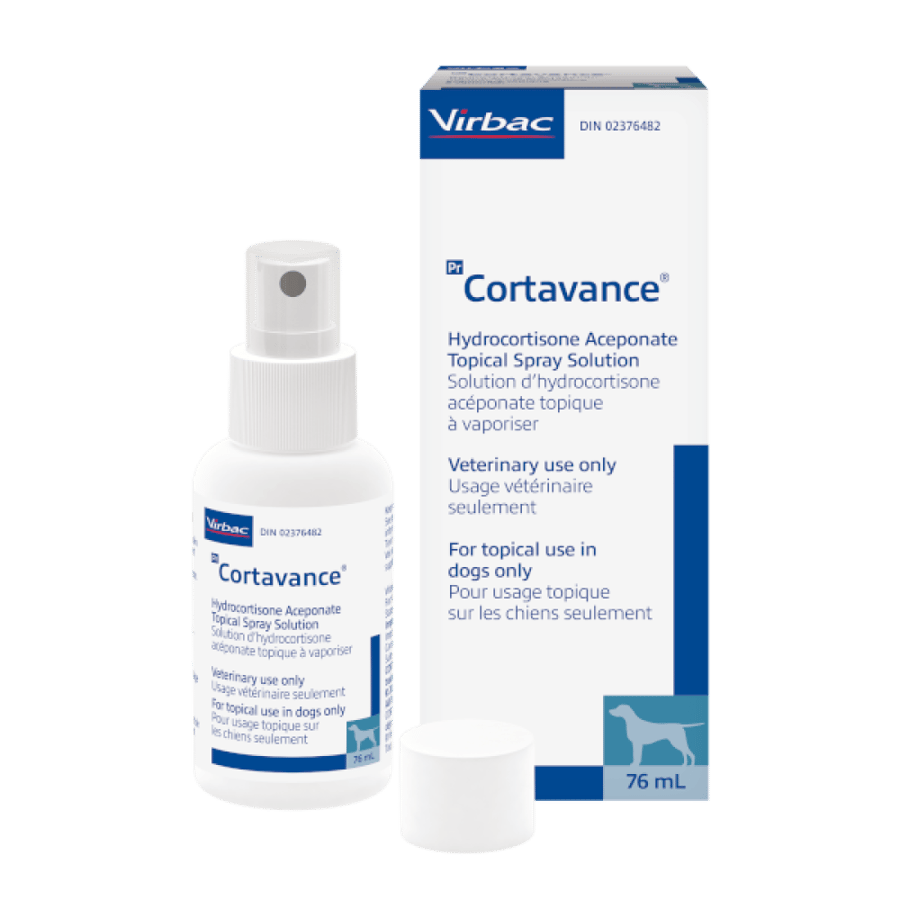
Virbac Cortavance topical Spray treatment to relieve pruritus and skin inflammation - 76 ml
75ر.س
Product description
Virbac Cortavance topical Spray treatment to relieve pruritus and skin inflammation - 76 ml
Product Overview
Cortavance Topical Spray Solution is a localized dermatological treatment formulated to relieve pruritus and skin inflammation in canine patients.
- Active Ingredient: Hydrocortisone aceponate (HCA).
- Target Species: Dogs only.
- Form and Application: Topical spray solution designed for direct application onto affected skin areas.
- Primary Purpose: Provides targeted, rapid relief from itching and inflammatory skin conditions without causing systemic disruption.
Key Ingredient and Functional Benefits
- Targeted Anti-Inflammatory Action: Features hydrocortisone aceponate, a highly lipophilic steroid that rapidly penetrates the epidermal and dermal layers to resolve inflammation directly at the site of skin irritation.
- High Safety Profile: Formulated as a pro-drug that acts locally in the skin before metabolizing into weaker compounds upon entering the bloodstream, greatly reducing the risk of systemic side effects.
- No Rubbing Required: Applied via a fine spray mist that absorbs quickly into the skin without requiring manual massage, reducing discomfort on sensitive skin.
Indications for Use
Cortavance Topical Spray Solution is indicated for:
- Symptomatic relief of inflammatory and pruritic dermatoses in dogs.
- Management of localized skin allergies, redness, and itching associated with allergic dermatitis.
- Soothing acute skin irritations without disrupting skin integrity.
Administration and Usage Guidelines
- Method of Application: Spray directly onto the affected skin areas from a short distance, ensuring coverage of the inflamed lesions.
- Dosing Protocol: Apply according to veterinary instructions based on the extent and severity of the skin condition.
- Ease of Use: Spray presentation allows for quick, clean, and precise application over localized lesions.

From Riyadh
Questions you might have