
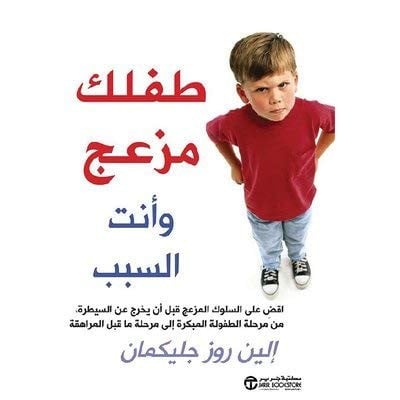
Your child is annoying and you are the reason
46ر.س
Product description
Your child is annoying and you are the cause by Elin Rose Glickman ... It may seem that the small child shouting at the standing parents in the checkout line wants Bubble Gum, and it may seem that the child who reached third grade when he turns his gaze in boredom wants his parents to be more understanding of him, and it may seem that the teenager who wants to wear a short skirt not appropriate for public morals but wants fame and to attract others' attention; but what they really need is to set boundaries and appropriate expectations. What they really need are real opportunities to learn discipline, show responsibility, increase self-confidence, have self-respect, and respect those around them. What they really need is for us - parents - to take control. To tell them: "No, stop that." To tell them they do not have to behave in an annoying way to attract our attention, or to get what they want. To tell them that we love them enough to teach them better ways to behave. It may seem that the annoying children who are obedient to their parents get what they want in the short term; but this is not what we want for our children in the long run, and they themselves do not want to become like that. So, how do we prevent our children from becoming annoying, or from continuing to bother us? This book will help you recognize those situations where we allow our children - or perhaps encourage them - to bother us, how we see our children and the way we raise them as others see it, and how to change wrong patterns to improve things for the benefit of our children and those around them, as well as for our families and ourselves. And how we develop and become the parents our children deserve. Even if those children are now lying on the couch, with their feet on the coffee table, shouting for some soda, go ahead and pour them the drink (and don’t forget the ice cubes), but warn them that this will be the last time; things are about to change.
Author: Elin Rose Glickman
Topic: Family, Psychology
