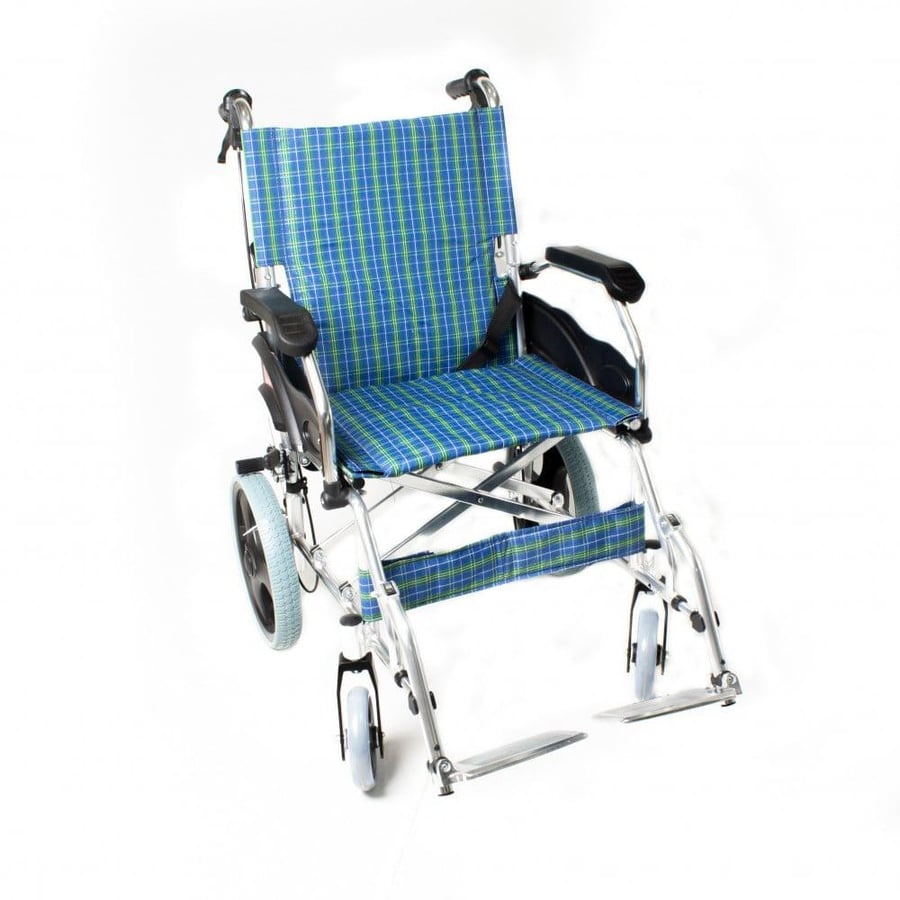
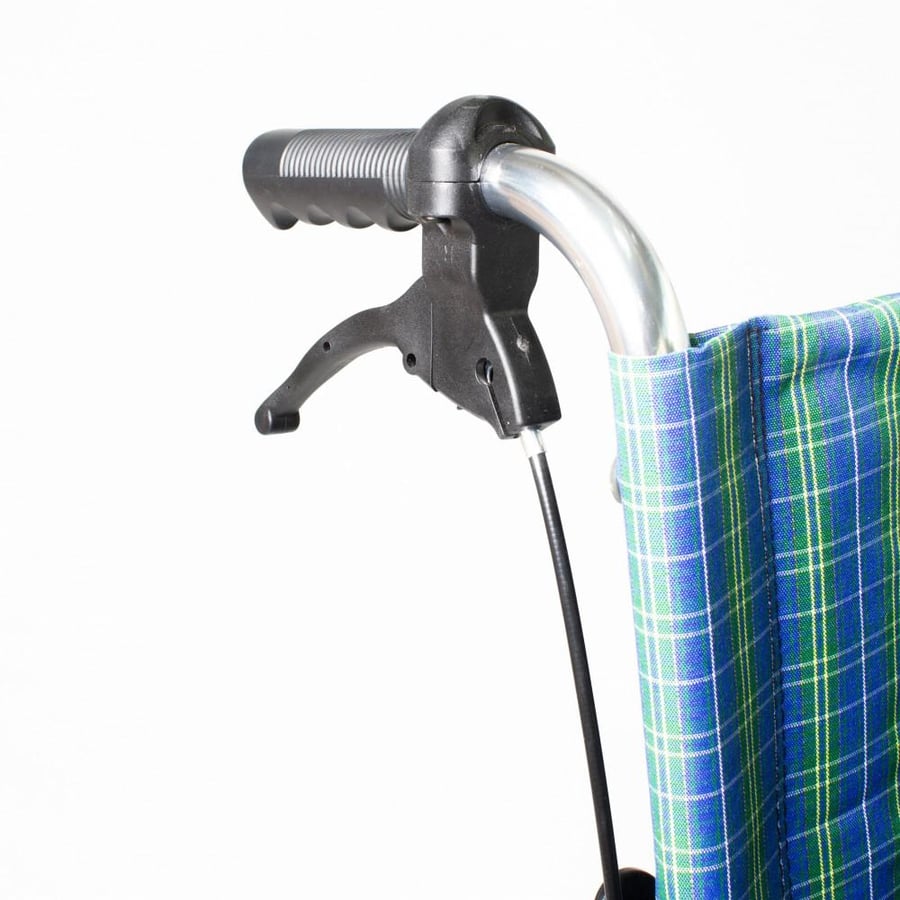

Aluminum chair with checkered cover, small size, model 863
549ر.س
Out of Stock
Product description
Indications for use: patients who suffer from temporary disability or permanent inability to walk for various reasons such as:
• age-related difficulties
• neurological problems
• genetic problems
• bone joint damage in the lower limbs
• muscular disability of the lower limb
• inability to move after surgery
Contraindications:
• patients weighing more than 120 kg
• patients under 12 years old
Description:
• armrest with transfer handles
• quick-release wheels
• footrest adjustable in height, removable, and rotatable to facilitate mobility
• anti-tip system to reduce backward tilt, decreasing the risk of wheelchair overturning
• pelvic support belt prevents slipping or falling from the wheelchair
• strong solid steel frame with double cross support
• padded, comfortable nylon seat and backrest
********************************************************************************************************************************************************************************************************************************************
Do you know how to choose the appropriate manual wheelchair?
Before we go into details, you should know that generally there are two types of wheelchairs: manual wheelchair and electric wheelchair.
The manual wheelchair suits the user who can push themselves, or has someone to help, or if the user's need for the wheelchair is temporary, or if the wheelchair use is infrequent and intermittent, or if the user needs it to be lightweight and foldable for easy transfer and storage (for loading into a car or airplane, for example, or for storing at home after use).
As for the electric wheelchair, it suits the user who cannot push themselves or has no one to help, and also suits the user who prefers to move freely and easily both at home and outside.
In this article, we will discuss how to choose the suitable manual wheelchair, its types, and its different features.
To determine the appropriate manual wheelchair and avoid secondary injuries to the user, the most important thing is to understand the user's mobility and transfer ability.
From this understanding, we can select the most suitable wheelchair and the best features that meet their needs.
To understand the user's mobility, we need to answer some questions about the user:
First question: if the user can walk, do they need assistance when walking on uneven ground?
When walking on uneven ground, do they need to use crutches or a walker (or other walking aids) to help maintain balance and prevent falling?
If the user feels (and is confident) that these walking aids (crutches, walker, etc.) are sufficient, then they do not necessarily need to use a wheelchair.
However, in some circumstances, it may be appropriate to use a wheelchair, especially if the user is a child or elderly and suffers from cognitive impairment, as they might wander and get lost easily when away from their caregivers or family.
Second question: if the user can walk, do they need to hold onto fixed objects around them or lean on them to balance and feel stable?
For example, when walking from the bedroom to the living room, do they lean on the walls, sofa back, or door handle to balance and avoid falling?
If the answer is yes, then they need an aluminum wheelchair, lightweight and foldable.
This type of manual wheelchair is useful in case of a temporary injury that makes walking very difficult or impossible but only for a limited period, such as fractures or leg surgeries, among others.
It is also suitable for elderly people who experience weakness and need to use the wheelchair intermittently, not constantly.
Sometimes they walk with assistance, and sometimes they use the wheelchair.
In any case, if the wheelchair user will sit in it for more than half an hour a day, it is very essential to use a special seat cushion, especially for elderly patients, because prolonged pressure can cause skin ulcers.
Extended sitting affects not only the skin of the buttocks but also the lower arms and back, which can also develop skin ulcers, so armrests should be covered with soft materials, and the back of the chair should also be made of soft materials.
Third question: if the user cannot walk, can they comfortably get up from the sitting position?
If the wheelchair user cannot stand up alone, how do they transfer to and from the chair?
How will they move between the wheelchair and the bed, toilet chair, or car?
In all cases, whether they rely on themselves, need assistance, or are carried, the hand and leg supports (mentioned earlier in the aluminum chair) can get in the way and make transfer difficult.
Therefore, in this case, the hand and leg supports on the wheelchair should be movable or easily removable and reattachable.
This feature will greatly facilitate transfer, as the patient will not need to stop; they just need to detach the armrest and rotate the leg support, then transfer their body independently or with help.
This makes the process easier, faster, and requires less effort from the user and helper.
By the way, when the leg supports can fold inward, it makes storage easier because the chair's size becomes smaller and requires less storage space.
In addition to the above, some users cannot walk at all, such as those with spinal cord injury and paralysis in the legs, but their upper body and arms are strong, and they are naturally active and move and transfer frequently.
In this case, the best option is a sports wheelchair.
This wheelchair is very lightweight, but its structure is very strong, and it moves easily and quickly.
Fourth and final question: if the user cannot walk, do they need additional trunk support while sitting in the chair?
If the user cannot sit independently in the wheelchair (leaning to the side or at risk of falling out), they need a special wheelchair that supports their back and head while sitting to prevent falling or injury.
This type of wheelchair has a tall backrest, supporting the entire back and head, and there are three types:
- tilting wheelchair (tilts backward)
- reclining wheelchair (the entire backrest reclines)
- a combination of both, allowing any of these features to be used.
The first type, when tilted backward, reduces pressure on the buttocks and back, thus decreasing the risk of skin ulcers.
The second type allows full recline, making it easier for caregivers to perform tasks that cannot be done while the user is sitting, such as changing diapers or cleaning the body with a wet sponge.
Summary:
There is no such thing as the best wheelchair, but there is the most suitable wheelchair.
We summarized the types of manual wheelchairs, and each is suitable for different cases.
If you cannot decide and need help, contact us; our team is specialized and ready to assist you in choosing the most appropriate wheelchair.
General wheelchair:
Most used in hospitals, heavy and uncomfortable, not recommended for long trips.
Aluminum wheelchair:
Lightweight and easy to carry, suitable for those who can walk but unsteadily.
Transport wheelchair:
Suitable for patients who cannot stand easily and need to transfer to and from the chair frequently during the day, with removable and adjustable foot and arm supports to make transfer easier and safer.
Sports wheelchair:
Best for patients who cannot walk but have a strong upper body. Very light, durable, and fast-moving.
Tilt-back wheelchair:
Suitable for patients who cannot sit independently; tilting back allows the patient to recline partially without the risk of slipping forward or falling off.
Reclining wheelchair:
Allows full recline, suitable for patients who cannot sit independently and need special care.
Tilt-back with reclining back:
Allows partial or full recline, suitable for all patients with upper body weakness.

From Mecca