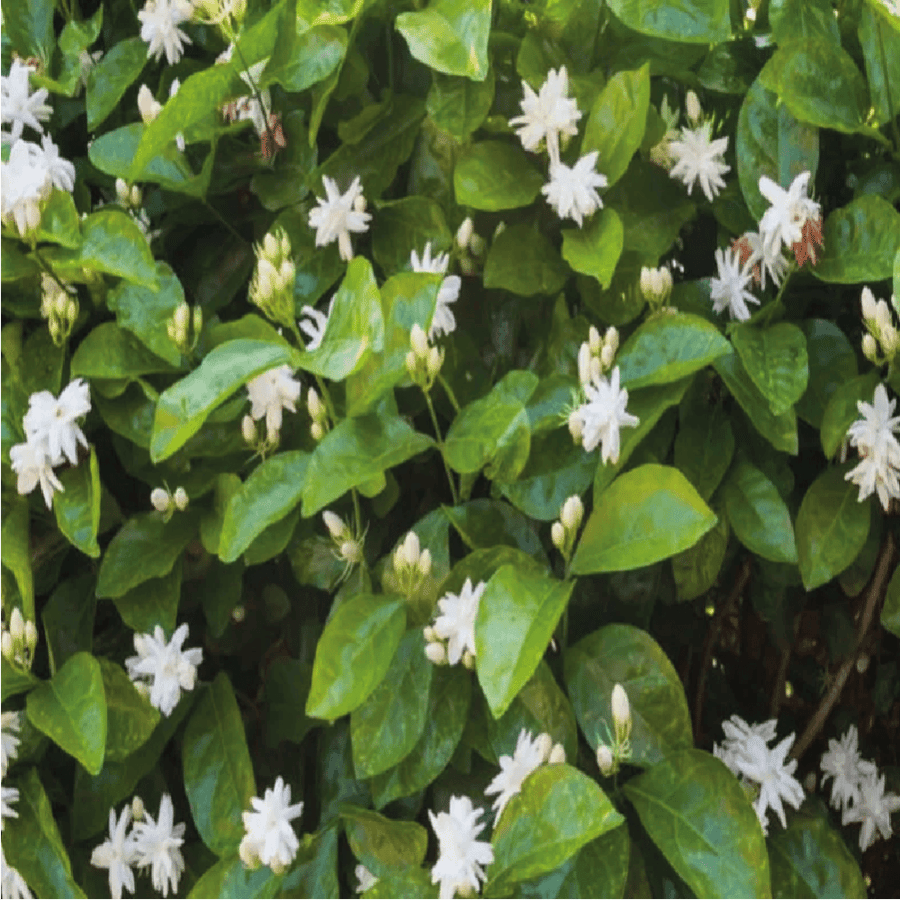


Jasmine or Gizan jasmine or Arabic jasmine and called in English Jasminum arabian
16.10ر.س
Product description
The prices displayed do not include shipping fees, which may vary depending on the destination. Please note that: the product size may vary slightly, ranging between 50cm - 20cm.
Note: The images shown here of the product illustrate its features and appearance after planting, caring for it, and providing all its needs as shown in the plant description.
Arabian Jasmine or Jizan Jasmine is an aromatic plant with beautiful white flowers and a strong fragrant scent, making it a popular plant for many. This type of jasmine is characterized by its large white flowers that usually bloom at night and spread their strong fragrance in the air.
Plant description:
Leaves: Arabian jasmine leaves are simple, pointed, and dark green.
Flowers: White, large, with a strong and distinctive scent. The flowers gather in small clusters.
Stem: Branching and climbing, requiring support to grow well.
Ways to care for Arabian jasmine:
Light: Arabian jasmine needs bright, indirect sunlight, so it is best to place it near a sunny window.
Watering: Water the jasmine regularly to maintain soil moisture, but avoid overwatering which can lead to root rot.
Soil: Arabian jasmine prefers rich, well-draining soil.
Fertilizing: Fertilize the jasmine regularly during the growing season with a balanced liquid fertilizer.
Pruning: Prune the jasmine regularly to maintain its shape and increase flower density.
Temperature: Arabian jasmine prefers moderate and warm temperatures.
Humidity: The jasmine loves a humid environment; you can increase humidity around the plant by periodically misting it with water.
Common problems and tips:
Lack of flowering: The reason for jasmine not flowering may be insufficient light, lack of fertilization, or overwatering.
Yellowing leaves: This may be caused by lack of water, overwatering, or nutrient deficiency.
Leaf drop: Sudden temperature changes or pest infestation may cause leaf drop.
Additional tips:
Propagation: Arabian jasmine can be propagated by stem cuttings.
Pests and diseases: Arabian jasmine may be affected by insects such as aphids and scale insects, which can be controlled with appropriate pesticides.
Note: The needs of Arabian jasmine may vary slightly depending on environmental conditions and climate.

From Al Kharj
Questions you might have