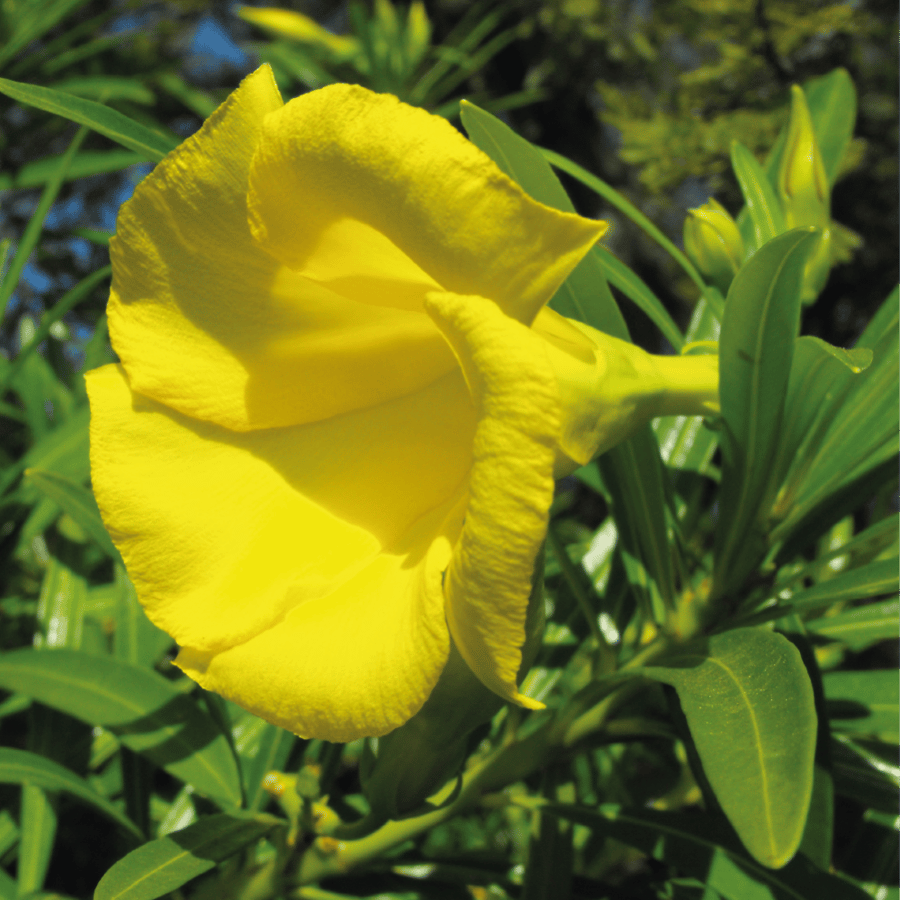


Thevetia or what is called Thevetia peruviana
26.45ر.س
Out of Stock
Product description
The displayed prices do not include shipping fees, which may vary depending on the destination. Please note that: the product size may vary slightly, ranging between 170cm - 140cm.
Note: The images shown here of the product illustrate its features and appearance after planting, care, and providing all its needs as shown in the plant description.
The Thymus plant, or as it is known as yellow Dufla, is an evergreen shrub characterized by the beauty of its bright flowers and shiny leaves. It is considered a common ornamental plant in gardens and landscapes, but it requires some special care due to its toxicity.
Description of the Thymus plant:
Leaves: Thymus leaves are long, narrow, shiny, and dark green.
Flowers: Thymus flowers are colored in bright shades such as yellow, orange, and pink, and are shaped like a cone or bell.
Fruits: Thymus produces oval-shaped fruits containing toxic seeds.
Size: The Thymus tree can reach several meters in height.
Ways to care for the Thymus plant:
Light: The Thymus plant needs full sun exposure to bloom well.
Watering: Thymus should be watered regularly, especially during summer, ensuring excess water drains properly.
Soil: Thymus prefers well-draining sandy soil.
Fertilizer: Thymus can be fertilized with a balanced fertilizer once a month during the growing season.
Pruning: Thymus can be pruned to maintain its shape and increase density.
Temperature: Thymus tolerates heat and drought but does not tolerate frost.
Important notes:
Toxicity: All parts of the Thymus plant are toxic if leaves or any parts are ingested, so caution should be taken when handling it, especially around children and pets.
Diseases and pests: Thymus may be affected by scale insects and mealybugs, which can be controlled with appropriate insecticides.
Benefits of the Thymus plant:
Decorative: Thymus is a beautiful ornamental plant that adds a touch of beauty to any garden.
Endures harsh conditions: Thymus is characterized by its ability to withstand drought and heat, making it suitable for planting in hot areas.
Additional tips:
When planting Thymus in pots, choose large-sized pots with good drainage.
Thymus can be propagated by seeds or cuttings.
Wear gloves when handling Thymus to avoid poisoning.
In short, the Thymus plant is a beautiful and easy-to-care-for plant, but it requires some special attention. With proper care, you will be able to enjoy the beauty of its flowers for many years.

From Al Kharj