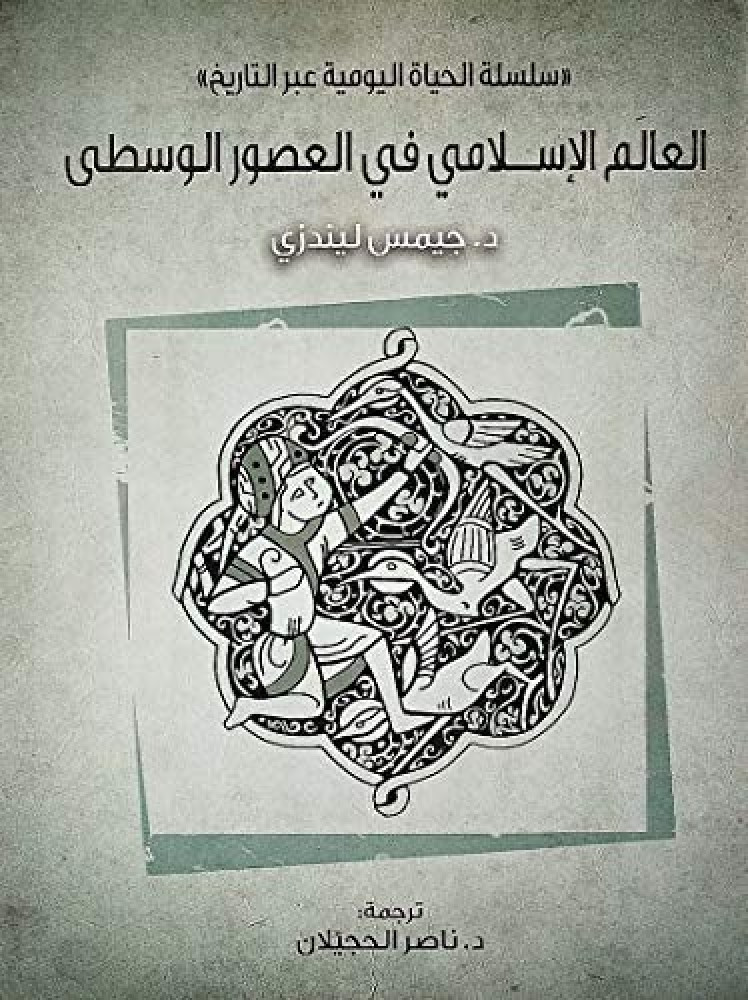
The Islamic world in the Middle Ages
60ر.س
Product description
Translation: Dr. Nasser Al-Hajilan
Publication Year: 2012
Edition: 1
Number of Pages: 422 pages
Cover: Hardcover
Publisher: Dar Kalima for Translation
The author of the book, James Lindsay, attempts to present "the Islamic world in the Middle Ages" to the American reader and the English-speaking audience in general. The author emphasized in the introduction that his book is a general overview of Islamic history in the Middle Ages from the perspective of those who lived during that era; therefore, it includes citations from Arabic texts written at that time, especially poems which he considers the primary artistic form of that period.
The author chose to focus on the main regions of the Islamic world during the Middle Ages, which are the Arabian Peninsula, Damascus, Baghdad, and Cairo, sometimes referring to other places to illustrate the continuity and diversity within Islamic societies.
The book is divided into seven chapters, starting with an overview of important topics in those eras. Then, "Arabian Peninsula" is given a chapter discussing various topics, limited to the era of Prophethood. The third chapter focuses on "Wars and Politics," highlighting military techniques of that period, as well as the concept of Islamic Jihad, conquests, Crusades, and others.
The fourth chapter is concerned with "Cities," following the daily life of the populations in Damascus, Cairo, and Baghdad at that time. After that, the chapter on "Rituals and Worship" discusses the five pillars of Islam, which represent the rhythm of daily life for Islamic communities.
Then, the sixth chapter, titled "Interesting and Entertaining Facts," presents a wide range of topics related to daily life that were not covered in the previous chapters.
This book is considered one of the important works that dealt with the history of daily life in the Middle Ages for the Islamic world, approached from a Western perspective, revealing aspects of what Islamic civilization contributed in fields such as political system, military strength, economic capacity, civil society, and intellectual and scientific research.
