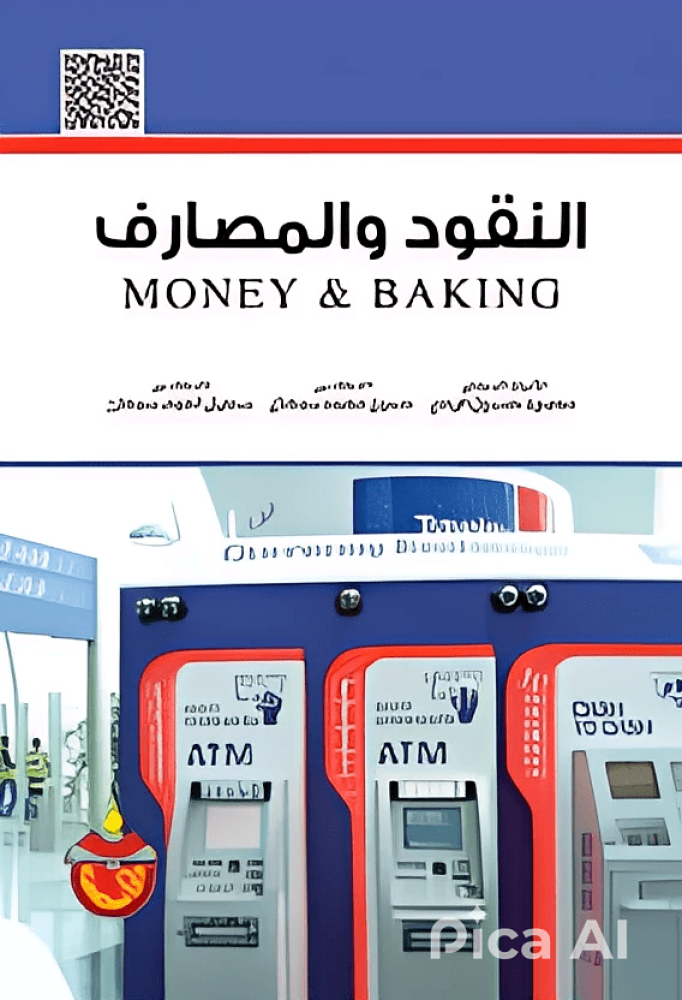
Money and banks for Dr. Mahmoud Hussein Al-Wadi and others
63ر.س
Product description
All members of contemporary societies use money in its current form in their daily lives, and they deal with banks to save their money or obtain loans or facilities within them. Many writings have been written in the field of money and banking, but this book, God willing, is considered non-traditional, as the authors have strived to present this book in its first edition to include an explanation of money, both old and new, because the emergence and development of money occurred with the development of the barter economy (market economy), and this market existed with the presence of barter and through its development. Money began as a commodity accepted for trading as an use value and to satisfy certain needs, then developed to become a tool for individuals to obtain goods and services that satisfy human needs, as a result of exchange, and in barter economies, its value was born from the acceptance of members of society. Since money is an economic phenomenon, meaning it is social and historical, it can only be recognized by following the historical approach and through the development of the barter stage. With the development of money, the role of banks and monetary and financial institutions became prominent, especially since money has become a banking issue in the capitalist economy, and banks have begun to help create money. Therefore, the authors in this book discussed the history of money, old and new, to enable the reader to understand the details of the development of money up to the concept of money in the contemporary era. The book has been divided into two parts: The first discusses money and is divided into five chapters. The first chapter includes an introduction to money and explains the barter or exchange system, types of money including commodity money, metallic, paper, auxiliary, credit, and electronic money, as well as the functions of money. The second chapter provides the reader with information about monetary systems, types of monetary systems, and how the monetary system shifted from the gold standard to the obligatory paper monetary system. The third chapter explains monetary theories, including classical monetary theory and modern monetary theory. The fourth chapter discusses money and the general price level, focusing on the value of money, the general price level, the value of money, and inflation. The fifth chapter covers money in Islam and explains the nature of money in the Islamic financial system. The second part discusses banks and includes five chapters as follows: Chapter six gives the reader a comprehensive idea about commercial banks, their resources, and functions. Chapter seven studies central banks, their relationship with banks and financial institutions, and the financial system in the country. Chapter eight provides an appropriate idea about Islamic banks, and chapter nine about specialized banks. The last chapter explains electronic banking.

From Riyadh