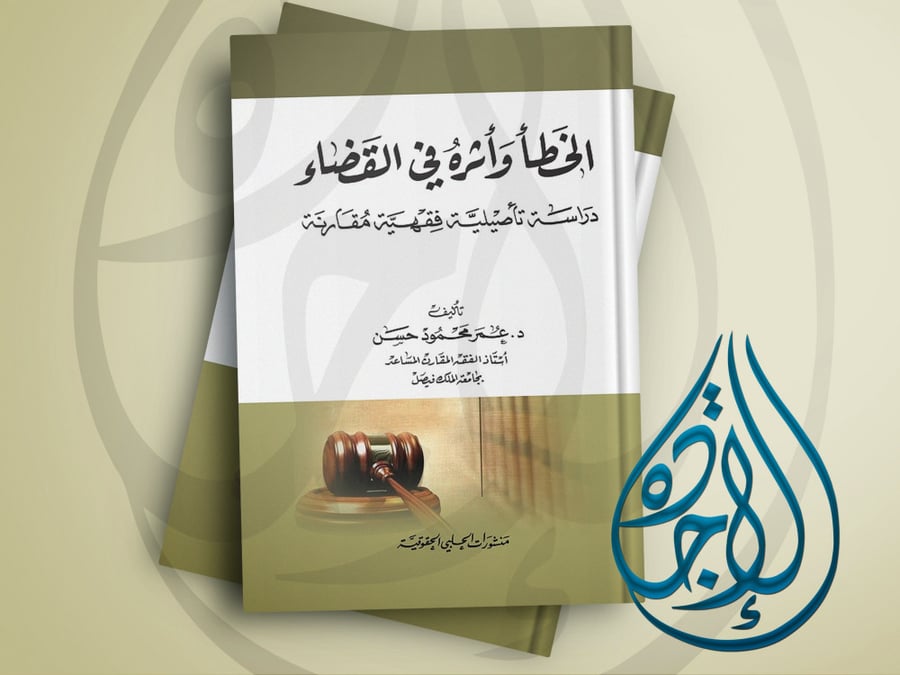
The mistake and its impact on judgment: An analytical jurisprudential comparative study by Dr. Omar Mahmoud Hassan
125ر.س
Product description
The mistake and its effect in judgment: a foundational comparative jurisprudential study
Author: Omar Mahmoud Hassan
Classification: Criminal
Year of publication: 2015
ISBN: 9786144017074
===========================
Contents
Preliminary chapter: The reality of the mistake and the reality of judgment
First section: The mistake: its definition, related terms, its types, its controls, its relation to competence
First requirement: Definition of mistake linguistically and idiomatically
Mistake linguistically
Mistake in terminology
The defining reference
Explanation of the definition and its reservations
Second requirement: Related terms and their difference from mistake
First: Forgetfulness
Second: Error
Third: Ignorance
Third requirement: Types of mistake
First: Considering intention and lack thereof
Second: Considering the direct action of the wrongdoer and its causation
Third: Considering guarantee and non-guarantee
Fourth: Considering its source as suspicion or certainty
Fifth: Considering the act of doing or abstaining from doing
Sixth: Considering its cause
Fourth requirement: Controls of mistake
Fifth requirement: The obligation of the wrongdoer and holding him accountable for the mistake
First: Rules of competence
Definition of competence
Categories of competence
Disorders of competence
Second: Holding the wrongdoer accountable for the mistake
Third: The effect of mistake on the actions of the accountable person
Second section: Judgment: its reality, legitimacy, ruling, pillars, the judge, and his approach in issuing rulings
First requirement: Definition of judgment linguistically and idiomatically
Second requirement: Legitimacy of judgment and its ruling
First: Legitimacy of judgment
Second: Ruling of judgment
Third requirement: Pillars of judgment
Fourth requirement: The judge
First: Definition of the judge and his responsibilities
Second: Conditions and attributes of the judge — agreed conditions — differing conditions
Fifth requirement: The judge’s approach in issuing rulings
First: The judge’s approach in his rulings in Islamic jurisprudence
Second: Procedures of trial in positive law
Chapter One: Mistake in testimony
First section: The reality of testimony
First subsection: Definition of testimony, its authenticity, its legitimacy, and its ruling
First: Definition of testimony linguistically and idiomatically
First: Testimony in language
Second: Testimony in terminology
Definition of testimony in Islamic jurisprudence
Definition of testimony in positive law
Third: Comparison between Islamic jurisprudence and law in defining testimony
Second subsection: The validity of testimony
Third subsection: The legitimacy of testimony
Fourth subsection: The ruling of testimony
Second section: Conditions of testimony and acceptance controls with the impact of mistake in it
First requirement: Conditions of testimony and acceptance controls in Islamic jurisprudence
Second requirement: Conditions of testimony and acceptance controls in positive law
Third requirement: Comparison between Islamic jurisprudence and law on the subject of testimony
Fourth requirement: Factors leading to mistake in testimony and their impact
First: Mistakes resulting from weak senses
Second: Influential pathological factors affecting the mind
Third: Psychological illnesses
Chapter Two: Witnesses’ withdrawal from testimony and its return
First section: The reality of withdrawal from testimony
First subsection: Definition of withdrawal from testimony linguistically and idiomatically
Second: Extent of legitimacy of withdrawal from testimony
Third: Conditions for the validity of withdrawal from testimony
Fourth: Causes of withdrawal from testimony
Second subsection: The effect of withdrawal from testimony before issuing the judgment and its consequences
First: Effect of withdrawal before judgment in Islamic jurisprudence
First: Effect on the judge’s ruling
Second: Effect on guaranteeing the right of the witness
Third: The extent of punishment for the one who withdrew from testimony
Fourth: The acceptance of the witness’s testimony in the future
Second requirement: Effect of withdrawal before judgment in positive law
Third requirement: Balancing between Islamic jurisprudence and law regarding withdrawal before judgment
Third section: The effect of withdrawal after judgment and before enforcement and its consequences
First: Effect of withdrawal after judgment and before enforcement in monetary cases
Second: Effect of withdrawal after judgment and before enforcement in cases of hudood and blood money
Third: Balancing between Islamic jurisprudence and law regarding withdrawal after judgment and before enforcement
First: The impact of withdrawal on the judge’s ruling
Second: Impact regarding responsibility of the witness who withdrew criminally
Fourth section: The effect of withdrawal after judgment and after enforcement and its consequences
First: Effect of withdrawal after enforcement in monetary cases
Second: Effect of withdrawal after enforcement in hudood and blood money cases
Third: The stance of positive law on withdrawal after enforcement in criminal matters
Fourth: Balancing between Islamic jurisprudence and law regarding withdrawal after enforcement in hudood and blood money cases
First: Effect of withdrawal on the ruling
Second: Responsibility of the witness who withdrew criminally
Chapter Two: The effect of mistake in issuing judicial rulings
First section: The reality of the judicial ruling
First subsection: Introduction to judicial ruling, its conditions, and its legal classification
First: Definition of judicial ruling linguistically and idiomatically
First: In Islamic jurisprudence
Second: In positive law
Second subsection: Conditions of judicial ruling
First: Conditions in Islamic jurisprudence
Second: Conditions in positive law
Third subsection: Classification of judicial ruling and avenues of error on it
First: Classification of judicial ruling
Second: Avenues of error on judicial ruling
Second subsection: The effect of mistake in changing the nature of the thing
First: The legal description of the ruling
First: Opinions of jurists on the matter (Does the judge’s ruling execute outwardly and inwardly?)
Second: The case scenario
Third: Evidence for the opinions and discussion of them
Fourth: The preferred opinion in the matter
Second requirement: The validity of the judicial ruling
First: The extent of the ruling’s validity
Second: Manifestations of the ruling’s validity
Third requirement: The effect of the ruling in positive law
First: The binding authority of the res judicata
Second: The case leaving the court’s jurisdiction
Third: Declaration of rights
Fourth: Strengthening of the right
Second chapter: Responsibility of the judge for errors in his rulings
First section: Protecting the judge, his duties, and responsibility for his rulings
First requirement: Protecting the judge
Second: The judge’s duties
Third: Responsibility of the judge for his rulings
Second section: Avenues of error on the judicial ruling
First: Error resulting from the judge’s effort and its consequences
Second: Error based on false cause and its consequences
Third: The judge’s error in issuing the ruling
First: The effects of intentional error by the judge
Second: The effects of unintentional error by the judge
Third: Responsibility of the judge for his mistakes in positive law
Chapter Three: The effect of mistake in executing judicial rulings
First section: The reality of executing the judicial ruling
First subsection: Definition of execution, its legitimacy, importance, nature, and the jurists’ stance on execution
First: Definition of execution linguistically and idiomatically
Second: Legitimacy of executing judicial rulings
Third: The importance of executing judicial rulings
Fourth: Nature of execution and the jurists’ stance on executing judicial rulings
First: Nature of execution
Second: Jurists’ stance on executing judicial rulings
Second subsection: Executing the judicial ruling
First: Conditions for executing the judicial ruling
Second: The competent authority in executing the judicial ruling
First: The competent authority for execution in Islamic jurisprudence
Second: The competent authority for execution in positive law
Chapter Two: Mistake of the judge in executing the judicial ruling
First subsection: Types of execution
First requirement: Types of execution in Islamic jurisprudence
First: Voluntary execution
Second: Coercive execution
Second requirement: Types of execution in positive law
First: Voluntary execution
Second: Coercive execution
Third requirement: Balancing between Islamic jurisprudence and law on types of execution
Second subsection: Mistake of the judge in executing the judicial ruling
First: Mistake in executing the hudood and ta’zir in Islamic jurisprudence and its consequences
Second: Mistake of the judge in executing qisas in Islamic jurisprudence and its consequences
Case scenario: Organ transplantation after amputation in hudood or qisas — old and contemporary jurists’ opinions — Islamic Fiqh Assembly decision on transplanting an organ removed in hudood or qisas
Third: Mistake in executing the judicial ruling in positive law and its consequences
Fourth: Compensation for the accused upon proving innocence
Conclusion

From Riyadh
Questions you might have