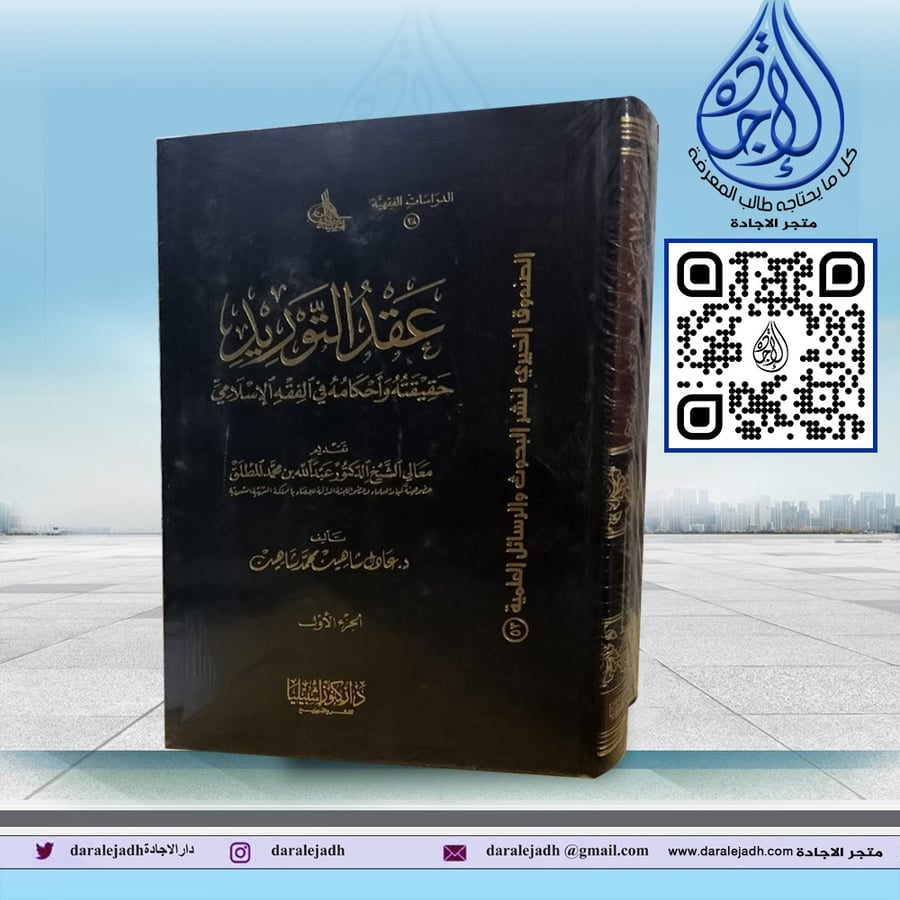
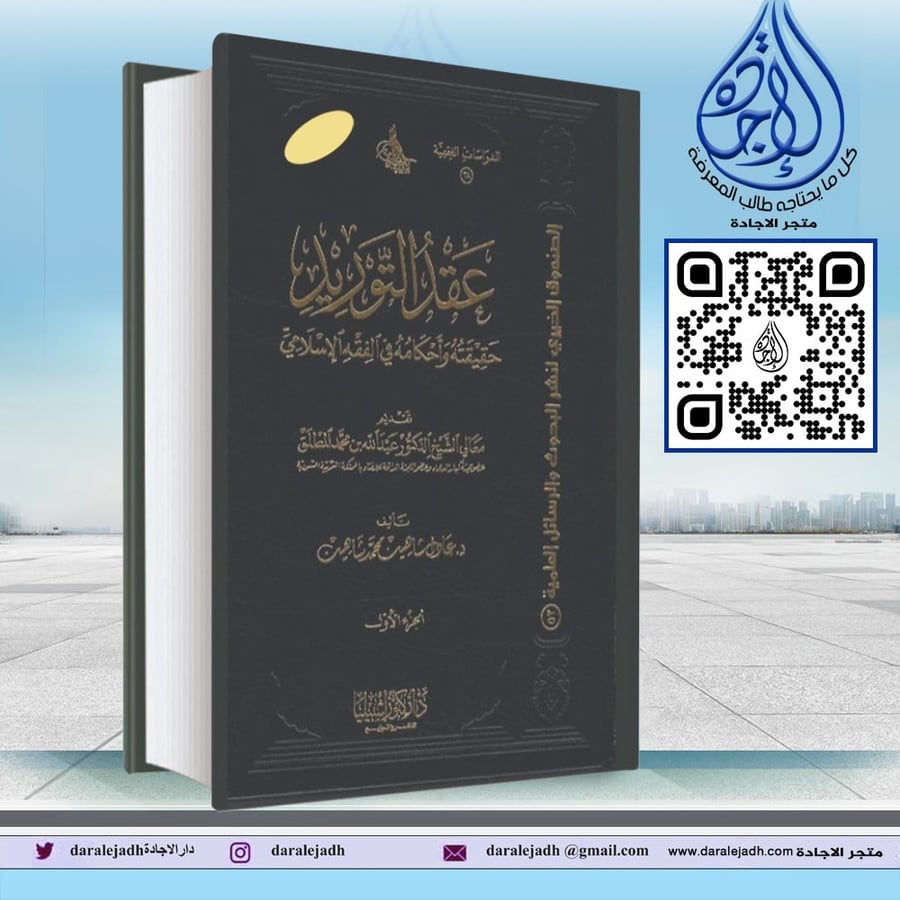
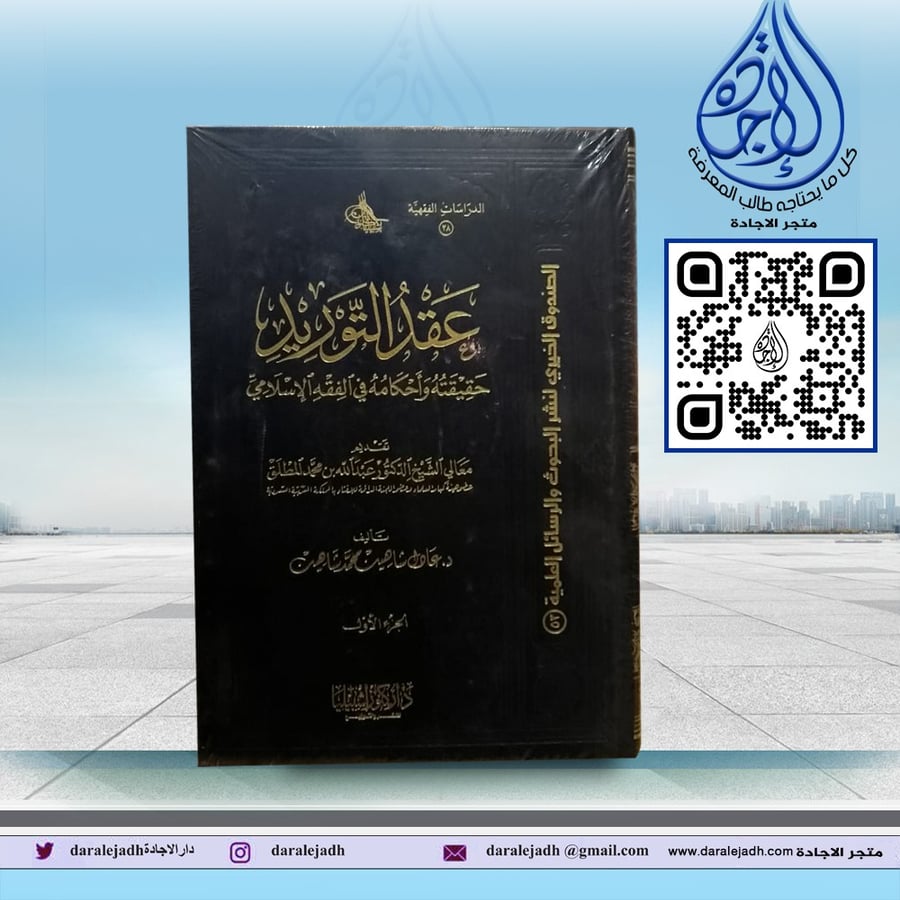
The supply contract: its reality and rulings in Islamic jurisprudence (two volumes) by Dr. Adel Shaheen Muhammad Shaheen
52ر.س
Product description
On the supply contract: its reality and rulings in Islamic jurisprudence: the introduction: I clarified it with the contract in its general and specific meaning, and that what is meant in the chapter of financial negotiations is the contract in its specific meaning, then I mentioned the terms related to the term contract, such as obligation, disposition, covenant, and promise, then I mentioned the types of contracts based on several considerations.
First chapter: I talked about the reality of the supply contract, where I defined supply linguistically and terminologically, then I mentioned the types of the supply contract based on several considerations, then I followed that with the pillars of the supply contract, then its general and specific conditions, then I mentioned the common forms of the supply contract whether it is a single payment or installments.
Second chapter: I mentioned the jurisprudential classification of the supply contract, so I prepared for that by clarifying the origin of contracts, then I mentioned the general controls for them. The classification of the contract was based on two principles: the first: attaching the supply contract to similar contracts and various sales such as the Salam contract, the Istisna’a, the sale of the absent by description, the sale of the described in the auction outside the Salam method, the sale of the barter, and the sale of what is repeatedly harvested, deriving it based on a binding agreement for both parties.
The second principle: classifying the supply contract based on the rule of the implication and the prohibition, so I mentioned the implication for the supply contract, which is the general and specific need, then I mentioned the prohibition in the supply contract, such as entering into a sale of what you do not have, or containing grossly uncertain elements, and I clarified that the supply contract does not contradict a Sharia text or an accepted rule.
Then I mentioned the attributes of the supply contract regarding its obligation or lack thereof, opposition or non-opposition, timing or lack thereof, and its ruling and legitimacy, emphasizing that it is a valid and legitimate contract.
Third chapter: I mentioned the methods of concluding the supply contract, which include:
1- Tendering: where I explained its meaning, its Islamic ruling, how it is conducted, its types, and rulings, and the ruling on concluding the supply contract through it.
2- Practice: where I explained its meaning, its ruling, its types, and the ruling on concluding the supply contract through it.
3- Direct insurance: I explained what is meant by direct insurance, the cases in which contracting is done via direct insurance, the controls for that, and the ruling on concluding the supply contract through direct insurance.
Fourth chapter: on the rulings of the supply contract, where I discussed the validity of conditions in the supply contract and the types of conditions, then I explained the implementation of the supply contract regarding the obligations of both the supplier and the importer, then I addressed issues related to its enforcement, the option in the supply contract and its types, then I discussed what relates to guarantee in the supply contract through the supplier’s guarantee and the importer’s guarantee.
I also discussed the termination of the supply contract, whether it is a natural end with the completion and fulfillment of all obligations, or an unnatural end before its completion, either by rescinding the contract, termination, the death of one of the contracting parties, bankruptcy, destruction of the subject, violation of specifications and conditions, or the issuance of regulations that prevent its implementation.
Fifth chapter: it relates to the application of the supply contract in the Kingdom of Saudi Arabia, where I mentioned the conclusion of the supply contract in the Kingdom through public or limited competition, with some contracts as examples.
Then I mentioned concluding the supply contract through practice, noting that this method is not used in the Kingdom, and then I explained its conclusion via direct insurance, with examples of some contracts.
Conclusion: I listed the most important research findings and key recommendations.
Indexes: where I included a set of comprehensive scholarly indexes that serve the thesis.

From Riyadh