

International Law of the Seas according to Saudi regulations for lawyer Ali Sulfiq Al-Enzi
92ر.س
Product description
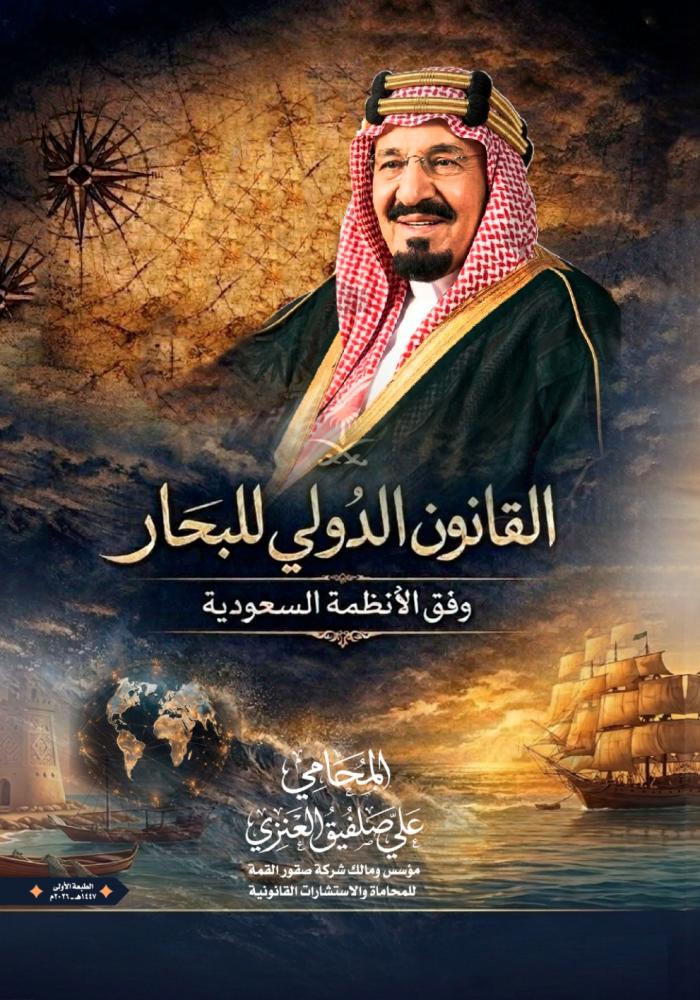
International Law of the Seas according to Saudi regulations
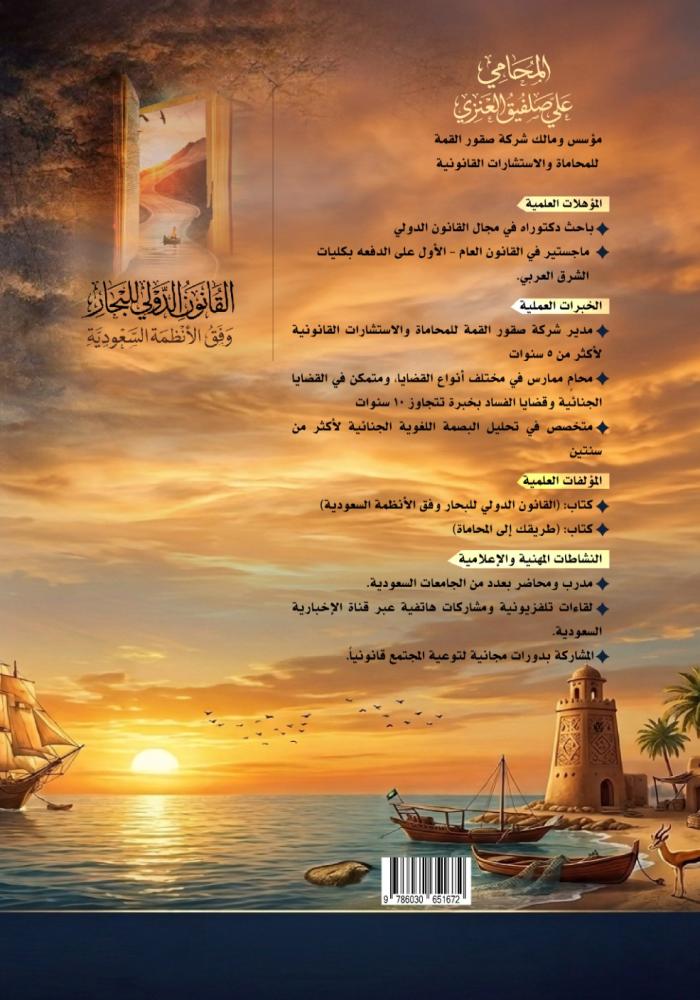
Ali Salfeeq Al-Anzi
First Edition: 1447 AH – 2026 AD
Number of pages: 298
About the book
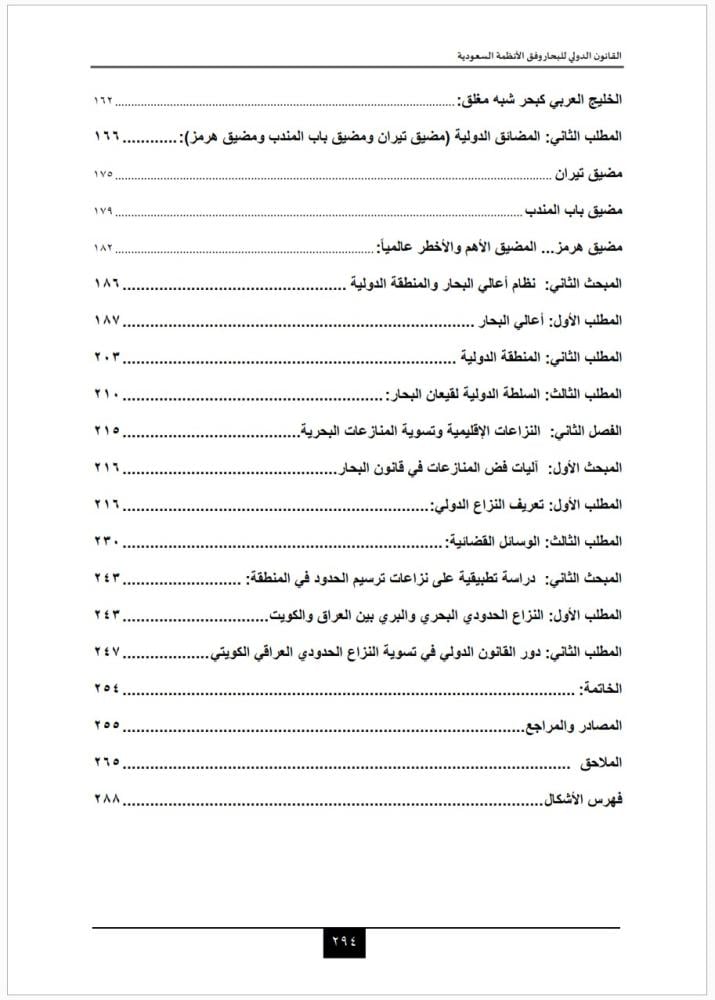
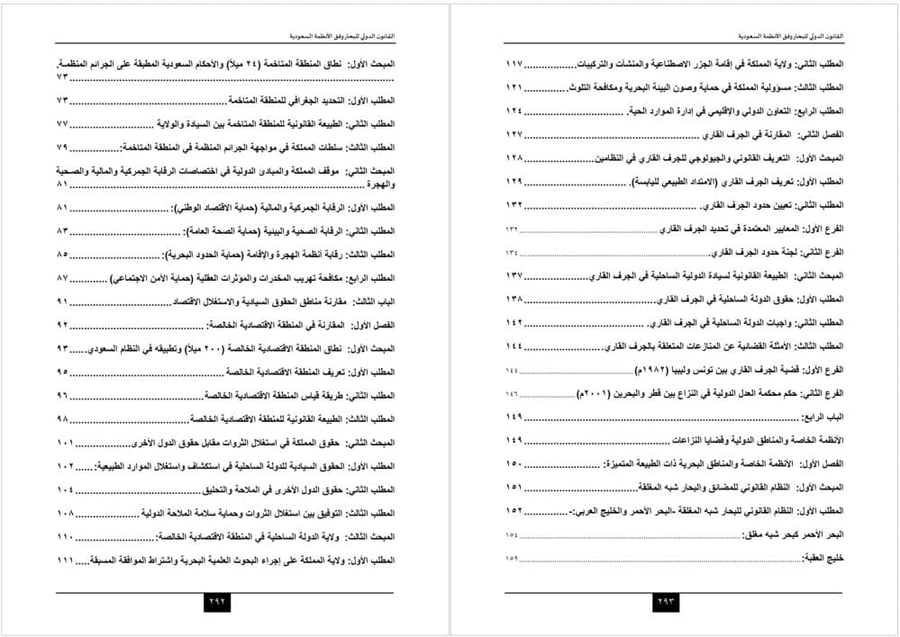
Studying the international law of the seas is one of the strategic pillars that regulate legal and economic interactions in global water spaces. This law has developed historically through a series of international agreements and customs, culminating in the formulation of the United Nations Convention on the Law of the Sea 1982. This has resulted in a conceptual framework and comparative methodology aimed at defining the scope of application of these rules and clarifying their significant impact on national legal systems. The Saudi maritime system stands out as a living model of the interaction between national sovereignty and international obligations, especially given the Kingdom’s unique geographical location along the Red Sea and the Arabian Gulf. This necessitated adopting precise rules for measurement and delimitation based on the concepts of the baseline and maritime delimitation established in international judiciary.
The authority of the coastal state extends over its maritime zones according to the principle of diminishing sovereignty as one moves towards the high seas, where internal waters and the territorial sea are subject to absolute sovereignty ensuring the state's protection of its borders while guaranteeing innocent passage for foreign ships. This is followed by the contiguous zone, which represents a scope for regulatory authority to combat organized crimes, illegal immigration, and to protect social and economic security. This comparison extends to include customs, health, and environmental control authorities, ensuring that the Kingdom exercises its sovereign rights in the exclusive economic zone and the continental shelf, where efforts are concentrated on natural resource exploration and the establishment of artificial islands, with full commitment to protecting the marine environment and developing marine scientific research systems in accordance with the new environmental system and regional bodies concerned with preserving the resources of the Red Sea and the Gulf of Aden.
In light of current geopolitical challenges, the systems governing international straits and semi-enclosed seas are of utmost importance due to the specificity of vital passages surrounding the Kingdom, such as the Tiran Strait, Bab el-Mandeb, and the Strait of Hormuz. These require a delicate balance between international navigation and regional sovereignty. Moving to the scope of the high seas and the international zone, the activation of dispute resolution mechanisms through diplomatic and judicial means, such as the International Tribunal for the Law of the Sea (ITLOS), is necessary to ensure maritime peace and security. Practical disputes in the northern Gulf and regional Saudi agreements with Kuwait, Yemen, Egypt, and other countries exemplify lessons learned in the art of legal negotiation and boundary delimitation, enhancing the ability of the Saudi national judiciary to enforce international judgments and apply the law of the sea with rigorous professional standards.

From Riyadh