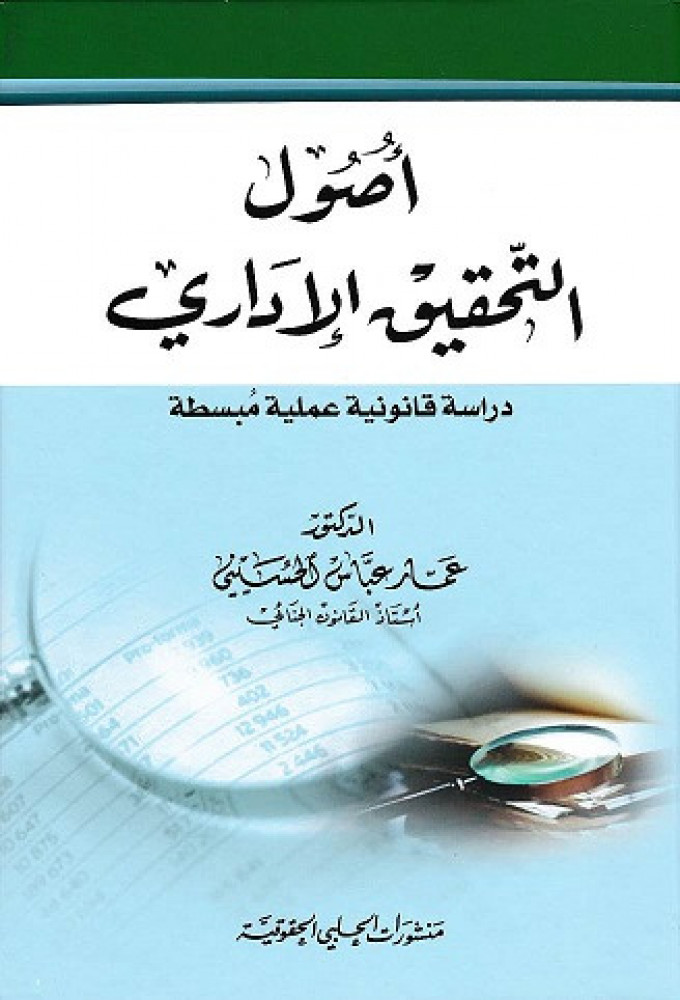
Principles of Administrative Investigation A Practical Legal Study Simplified by Dr. Ammar Abbas Al-Husseini
115ر.س
Product description
Basics of Administrative Investigation
A Practical Simplified Legal Study
Author: Ammar Abbas Al-Husseini
Classification: Administrative
Publication Year: 2016
ISBN: 9786144016886
Contents of the Book
Introduction
Chapter One: Introduction to Administrative Investigation
Section One: Concept of Administrative Investigation
Requirement One: Definition of Administrative Investigation
Subsection One: Linguistic meaning of Investigation
Subsection Two: Administrative Investigation as a legal term
Requirement Two: Addressing the issue of the term
Characteristics of Administrative Investigation
Importance of Administrative Investigation
Subsection One: Importance to society
Subsection Two: Importance to employees
Subsection Three: Its significance for administration
Requirement Three: Independence of disciplinary responsibility from criminal responsibility
Section Two: Subjects of Administrative Investigation
Requirement One: Public employee
Requirement Two: Some categories of contractors "temporary employees"
Requirement Three: Employee under trial
Requirement Four: Exceptions from compliance with the discipline law
First: Members of the armed forces
Second: Members of internal security forces
Third: Members of the National Intelligence Agency
Fourth: Judges
Fifth: Members of the Public Prosecution
Section Three: Administrative Investigation and Criminal Investigation
Requirement One: Aspects of similarity
First: In terms of purpose
Second: In terms of the principle of legality of sanctions
Third: In terms of the principle of personal sanctions
Fourth: In terms of the nature of each
Fifth: In terms of documentation
Sixth: In terms of the prohibition of ignorance of the law as a defense
Seventh: In terms of evidence collection procedures
Eighth: In terms of the philosophy of punishment
Requirement Two: Aspects of difference
First: In terms of cause
Second: In terms of the harmed interest
Third: In terms of those with whom the investigation is conducted
Fourth: In terms of the competent investigating authority
Fifth: In terms of the permanence of the investigating authority
Sixth: In terms of the principle of legality
Seventh: In terms of precautionary procedures related to investigation
Eighth: In terms of the separation of powers between accusation and investigation
Ninth: In terms of the source of punitive harm
Tenth: In terms of interpreting doubt
Eleventh: In terms of the nature of decisions issued from investigation
Section Four: Extent of the Administrative Investigation’s Compliance with Final Criminal Judgments
Requirement One: Cases where the administrative investigation is not bound by the final criminal judgment
Subsection One: Criminal judgment of conviction covered by general pardon
Subsection Two: Judgment issued with a suspended sentence
Subsection Three: Judgment of acquittal due to absence of criminal intent
Subsection Four: Judgment of acquittal due to incomplete elements of the crime
Subsection Five: Judgment of acquittal due to nullification of procedures
Subsection Six: Judgment of acquittal or release due to doubt or insufficient evidence
Subsection Seven: Judgment of acquittal due to widespread suspicion
Requirement Two: Cases where the administrative investigation is bound by the final criminal judgment
Subsection One: Concurrence of criminal and disciplinary descriptions in the committed act
Subsection Two: Final criminal judgment of conviction
Subsection Three: Final judgment of acquittal due to lack of physical evidence of the criminal facts
Subsection Four: When a general pardon decision includes disciplinary effects
Chapter Two: Referral to Administrative Investigation
Section One: Nature of referral to administrative investigation
Requirement One: Definition and importance of referral
Requirement Two: Legal nature of referral to administrative investigation
Requirement Three: Prerequisites of referral
Requirement Four: Means of detecting administrative violations
Subsection One: Complaint before the administrative authority
Subsection Two: Informing the authority of the violation
Subsection Three: Addressing judicial authorities for the administration
Subsection Four: Administrative supervisor’s oversight
Subsection Five: Oversight by oversight bodies
Subsection Six: Media publications
Section Two: Justifications for referral to investigation
Requirement One: Disciplinary violation attributed to the employee
Requirement Two: Extent of possible subjecting disciplinary violations to the principle of legality (whether disciplinary violations can be limited)
Requirement Three: Job duties
Subsection One: Positive duties
Subsection Two: Negative duties
Subsection Three: Duties outlined in codes of conduct
Requirement Four: Presumption of knowledge of job duties
Requirement Five: Elements of disciplinary violation
Subsection One: Material element
Subsection Two: Moral element
Section Three: The authority responsible for referral and form of referral
Requirement One: The authority responsible for referral
Requirement Two: Form of referral to administrative investigation
Section Four: Impact of employee promotion on referral to investigation
Chapter Three: Authority of Administrative Investigation
Section One: Investigation Committee
Requirement One: Meaning of the investigation committee
Subsection One: Definition of the investigation committee
Subsection Two: Autonomy of the disciplinary investigation committee
First: Differentiating the investigation committee from the special “inclusion” committee
Second: Differentiating the investigation committee from other committees
Subsection Three: Legal nature of the investigation committee
Subsection Four: Jurisdiction of the investigation committee
Requirement Two: Composition of the investigation committee and its permanence
Subsection One: Permanent investigation committee
First: Meaning of permanent committees
Second: Criteria for the permanence of committees
Subsection Two: Temporary investigation committee
Subsection Three: Advantages and disadvantages of committee permanence
First: Advantages of permanence
Second: Disadvantages of permanence
Requirement Three: Organic composition of investigation committees
Subsection One: Number of members
Subsection Two: Legal member requirement
Subsection Three: Conditions for members of the investigation committee
First: Job experience
Second: Neutrality
Third: Member’s rank not less than the rank of the employee referred to investigation
Subsection Four: Replacing a committee member
Requirement Four: Imposing disciplinary punishment without an investigative committee
Section Two: Authority in case of employee secondment, transfer, or assignment
Requirement One: Employee secondment or assignment
First: Single case under disciplinary system
Second: When disciplinary system differs
Requirement Two: In case of employee transfer
Section Three: Characteristics of the investigator and influencing psychological factors
Requirement One: Qualities required in the investigator
First: Belief in their mission
Second: Seriousness and activity in work
Third: Sharpness and accuracy of observation
Fourth: Strong memory
Fifth: Precision in work
Sixth: Confidentiality of investigation secrets
Seventh: Courage
Eighth: Patience
Ninth: Calmness
Requirement Two: Psychological factors affecting the investigator
First: Influence of public opinion
Second: Bitter experiences
Third: Effect of suggestion
Fourth: Feeling of inadequacy
Fifth: Premature formation of opinion
Sixth: Tendency to favor one side
Seventh: Tension
Eighth: Arrogance
Ninth: Narrow-mindedness
Chapter Four: Procedures of Administrative Investigation
Section One: Holding the investigation session
Requirement One: Preliminary meeting of the investigation committee
Requirement Two: Necessity of all members’ presence
Requirement Three: Necessity of employee’s attendance at the investigation session
First: First opinion: conducting investigation in absentia despite employee notification
Second: Second opinion: conducting investigation in absentia when investigation interest requires
Third: Third opinion: conducting investigation with employee’s refusal to receive notification
Fourth: Fourth opinion: presence of a proxy for the absent employee
Requirement Four: Confidentiality of investigation sessions
Requirement Five: Procedures of administrative investigation
Requirement Six: Necessity of adhering to accusations against the employee
Requirement Seven: Speed of investigation and completion
Section Two: Disciplinary sanctions and main principles governing their imposition
Requirement One: Disciplinary sanctions
First: Warning
Second: Reprimand
Third: Salary deduction
Fourth: Reproof
Fifth: Salary reduction
Sixth: Grade demotion
Seventh: Dismissal
Eighth: Dismissal from service
Requirement Two: Main principles governing sanctions
Subsection One: Legality of sanctions
Subsection Two: Personal nature of sanctions
Subsection Three: Unity of sanctions
Subsection Four: Suitability of sanctions to the committed violation
First: Objective standards
Second: Personal standards
Chapter Five: Recommendations of the Investigation Committee and their ratification
Requirement One: Recommendation to impose disciplinary punishment
Subsection One: Concept and forms of recommendation
First: Recommendation not to hold the employee accountable and closing the investigation
Second: Recommendation to impose one of the sanctions
Third: Recommendation to refer the employee to the competent court
Subsection Two: Requiring consensus or majority of committee members in recommendations
Requirement Two: Ratification of the investigation committee’s recommendations
First: Ratification by the President of the Republic and Prime Minister
Second: Ratification by the minister or head of a non-ministerial authority
Third: Ratification by the head of the department
Fourth: Ratification by the Council of Ministers
Section Four: Administrative investigation report and notifying the employee of the decision
Requirement One: Administrative investigation report
First: Preamble
Second: Details of investigation and procedures
Third: Attachments to the investigation report
Fourth: Recommendations of the investigation committee
Fifth: Justification of the recommendation
Sixth: Page numbering of the report
Seventh: Signatures of investigation committee members
Requirement Two: Notifying the employee of the investigation decision
Requirement Three: Saving the disciplinary decision in the employee’s personnel file
Section Five: Withdrawal of hand (suspension)
Requirement One: Concept of withdrawal of hand
Subsection One: Definition of withdrawal of hand
Subsection Two: Legal nature of withdrawal of hand
Subsection Three: Purpose of withdrawal of hand
Requirement Two: Forms of withdrawal of hand
First: Mandatory withdrawal of hand
Second: Permissible withdrawal of hand
Requirement Three: Conditions for withdrawal of hand
First: Issuance of withdrawal by a competent administrative authority
First case: Mandatory withdrawal
Second case: Permissible withdrawal
Second: Existence of legal reason for withdrawal
Requirement Four: Duration of withdrawal of hand
Requirement Five: Effects of withdrawal of hand
Subsection One: Removing the employee from their duties
Subsection Two: Suspending half of the salary
First: In case of dismissal or dismissal from service with withdrawal of hand
Second: In case of punishment with salary reduction or grade demotion
Third: In case of acquittal or release of the employee with withdrawal of hand
Fourth: When the employee is punished with warning, reprimand, salary cut, or warning with withdrawal of hand
Fifth: In case of employee’s death with withdrawal of hand
Subsection Three: Suspension of financial allocations
Subsection Four: Not promoting the employee during the withdrawal period
Requirement Six: Legality of challenging the withdrawal of hand decision
Chapter Five: Evidence Methods in Administrative Investigation
Introductory Section: Specificity of evidence in disciplinary field and types of disciplinary evidence
Requirement One: Specificity of evidence in disciplinary field
Requirement Two: Types of disciplinary evidence
Subsection One: Classification of evidence by nature (material and non-material evidence)
First: Material evidence
Second: Moral evidence
Subsection Two: Classification of evidence by relation to the fact to be proved
First: Direct evidence
Second: Indirect evidence "circumstantial evidence"
Subsection Three: Classification of evidence by function
First: Evidence of accusation
Second: Evidence of proof and judgment
Third: Evidence of denial
First: Interrogation
Requirement One: Definition and importance of interrogation
Requirement Two: Basic rules of interrogation
Requirement Three: Guarantees of interrogation
Requirement Four: Confession
Second: Testimony
Requirement One: Definition of testimony and its importance
First: Automatic method
Second: Interrogative method
Requirement Two: Types of witnesses
First: Witnesses of denial
Second: Witnesses of proof
Requirement Three: Rules for hearing witnesses
Requirement Four: Lying in testimony
First: Arbitration of custom and habit
Second: Arbitration of reason
Third: Testing witness senses
Fourth: Examining the witness’s morals
Fifth: Examining the witness’s mental and psychological powers
Sixth: Identifying contradictions in testimonies
Seventh: Using legitimate tricks
Eighth: Unacceptable consistency in testimonies
Ninth: Repetition of testimony
Tenth: Encouraging the witness to tell the truth
Eleventh: Questioning about details and specifics
Twelfth: Comparing testimony with physical evidence
Requirement Five: The evidentiary value of testimony in disciplinary proof
Third: Documents
Requirement One: Definition of written documents and their development
Subsection One: Definition of written documents
Subsection Two: Development of reliance on written documents
Requirement Two: Types of written documents
Subsection One: Official documents
Subsection Two: Ordinary "non-official" documents
Requirement Three: Evidentiary value of written documents
Fourth: Expertise
Requirement One: Meaning of expertise and its importance
Requirement Two: Definition of expert
First: In terms of source of knowledge of the expert
Second: In terms of the experts’ workplaces
Requirement Three: Main rules of expertise
Requirement Four: Evidentiary value of the expert’s report
Fifth: Inspection of the scene (examination)
Requirement One: Definition of inspection
Requirement Two: Importance of inspection in administrative investigation
Requirement Three: Basic and technical rules of inspection
Sixth: Evidence
Requirement One: Meaning of evidence
Requirement Two: Types of evidence
Subsection One: Legal evidence
Subsection Two: Judicial "investigative" evidence
Requirement Three: Evidentiary value of evidence in disciplinary proof
Seventh: Search
Requirement One: Definition of search
Requirement Two: Importance of search in administrative investigation
Requirement Three: Legal rules of search
Requirement Four: Technical rules of search
First: Speed in reaching the place to be searched
Second: Taking precautionary measures
Third: Maintaining complete confidentiality during search
Fourth: Observing manners with those being searched
Fifth: Diligence in observation
Chapter Six: Guarantees of Administrative Investigation
Section One: Guarantees prior to conducting the investigation
Requirement One: Notifying the employee of the investigation and informing him of the charge
Subsection One: Concept of notifying the employee
Subsection Two: Form of notification in the presence of investigation
Subsection Three: The period granted to the employee to attend the investigation
Requirement Two: Reviewing the files of the charge and employment
Subsection One: Reviewing the disciplinary charge file
Subsection Two: Reviewing the personal file (service file)
Section Two: Contemporary guarantees for conducting administrative investigation
Requirement One: Right to defense during investigation
Subsection One: Confronting the accused employee with the disciplinary charge
Subsection Two: Employee’s right to consult a lawyer
Subsection Three: Prohibition of swearing the accused in
Subsection Four: Presumption of innocence
Subsection Five: Using witnesses of denial and cross-examining witnesses of proof
Subsection Six: Right of the employee to remain silent
Requirement Two: Writing the investigation report
Subsection One: Concept and importance of writing the investigation
Subsection Two: Exception to the rule of writing the investigation
Subsection Three: Loss of investigation papers
Requirement Three: Justification of the decision imposing disciplinary punishment
Subsection One: Concept of justification
Subsection Two: Importance of justification
First: Importance for the employee
Second: Importance for judicial oversight
Third: Importance for administration
Subsection Three: Rules of justification
First: Presenting the facts
Second: Clarity in justification
Third: Validity of the justification
Fourth: Mentioning the justification within the disciplinary decision
Requirement Four: Impartiality of the investigating authority
Subsection One: Formal appearance of impartiality
Subsection Two: Substantive appearance of impartiality
Section Three: Guarantees following the investigation (appealing the disciplinary decision)
Requirement One: Complaint against the disciplinary decision
Subsection One: Concept and importance of complaint
Subsection Two: Forms of complaint
First: Complaint regarding obligation
Second: Complaint before the authority to which it is submitted
Subsection Three: Conditions of complaint
Subsection Four: Period allowed for complaint
Subsection Five: Form of complaint
Subsection Six: Effects of complaint
Requirement Two: Judicial appeal against the disciplinary decision
First: Origin of the Disciplinary Council
Second: Reasons for appealing the disciplinary decision before the council
Third: Period allowed for appeal before the council
Fourth: Effects of appeal before the council
First: Ratification of the decision
Second: Reduction of the sanction
Third: Cancellation of the sanction
Fifth: Possibility of requesting compensation from the employee
Sixth: Appeal of the Disciplinary Council’s decision before the General Authority of the State Shura Council
First: Ratification of the council’s decision
Second: Reduction of the sanction
Third: Reversal and return to the Disciplinary Council

From Riyadh