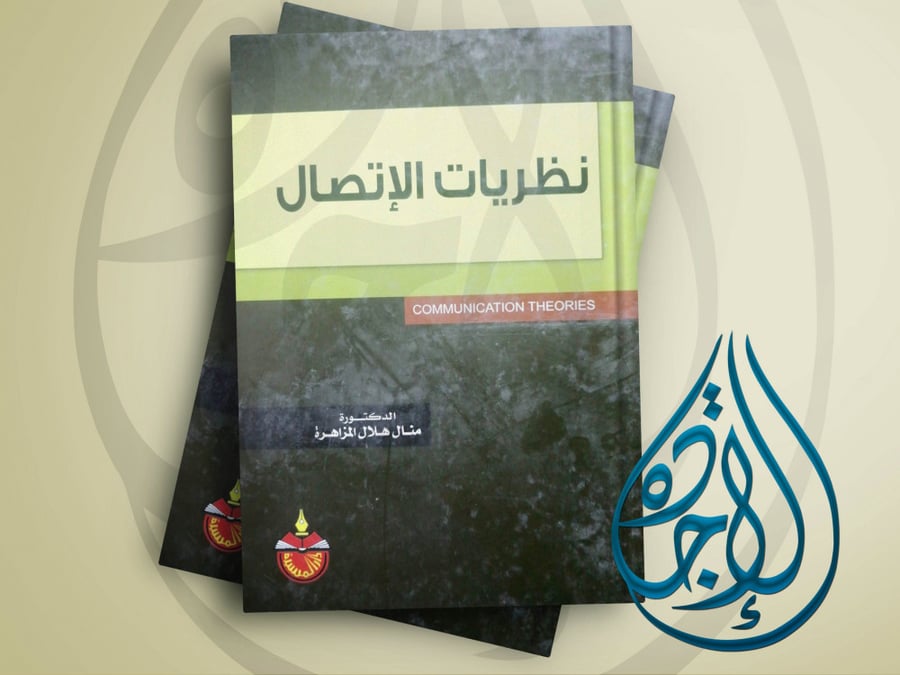
Communication theories Dr. Manal Hilal Al-Muzahira
108ر.س
Out of Stock
Product description
Communication theories Dr. Manal Hilal Al-Mazahra Researchers classify models and communication theories each according to their specialization and according to the field in which they work, so this book came to focus on the models and theories that have developed over the years related to audience use of media, and the types of influence these media have, and media knowledge theories as well as empathy theories because they are considered part of communication. This book contains four main topics related to communication theories, the first of which is definitions of the concept of communication, its elements, and its levels, the second is the functions of mass communication, the third is communication models and their divisions, and finally the main communication theories, where this book is divided into eleven chapters into two parts as follows: The first part of the book covers the first three chapters, where the first chapter discusses the definition of the concept of communication linguistically and terminologically, the elements of the communication process, its types, objectives, and the processes that determine the success or failure of communication in achieving goals, and finally the obstacles to communication. The second chapter presents the functions of mass media, whether at the societal level or at the individual level. As for the third chapter, it focuses in detail on communication models in terms of defining models and the benefits of their use, the difficulties faced in preparing these models in the communication process, the divisions of main communication models, the linear (one-way) models, and the interactive (two-way) models. The second part of the book, starting from the fourth chapter, is dedicated to communication theories, where this chapter presents theories that focus on the use of media by the audience, most notably the Uses and Gratifications theory and the Dependency on Media theory. The fifth chapter is concerned with the theories of the communicator, their role in the communication process, and studies that addressed this concept, the characteristics that the communicator must possess, as well as the factors that make him influential in persuading the audience. It also discusses the Gatekeeping theory, which is related to the study of those responsible for communication, through presenting important studies that focused on the fundamental aspects of the gatekeeper process, the development of this concept, its definitions, principles, and foundations, as well as the factors affecting the work of media gatekeepers, in addition to criticisms directed at this theory. The sixth chapter provides a detailed presentation of the theory of direct influence, which was the first communication theories that appeared in the early twentieth century and was called the Magic Bullet theory or the Hypodermic Needle theory, due to the prevailing belief at the time in the powerful influence of media on the audience. This chapter will address the history of this theory, its core, the hypotheses it was based on, a review of the theories influenced by it, reasons for skepticism about it, and its fall. The seventh chapter reviews the limited effects theories of media that came after the fall of the strong effects theory of media on individuals in the early twentieth century, most notably the Two-Step Flow theory, which discusses its emergence, the studies conducted on it, its core, and hypotheses. This chapter also covers the Diffusion of Innovations theory, its emergence and development, its principles, the stages of adopting ideas and methods, the stages of accepting and spreading innovations, the positives of this theory, an evaluation of it, and its connection to the Bullet theory, as well as the political use of the Diffusion of Innovations theory and criticisms directed at it. The eighth chapter is dedicated to moderate effects theories of mass communication that appeared after the limited effects theories, which aimed to understand the nature of the relationship between mass media and individuals, including the Agenda-Setting theory, Framing theory, and Cultivation theory. It discusses the core and hypotheses of these theories and criticisms directed at this type of theories. The ninth chapter provides a detailed description of the powerful and cumulative effects theories of media that appeared in the 1980s, which assume the strong influence of media, most notably McLuhan’s theory and the Spiral of Silence theory. The tenth chapter deals with theories related to gaining knowledge from media, which appeared in the late 1950s, to study the role of media in education and the relationship between education and exposure to communication media, due to societal development and media development, where their role became providing individuals with information and knowledge. Most important of these theories are the Knowledge Gap theory and the Information Contact theory. Finally, the eleventh chapter discusses empathy theories, which are an integral part of communication, where theories about the foundations of empathy agree that the primary material for expectations is the physical behavior performed by the human, and that human predictions about internal psychological states are based on observable physical behavior. These theories also agree that humans form these predictions using symbols indicating that behavior, and by influencing these symbols, most notably the Inferential Theory of Empathy and the Role-Taking Theory in Empathy. Part One: Communication and its models 1. Chapter One: Communication and its definitions First: Definition of communication The linguistic definition of communication The terminological concept of communication Characteristics of communication Second: Elements of the communication process Source or sender Message Medium or channel Receiver or audience Echo or feedback Effect Third: Types of communication Classification based on language Classification based on the size of participants in the communication process Fourth: Goals of communication Educational and cultural goal Promotional or entertainment goal Social goal Fifth: Processes that determine the success or failure of communication in achieving goals Coding, noise, influence Sixth: Obstacles to communication Material obstacles Personal obstacles Expressive barriers Disparity in level and perception Distraction and inattention Limited response barriers to meaning or symbols Seventh: Effects of media on the audience Changing attitudes and orientations Cognitive change Socialization Excitement Emotional arousal Social control 2. Functions of mass media Introduction Functions of media The informational function Guidance and shaping attitudes and orientations Increasing culture and information Social communication and relations entertainment and amusement advertising and publicity Functions of mass communication media and their uses First: Ways of thinking about the functions of mass media Second: Functions of media for society Third: Functions of media for the individual 3. Communication models and their divisions Introduction Communication models Definition of communication models Benefits of using models Difficulties in preparing communication models Basic considerations in using communication models Divisions of communication models Linear models (one-way) Interactive models (two-way) Part Two: Communication theories 4. Audience use theories of media Introduction Uses and Gratifications theory Linguistic definition of Uses and Gratifications theory The functional approach Origin of the theory Core of the theory Premises of the theory Goals of the theory Achieved goals Elements of the Uses and Gratifications theory Gratifications from media Criticisms of the Uses and Gratifications theory Dependency on media theory Origins and development of the theory Theoretical assumptions Pillars of the theory The first dependency model The integrated dependency model developed in 2000 The perceptual model of dependency process The effect of media content on individuals The first step The second step The third step The fourth step The effects of audience dependency on media First: Cognitive effects Second: Emotional effects Third: Behavioral effects Interactions between dependency theory and other media theories Priority setting theory Knowledge gap theory Uses and gratifications theory Features of dependency theory Criticisms of dependency theory by researchers 5. The communicator and the gatekeeper theory Introduction The effective communicator or the relationships affected during his practice in media institutions Factors that make the communicator influential in persuading the audience Conditions required for the communicator as defined by "David Berlo" Social studies of the communicator Gatekeeping theory Studies and research conducted to develop the gatekeeper concept that followed the communicator The emergence and development of the gatekeeper theory Definition of the gatekeeper theory Who are the gatekeepers Principles and foundations of the media gatekeeper theory Factors influencing the gatekeeper The difference between the communicator and the gatekeeper The function of the gatekeeper Post-theory studies and criticisms of the gatekeeper theory 6. Direct influence theories of media Introduction The Magic Bullet theory or Hypodermic Needle theory Hypotheses of the theory Core of the theory Theories influenced by the direct influence theory Development and skepticism of the direct influence theory The fall of the strong effects theory The Magic Bullet theory Criticisms of the direct influence theory The Magic Bullet theory The end of the theory 7. Limited effects theories of media Introduction The Two-Step Flow theory Hypotheses of the theory The emergence of the theory Studies conducted on it Core and hypotheses of the theory The diffusion of innovations theory, its emergence and development, principles, stages of adopting ideas, acceptance and dissemination of innovations, advantages of this theory, evaluation, and its connection to the Bullet theory, as well as the political employment of the diffusion of innovations theory and criticisms directed at it 8. Moderate effects theories of mass communication Introduction The Agenda-Setting (Priorities) theory Hypotheses of the theory Development of the theory Who sets the media agenda for the masses? Types of priority-setting research Criticisms of the agenda-setting theory Framing theory of media Definition of the theory Origin and development of the theory: frames or framing Hypotheses of framing theory Theories of framing Extension of the agenda-setting theory "Setting the agenda" Functions of framing media Benefits of framing analysis Media framing mechanisms Types of media frames Tools and mechanisms of framing Building news frames and their stages Elements of the media frame Factors influencing the media frame Relationship between framing theory and discourse analysis applications of framing theory Features of the strengths and weaknesses of framing analysis theory Cultivation theory of media emergence and development Concept of cultivation Main hypotheses of cultivation theory The main concepts added to cultivation theory Criticisms of the theory 9. Theories of cumulative (powerful) effects of media Introduction The Marshall McLuhan theory Media communication is an extension of human senses The second hypothesis of McLuhan The medium is the message Division of communication media into hot and cold media Principles of Marshall McLuhan’s theory Criticisms of McLuhan’s theory The Spiral of Silence theory Emergence of the theory Hypotheses of the theory Core of the theory Criticisms of the Spiral of Silence theory 10. Media knowledge theories Introduction The Knowledge Gap theory Emergence and development of the Knowledge Gap theory Hypotheses of the theory Measurement of the theory assumptions of the Knowledge Gap theory Application of the Knowledge Gap theory Variables measuring the Knowledge Gap research Variables explaining the occurrence of the Knowledge Gap Disadvantages of the Knowledge Gap theory Contact theory Hypotheses of the theory Analysis of the Contact theory 11. Empathy theories and their relation to media Definition of empathy terminology The terminological concept of empathy Emergence and development of empathy theory Empathy theories First: Inferential theory in empathy Second: Role-taking theory in empathy Third: Daniel Lerner’s theory about the media’s role in developing the capacity for empathy References

From Riyadh
Questions you might have