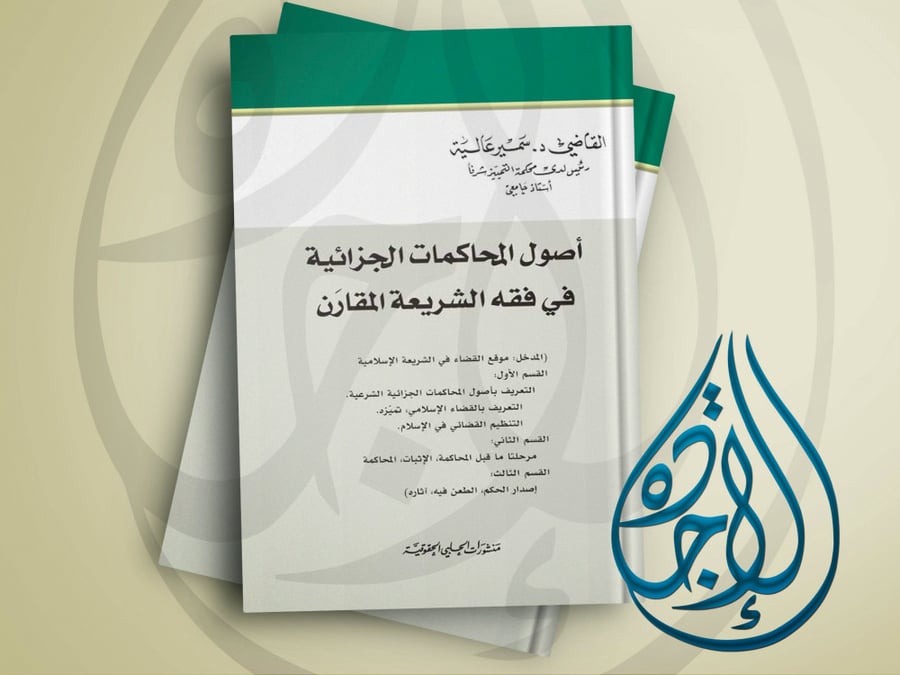
Principles of criminal trials in comparative Islamic jurisprudence by Dr. Samir Alia
86.25ر.س
Product description
Principles of Criminal Procedures in Comparative Shariah Jurisprudence (The Role of Judiciary in Islamic Shariah, Introduction to Principles of Criminal Procedures in Shariah, Introduction to Islamic Judiciary, Its Distinction. Pre-trial stages, Evidence, Trial. Issuance of judgment, its appeal, and its effects) Author: Samir Alia Classification: Principles of Criminal Procedures Year of Publication: 2023 ISBN: 9786144014936 Book Details Number of Volumes: 1 Edition Number: 1 Binding Type: Hardcover Pages: 366 Size: 17*24 Paper Type: White Printing Colors: Black and White Book Content Introduction: The Role of Judiciary in Islamic Shariah (First): Comprehensiveness of Islamic Shariah, rulings of religion, state affairs, and judiciary (Second): - The importance of judiciary in Islam and those who work in it (Third): - The originality of judiciary in Islam and its independence from other authorities (Fourth): - The independence of Islamic judiciary from other authorities (Fifth): - Principles of judiciary in Islam (Sixth): - Reviving the study of judiciary and legislating it (Seventh): - Study plan Section One: Introduction to the principles of Islamic judiciary and its organization Preface and division Chapter One: The concept of judiciary in Islam First: The history of judiciary in Islam Subsection One: Judges before Islam (First): - David and Solomon among the first judges of mankind (Second): - Judiciary among Arabs in the Age of Ignorance Subsection Two: The stages of judiciary in Islam (First): - Judiciary during the time of Prophet Muhammad (Second): - Judiciary during the era of the Caliphs (A) - Judiciary during the time of Abu Bakr (B) - Judiciary during the time of Omar ibn Al-Khattab (C) - Judiciary during the time of Uthman ibn Affan (D) - Judiciary during the time of Ali ibn Abi Talib (Third): - Judiciary during the Umayyad era (Fourth): - Judiciary during the Abbasid era (Fifth): - Judiciary in Lebanon during the Ottoman period Subsection Two: Definition of judiciary in Islam First: The connotation of judiciary (First): - Judiciary in language (Second): - Judiciary in Islamic terminology (Third): - Judiciary in the Qur'an (Fourth): - Judiciary in the Sunnah Chapter Two: Judicial organization in Islam First: The pillars of judiciary in Islam - Listing these pillars Subsection Two: Differentiating judiciary from arbitration and fatwa (First): - Differentiating judiciary from arbitration (Second): - Judiciary and fatwa Second: Judicial organization in Islam Preface and division Section Two: Principles governing Islamic judicial organization Chapter Two: The system of judges in Islam First: The status of the judge and his conditions (First): - The status of the judge in Islam (Second): - Conditions for holding judicial office in Islam (A): - Attributes of the judge in the view of Imam Ali (B): - Attributes of the judge according to Omar ibn Abdul Aziz (C): - Attributes of the judge in general and the eligibility of women for judiciary (D): - Attributes of the judge according to Al-Mawardi (E): - Attributes of judges in Andalusia (F): - Attributes of judges in the Ottoman Majallat al-Ahkam al-‘Adliyyah Second: Rules for appointment, dismissal, and exemption (First): - Appointment rules (A): - Appointment authority (B): - Investigation and testing as conditions for appointment (C): - Age for appointment and retirement (D): - Appointment decree (E): - Income and salaries of judges (Second): Dismissal, resignation, and responsibility of judges (A): - Dismissal of judges (B): - Resignation of judges (C): - Responsibility of judges for their judgments Third: Judicial independence and the duty of discretion in public life (First): - Rejection of interference by rulers and testimony of leaders (Second): - No intercession in judiciary (Third): - Judges only accept written documents in court sessions Fourth: Duty of judges to maintain discretion in their public lives (Morals) (First): - Sale and purchase by judges (Second): - Attending banquets (Third): - Refusing to accept hospitality from litigants (Fourth): - Refusing to receive litigants at home (Fifth): - Visiting patients and attending funerals (Sixth): - Refusing gifts (Seventh): - Refusing to express opinions on cases before them (Eighth): - Judge’s house (Ninth): - Judge’s clothing and vehicle (Tenth): - Judges’ conduct at social occasions Fifth: The legacy of some notable Muslim judges Preface (First): - Judge of Judges (Abu Yusuf) (Second): - The most qualified judge, Abu al-Hasan Al-Mawardi Section Three: The system of judicial assistants and aides Preface and division First: Judicial assistants (First): - Deputy judge (Second): - Scholars and jurists advisors (Third): - Court clerk (Fourth): - The crier or the one in charge (Fifth): - The usher (Sixth): - The police Second: Judicial aides (First): - Litigation agent (Second): - Dividing expert (Third): - Interpreter (Fourth): - Judicial guard (Fifth): - Notary (Sixth): - Witness assessor Second Part: Presumed Foundations of Criminal Procedures in Islamic Jurisprudence Preface and division First: The nature of criminal principles, claims, and competent courts Division Chapter One: The nature of legal criminal principles First: Introduction to the principles of criminal procedures and their characteristics (First): - The definition of principles (Second): - The definition of principles of criminal procedures (Third): - The legal and Shariah importance of criminal principles for applying the penal law (Fourth): - The principles of criminal procedures are subject to the principle of legality of texts (Fifth): - Sources of legal rules for criminal principles (Sixth): - Relationship between criminal procedures and civil procedures Second: The position of the system of criminal accusation in the procedural systems (First): - Listing comparative criminal accusation systems (A): - Individual accusation system (B): - General accusation system (C): - Mixed accusation system (Second): - The legal position of the criminal accusation systems Chapter Two: The civil and dependent claims (criminal and civil claims) Preface and division First: The claim of accusation (First): - Definition of claim of accusation legally (Second): - Legitimacy of the claim (Third): - Types of criminal claims (Fourth): - Elements of the claim of accusation (A): - Parties to the claim of accusation (1): - Prosecutor (Public prosecution or victim or his representative) (2): - Defendant (accused) (B): - Cause of the claim of accusation (C): - Subject matter of the claim of accusation (its form) Second: The claim of the injured party (dependent claim) (First): - Legitimacy of the claim of the injured party (Second): - Elements of the claim of the injured party (A): - Parties involved (B): - Subject matter (C): - Cause of the claim (Third): - Estimation of compensation (Damages) (A): - Types of damages (B): - Estimation of compensation (C): - Timing of compensation estimation (D): - Settlement on compensation (E): - Statute of limitations for the right to compensation Chapter Three: Types of Islamic criminal courts First: Types of Islamic criminal courts First: The idea of a court (First): - Court location (Second): - Court sitting times (Third): - Judicial holiday Second: The individual judge and multiple judges - The permissibility of three judges forming a court Second: Jurisdiction of Islamic courts Preface and division First: The general subject matter jurisdiction of Islamic courts (First): - Civil jurisdiction (Second): - Summary jurisdiction (Third): - Personal status and inheritance jurisdiction (Fourth): - Misdemeanor or administrative jurisdiction (Fifth): - Jurisdiction based on the value of the claim (Sixth): - Criminal jurisdiction Second: Types of Shariah criminal jurisdiction Preface (First): - Jurisdiction in criminal law (Type) (A): - Public prosecution (B): - Major juvenile courts (C): - Wounds cases (D): - The Hajj or violations (Second): - Personal jurisdiction of courts (Third): - Spatial jurisdiction of courts (Fourth): - Jurisdiction of jurisdiction conflicts Second Part: Stages before trial and evidence and trial Preface and division First: Pre-trial stages Investigation and preliminary investigation First: Investigation and investigation functions (First): - The role of law enforcement / police in ordinary crime (Second): - The legal position on law enforcement functions (Third): - The legal position on police functions in ordinary crimes Second: The role of law enforcement in the witnessed crime Branch One: The legal and Shariah position on the idea of witnessed crime (First): - The legal position (Second): - The Shariah position Branch Two: Definition of witnessed crime and its conditions legally and Shariah-wise (First): - Definition of witnessed crime (Second): - Conditions of witnessed crime Legal and Shariah conditions (First): - Definition of witnessed crime (Second): - Conditions of witnessed crime Second: Preliminary investigation on accusation Preface (First): - The legal position on the preliminary investigation stage (Second): - Islamic procedures involved in the jurisdiction of the investigating judge (A): - Summoning the suspect to appear (B): - Interrogating the accused (C): - Preventive detention (D): - Hearing witnesses (E): - Expert reports and analyses (F): - Search and seizure (1): - Search of persons and homes (2): - Seizure of criminal materials Second: Criminal evidence before Islamic courts Division First: The nature of evidence (First): - Its definition (Second): - The importance of evidence Second: The nature of the system of criminal evidence in Islamic law Preface (First): - The opinion that the judge is convinced by any evidence presented (Second): - The opinion that the judge's conviction is restricted to evidence legally established Second: Conditions for validity of evidence Preface (First): - Conditions related to the evidence itself (Second): - Conditions related to the accused (Third): - Conditions related to the burden of proof Second: Methods of legal criminal evidence Preface (First): - Confession (Second): - Witness testimony (Third): - Circumstantial evidence and sensory evidence (Fourth): - The judge’s ruling based on his knowledge (Fifth): - Judgments based on apparent facts Third: Trial procedures (courts’ manners) First: The concept of judicial manners (First): - Judicial procedures in Islam as acts of worship, rules of order, and manners (Second): - Preparation for the court session with prayer and supplication (Third): - Judge’s attire (Fourth): - Court session or courtroom (Fifth): - Clearing the mind of worries and distractions Second: Opening the trial First: - Respecting principles of justice (A): - Informing the public about the start of the trial (B): - Publicity of trials and confidentiality (C): - Dignity and respect of the judge (D): - Introducing the litigants (E): - Omitting the greeting or peace greeting (F): - Fair treatment of litigants (G): - Justice and equality among litigants in court (Second): - Starting the trial (A): - Recording facts in the record (B): - Questioning litigants about the case (C): - The judge does not instruct litigants (D): - Ensuring the right to defense (E): - Hearing witnesses (F): - Concluding the trial to issue judgment (G): - Principles of trial in the book of Umar to his judge Third: Issuance of judgment and its appeal and effects Preface and division First: Issuance of judgment First: - Judging the accused present (A): - The nature of judicial judgment (1): - Definition of judicial judgment (2): - Conditions for validity of judgment (3): - Recording the judgment in its specific record (4): - Interpreting the judgment when ambiguous (B): - Justifications for postponing judgment (Second): - Judging the absent Second: Appealing judgments and levels of litigation (First): - Existence of legal bases in Islamic jurisprudence for appeal methods (Second): - Judgments subject to appeal and those not subject to appeal Second: Effects of judicial judgment and its enforcement First: Effects of judicial judgment (First): - The legal position on the effects of judgment (Second): - The Shariah position on the effects of judgment (A): - The authority of the judgment as a resolution of dispute (B): - The authority of the judgment as res judicata (C): - The effect of judgment in appearance Second: Enforcing judicial judgments Preface and division First: Authority of enforcement (First): - The legal authority ordering enforcement (Second): - The Shariah authority ordering enforcement Second: How to enforce (First): - Enforcing Hudood punishments (Second): - Enforcing Ta’zir punishments (Third): - Enforcing Qisas punishments (A): - Enacting retribution in the soul (B): - Conditions of the retribution instrument (Fourth): - How to enforce in case of multiple punishments (Fifth): - Showing mercy in enforcement for the weak (Sixth): - Compensation for exceeding enforcement limits

From Riyadh
Questions you might have