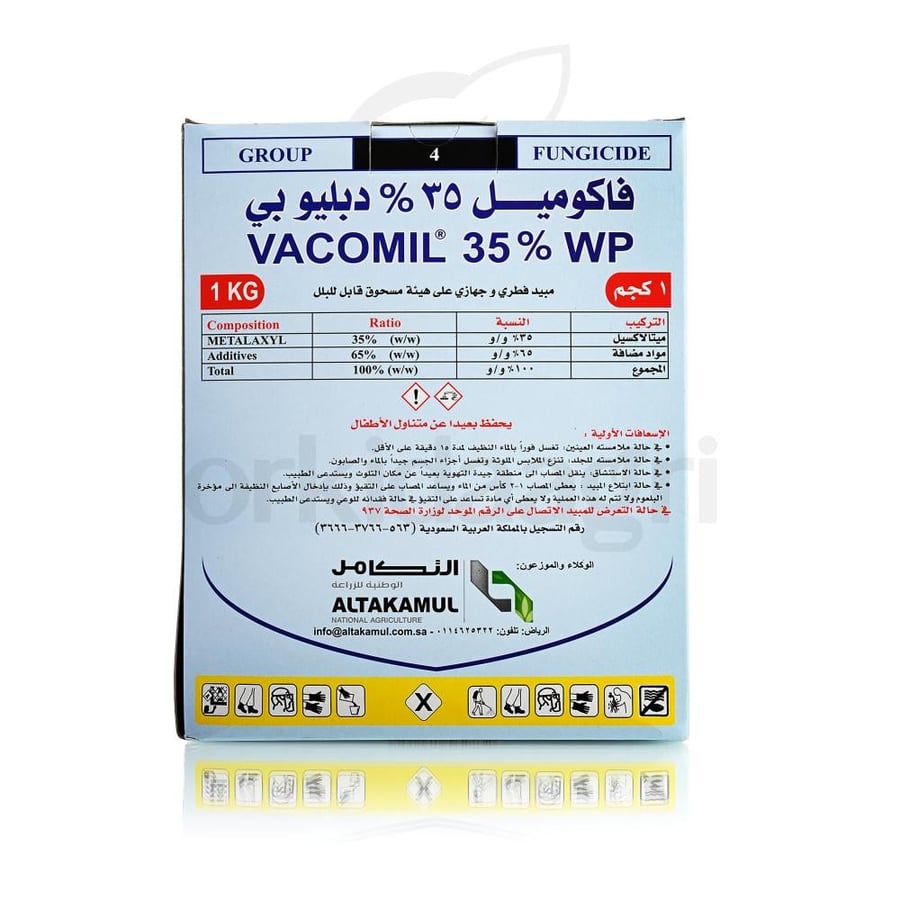
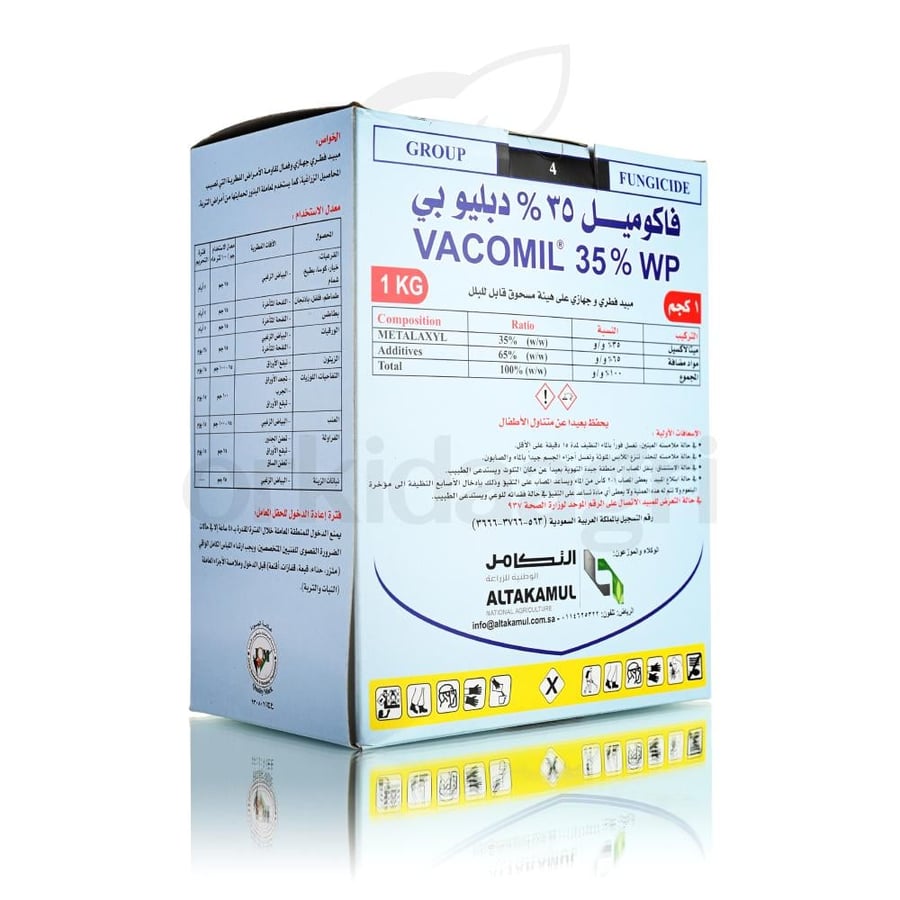
Vacomil 35% WP Systemic Fungicide for Downy Mildew and Late Blight 1 kg – Metalaxyl 35%
120ر.س
Product description
Vacomil 35% WP is a systemic fungicide containing metalaxyl 35%. It controls a range of crop diseases, especially downy mildew and late blight caused by oomycete pathogens. Metalaxyl is absorbed and moves within plant tissues, helping to protect new growth and limit disease development in its early stages. It inhibits processes linked to RNA synthesis in the pathogen, blocking its growth and spread inside the plant. Vacomil is used in preventive and early curative programs, and can also be used as a seed treatment according to approved instructions to protect seeds from certain soil-borne pathogens.
Key Features
- Systemic movement within the plant helps the active ingredient reach tissues and new growth after uptake.
- Preventive and early curative action against target pathogens, limiting disease development when applied at the right time.
- Effective against downy mildew and late blight pathogens, especially oomycetes attacking leaves, stems and fruits.
- Inhibits RNA synthesis in the pathogen, limiting mycelial growth and infection development.
- Movement inside the plant helps protect growing parts that are hard to fully cover with contact fungicides alone.
- Can help protect seeds and seedlings from certain metalaxyl-sensitive soil-borne pathogens when used in approved seed treatments.
Specifications
- Trade name: Vacomil 35% WP
- English name: VACOMIL 35% WP
- Product type: Systemic agricultural fungicide
- Active ingredient: Metalaxyl
- Concentration: 35% w/w
- Equivalent to: 350 g active ingredient per kg of product
- Formulation: Wettable powder (WP)
- Chemical group: Phenylamides
- Mode of action group: FRAC Group 4
- Registered crops: Vegetables, cucurbits, potato, leafy crops, olive, pome fruits, stone fruits, grapes, strawberry and ornamentals
- Pack size: 1 kg
- Manufacturer: VAPCO
Directions for Use
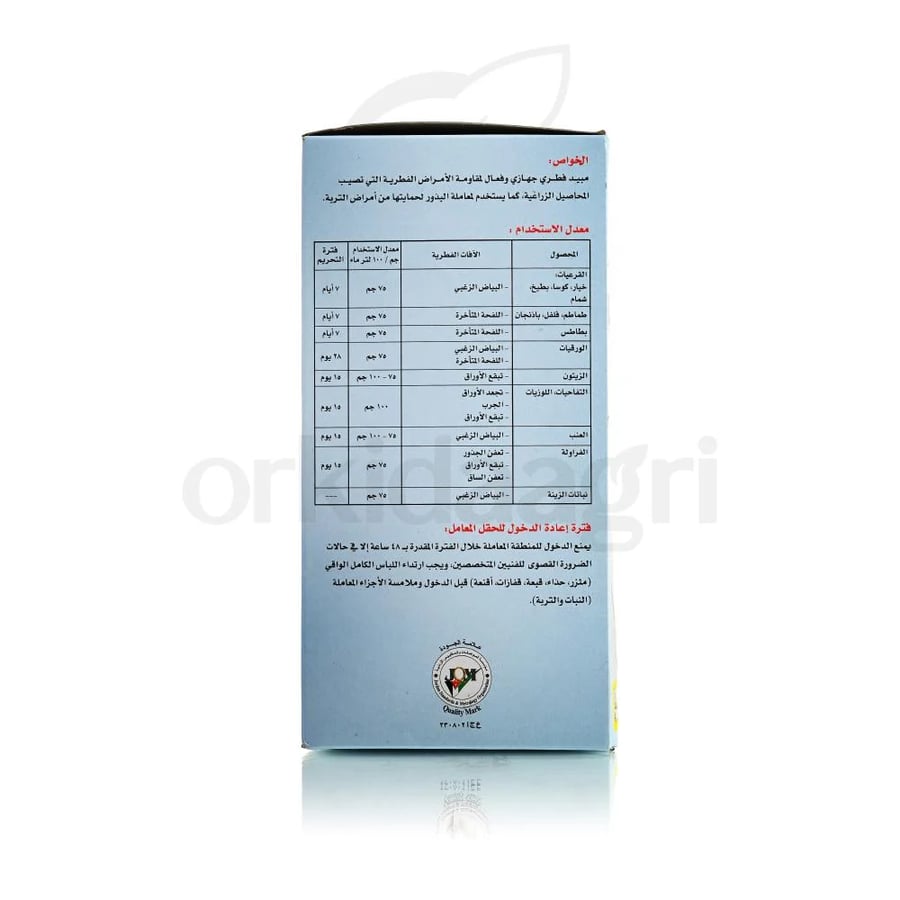
- Cucumber, zucchini, watermelon and melon – downy mildew: 0.75 g per 1 L of water (75 g per 100 L).
- Tomato, pepper and eggplant – late blight: 0.75 g per 1 L of water (75 g per 100 L).
- Potato – late blight: 0.75 g per 1 L of water (75 g per 100 L).
- Leafy crops – downy mildew and late blight: 0.75 g per 1 L of water (75 g per 100 L).
- Olive – leaf spot: 0.75–1 g per 1 L of water (75–100 g per 100 L).
- Pome and stone fruits – leaf curl, scab and leaf spot: 1 g per 1 L of water (100 g per 100 L).
- Grapes – downy mildew: 0.75–1 g per 1 L of water (75–100 g per 100 L).
- Strawberry – root rot, leaf spot and stem rot: 0.75 g per 1 L of water (75 g per 100 L).
- Ornamentals – downy mildew: 0.75 g per 1 L of water (75 g per 100 L).
- Pre-mix the required amount in a small volume of water with good stirring, then add to the spray tank and top up with water while agitating to ensure an even mix.
Pre-Harvest Interval (PHI)
- Cucumber, zucchini, watermelon and melon: 7 days.
- Tomato, pepper and eggplant: 7 days.
- Potato: 7 days.
- Leafy crops: 28 days.
- Olive: 15 days.
- Pome and stone fruits: 15 days.
- Grapes: 15 days.
- Strawberry: 15 days.
- Ornamentals: No harvest interval.
- Re-entry interval: 48 hours.
Precautions
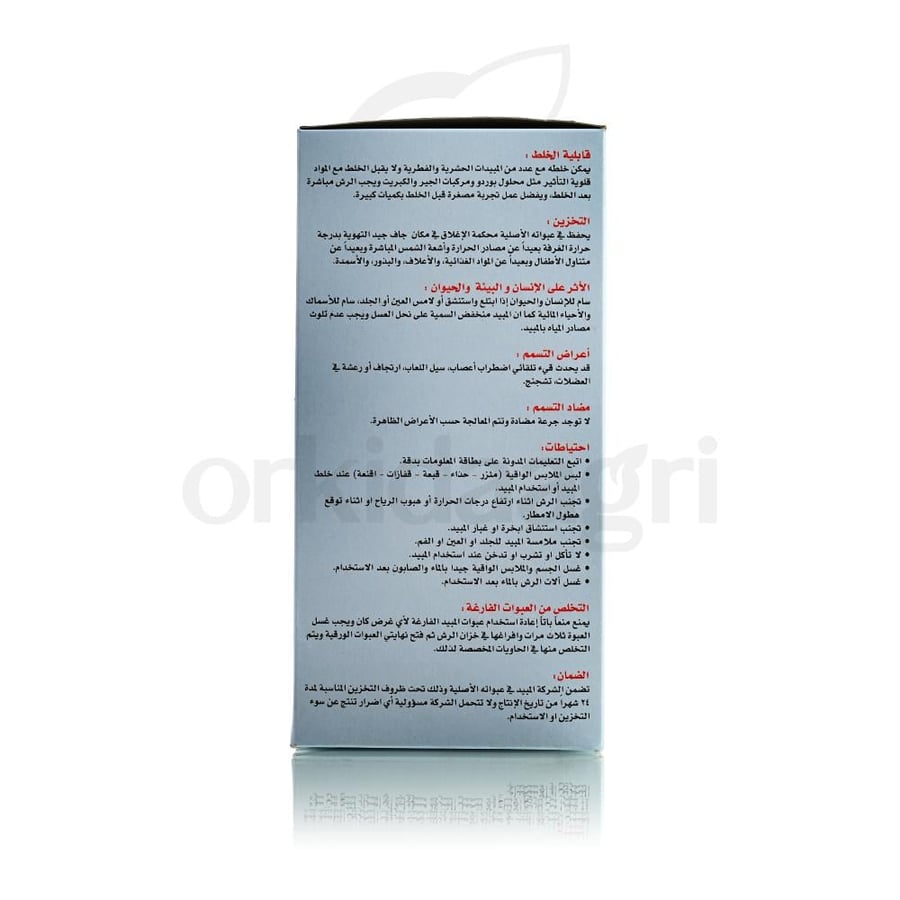
- Use preventively or at the first stages of infection; do not rely on it alone in advanced, widespread outbreaks.
- Metalaxyl is mainly specific to oomycete pathogens; confirm the diagnosis before use and do not treat it as a cure for all fungal diseases.
- Avoid consecutive use of metalaxyl or other Group 4 fungicides; rotate with different modes of action to limit resistance.
- Do not mix with Bordeaux mixture, lime-sulfur or strongly alkaline materials; run a compatibility test before mixing with any other pesticide.
- Follow the stated rates and avoid spraying in strong wind, high heat or conditions that increase drift.
- Wear suitable personal protective equipment, avoid inhaling the powder or contact with skin and eyes, and keep it away from water sources.
🌿 Orkida Tip
When controlling downy mildew and late blight, watch for periods of high humidity, mild temperatures and prolonged leaf wetness, as these favor disease spread. Start treatment before the disease builds up and adjust the spray volume for good coverage, especially of leaf undersides and new growth. If disease-favoring conditions persist, do not rely on repeated Vacomil sprays alone; use it in a program that rotates metalaxyl with different active ingredients, while improving ventilation and reducing leaf wetness where possible.
