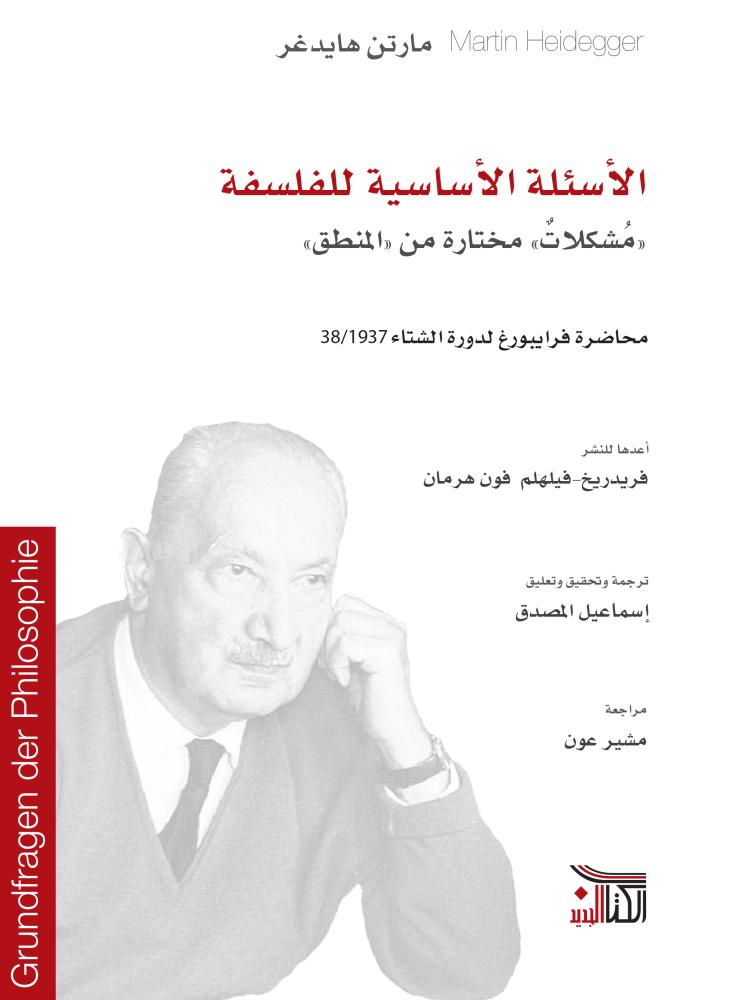
The fundamental questions of philosophy selected problems from logic - Martin Heidegger
76.50ر.س
Product description
The lecture given in the winter course between the years 1937 and 1938 at the University of Freiburg, with an average of one hour per week, "a problem" of the problems of "logic": the problem of truth as it is the correctness of the proposition, with the aim of posing the fundamental question about the nature of truth that is hidden behind the problem. It should be clear that the question of truth is not merely "a problem" of "logic," but is the most problematic question in our history until now and the most deserving to be asked in our future history.
In order to understand the return to the source of the traditional conception of truth based on Aristotle's philosophy as a historical reflection, a preliminary contemplation is made on the difference between the historical view of the past and the historical reflection on the future. The question about correctness as the essence of the real turns into the question about the truth of the essence, that is, about the Aristotelian-Platonic conception of the nature of essence. It becomes clear that the basis for determining the nature of truth as correctness in Aristotle is the concealment of the being as the truth, which is the most fundamental of truths, and it is certain that Greek philosophers experienced it but did not ask about it, and therefore it could be obscured in favor of truth as correctness.
Our historical position at the end of the initial beginning of the history of truth involves a historical reflection on the very first beginning, which serves as a prelude to the final beginning. If the harm of primitive thinking forced man and immediately defined him in the basic emotional state of astonishment, then our harm, as long as the question of truth was considered a "problem" in "logic," is the absence of harm. The abandonment of the universe is the basis of the absence of that fundamental emotional state that compels us to another necessity for an original question.
The lecture ends with a view of the preserved necessity of our questioning, the necessity of establishing the essence of truth, that is, carrying the very openness as a release to conceal the "universe" to its basis and the question of the nature of man as that guardian of the truth of the universe.

From Riyadh
Questions you might have