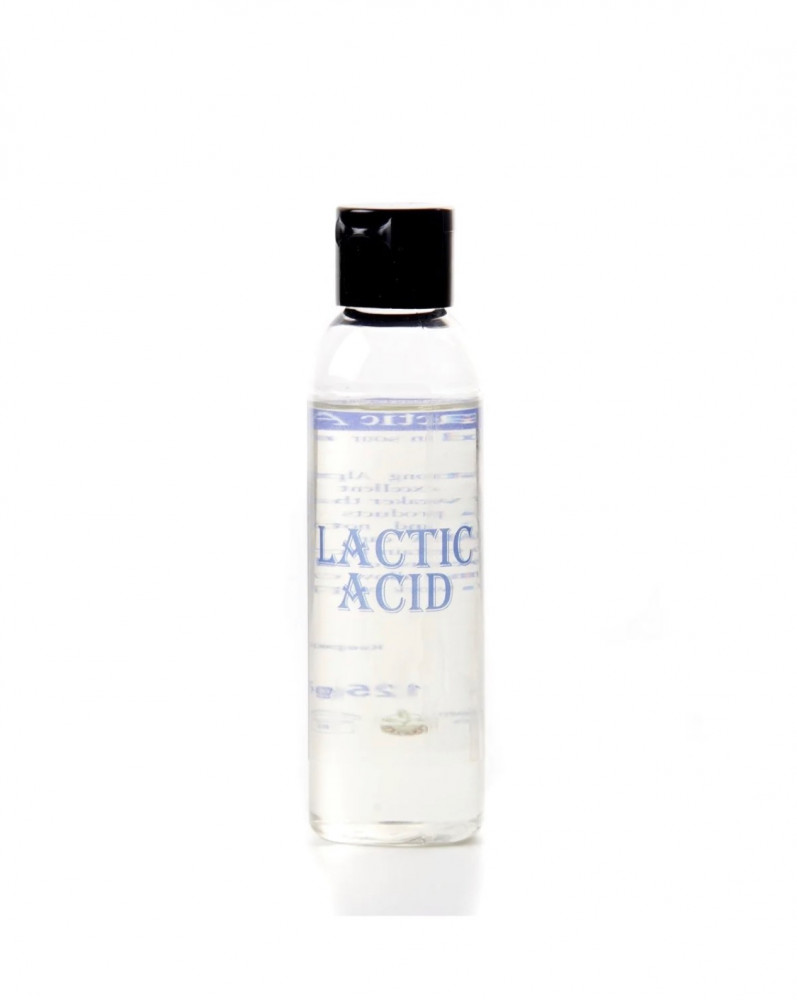
Lactic acid 80% stick moment
25ر.س
Product description
Lactic acid 80% standard. It is a liquid solution in water with a purity of 80%. 5 - 20% lactic acid will be a good place to start, because this is more moderate while still having an excellent skin peeling effect. Uses: treatment of dry, rough, and flaky skin. It can also be used for other conditions as determined by your doctor. Warnings: dilute before use. As with all acids, it is important to let your skin acclimate to its use. For those whose skin is not accustomed to acids, it may cause slight redness and tingling. If this occurs, reduce usage. If irritation persists, stop using it. This product contains alpha hydroxy acid (AHA) that may increase your skin's sensitivity to the sun and especially the likelihood of sunburn. Use sunscreen, wear protective clothing, and reduce sun exposure while using this product and for a week afterward. Lactic acid is a strong alpha hydroxy acid, and therefore will have excellent exfoliating properties, although weaker than glycolic acid, but second to it. AHA products should be a standalone treatment product and not included in another product. While AHA can be included in other products, there are some incompatibility cases that may appear, and AHAs (due to the required pH for optimal effectiveness) may prevent other products (such as cleansing masks) from working properly, and vice versa. AHA products should have a pH ranging from 3.5 to 4.5 for optimal effectiveness (note that at pH 7, alpha hydroxy acids are completely ineffective); while masks have a pH depending on their function (cleansing masks with pH from 7 to 8; moisturizing masks with pH from 5 to 6, and some treatment masks with pH from 4.5 to 5.5). Therefore, they may have incompatible pH levels. If the product contains some film-forming agents, or in the case of masks, contains substances that are not absorbed, these substances may reduce the absorption of alpha hydroxy acids, thus decreasing their effectiveness. If the mask uses clay, alpha hydroxy acids will react with it, reducing their activity and destroying some of the clay. If you want to use concentrated alpha hydroxy acids, most references indicate glycolic acid. However, while this is inexpensive and available in a 70% liquid form, due to its activity, it has risks in that it can burn the skin quickly with serious consequences. TGA and SUSDP (Toxicology Committee) have approved glycolic acid to be used at a maximum of 30% (preferably not exceeding 20%) and a pH greater than 3.5. Otherwise, it will be considered a therapeutic product and have different toxicity warnings on the label. Lactic acid is also a widely used organic acid, perhaps because it is classified as a weak acid. As with all manufacturing processes, extensive laboratory experiments are recommended to determine the appropriate amounts. The product is usually calibrated with a diluted solution of lactic acid (10 or 20% in water) until the desired pH is reached. It is preferred as an acid because it tends to have less destabilizing effect than citric acid.
