Strategy (STEM)
52ر.س
Product description
STEM Strategy Description – Practical Explanation for Teachers
What is the STEM strategy?
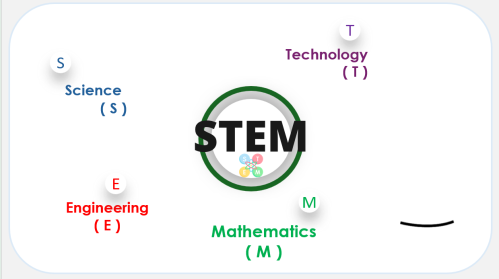
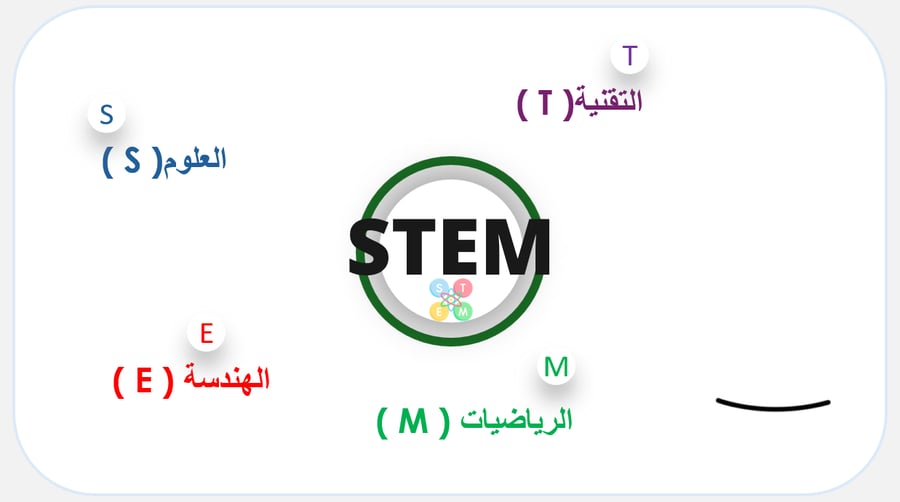
It is an educational strategy that integrates four essential fields in education:
Science – Technology – Engineering – Mathematics
It aims to develop thinking skills, problem-solving, innovation, and linking knowledge to real life.
It suits all subjects (Science, Mathematics, Arabic Language, Studies, Digital Skills, Health Education, even the Quran and Languages).
⭐ How does the teacher apply the strategy? (Practical steps)
Step 1: Identifying the lesson idea (Science)
The teacher starts by extracting the scientific idea or main concept in the lesson.
This step is not only for science; it applies to any subject.
Example:
• Arabic: Text idea – Cause and effect
• Mathematics: Concept of operation or relationship
• Social Studies: Cause of the event or its impact
• Science: Experiment or phenomenon
• English: Language skill or vocabulary
🔹 Goal of the step: for the student to understand “What do we want to discover?”
⸻
Step 2: Choosing a technological tool to support the lesson (Technology)
The teacher decides: what technical means help students understand, gather information, or present?
Examples of tools:
• Short video
• Image or infographic
• Scientific simulation
• Digital mind map
• Calculator
• Google Earth
• QR cards
• An app that allows recording sound or drawing a model
🔹 Goal of the step: to make learning engaging and easily accessible.
⸻
Step 3: Design and innovation phase (Engineering)
Students are asked to transform the idea into a model – design – plan – story – experiment, depending on the subject.
Examples:
• Arabic: Designing a story plan, dialogue, concept map
• Science: Water cycle model, experiment
• Mathematics: Graph or representation
• Studies: Historical map or info board
• English: Vocabulary card or illustrated story
🔹 Goal of the step: train students to turn knowledge into a tangible product.
⸻
Step 4: Calculation and analysis (Math)
Students perform calculations or analyze data related to the activity, even if the subject is not mathematics.
Examples:
• Arabic: Counting keywords, analyzing ideas
• Science: Measuring experiment time or number of changes
• Mathematics: Calculating ratios or differences
• Studies: Comparing the timing of two events
• Health Education: Calculating calories or frequency of a phenomenon
🔹 Goal of the step: making decisions based on numbers or data.
⸻
Step 5: Presenting the solution or project
At the end, each group presents “their work outputs” via:
• Slide,
• Model,
• Board,
• Audio recording,
• Short presentation.
The teacher comments on the scientific, technical, design, and mathematical aspects of the solution.