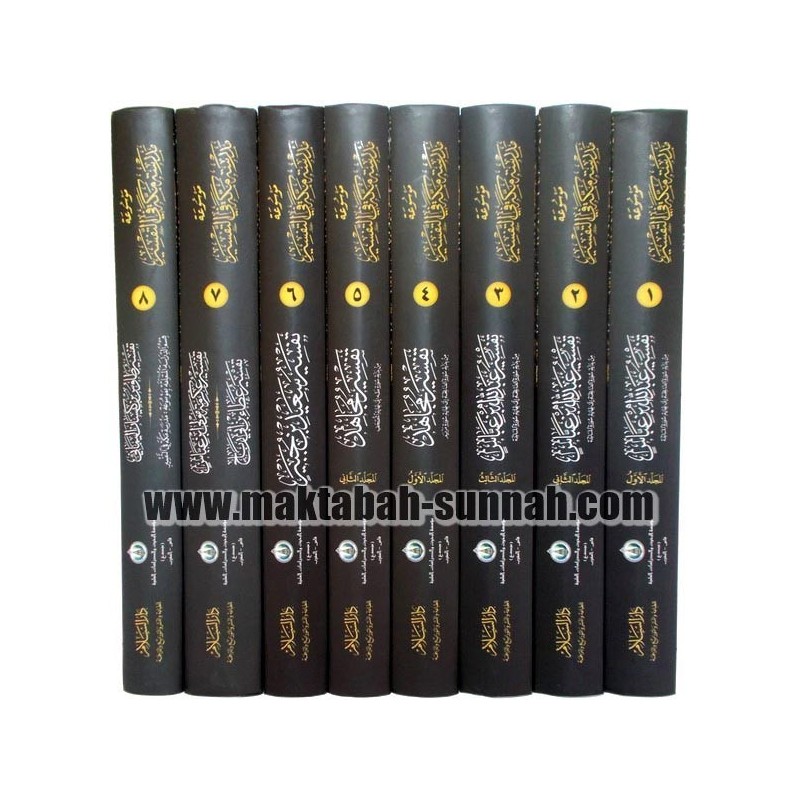

Makkah School Encyclopedia in Interpretation 1-8
287.50ر.س
Product description
Encyclopedia of Makkah School in Tafsir 1-8 Ahmad Al-Omran Tafsir Ibn Abbas Tafsir Mujahid Tafsir Saeed bin Jubeir Tafsir Ikrimah Tafsir Ata bin Rabaah Tafsir Tawoos Al-Yamani "Encyclopedia of Makkah School in Tafsir" compiled by the author in the first three parts, containing 7,516 texts of tafsir attributed to the Ummah's scholar Abdullah bin Abbas, may Allah be pleased with him, founder of the Makkah School in Tafsir, whom the Messenger of Allah, peace be upon him, prayed for, saying: "O Allah, grant him understanding of the religion and teach him the interpretation," explaining the words of Allah, the Almighty, and guiding to their various and diverse meanings. The fourth and fifth parts are dedicated to the tafsir of Mujahid, with the number of texts attributed to Mujahid, may Allah be pleased with him, reaching 4,595 in these two parts. In the sixth part, the author collected the tafsir of Saeed bin Jubeir, totaling 2,261 texts. The seventh part includes the tafsir of Ikrimah, the freed slave of Ibn Abbas, and Tafsir Ata bin Rabaah, with a total of 3,416 interpretative texts attributed to them. The eighth part contains the tafsir of Tawoos bin Kaysan Al-Yamani, with the total number of tafsir opinions attributed to Tawoos in this part reaching 550. This part also includes the study conducted by the author on this collection of tafsir, titled "Encyclopedia of Makkah School in Tafsir: Compilation, Verification, and Study." Combining the contents of the eight parts of the encyclopedia, the total number of texts attributed to these scholars reaches 18,338. These opinions of the six scholars are arranged according to the chapters of the Qur'an, starting with the Basmala or seeking refuge, then Al-Fatiha, ending with An-Nas. Each scholar's opinions and sayings are documented in these verses or in these surahs, according to what the books of the early scholars have preserved for us, which have kept this vast amount of interpretative traditions that serve to understand the Book of Allah, the Exalted. Sheikh Al-Islam Ibn Taymiyah said: "As for tafsir, the most knowledgeable people about it are the people of Makkah, because they are the companions of Ibn Abbas, such as Mujahid, Ata bin Rabaah, Ikrimah, the freed slave of Ibn Abbas, and others from Ibn Abbas's companions like Tawoos, Abu Shatha, Saeed bin Jubeir, and their like" (Majmoo' al-Fatawa). This research focuses on the interpretative tradition, investigating its location first, then verifying it, and studying it. The work aims to explore our nation's heritage by collecting the tafsir of the most important school in history, from various books—whether tafsir books with different scholarly backgrounds, or hadith books such as Sunan, Sahihs, compilations, Musnad, and others, or books of asceticism and spiritual virtues, or any book that contains a tafsir text, whether supported or not, from the leading scholars of the Makkah School who contributed to shaping its structure and course, as well as texts from those who studied under and sat with its scholars, drawing from their abundant sources and knowledge. This work seeks to correct the perspective of our children and all discerning scholars regarding our interpretative heritage, giving it its rightful intellectual value after completing the cultural step in this research—namely, studying the collected texts interpretively by examining the figures involved in the school's inception, education, influence, and methodology, then studying these texts in a verified hadith manner, analyzing their chains of narration and texts to distinguish authentic from weak, and clarifying the sources from which they were transmitted.

From Dammam