

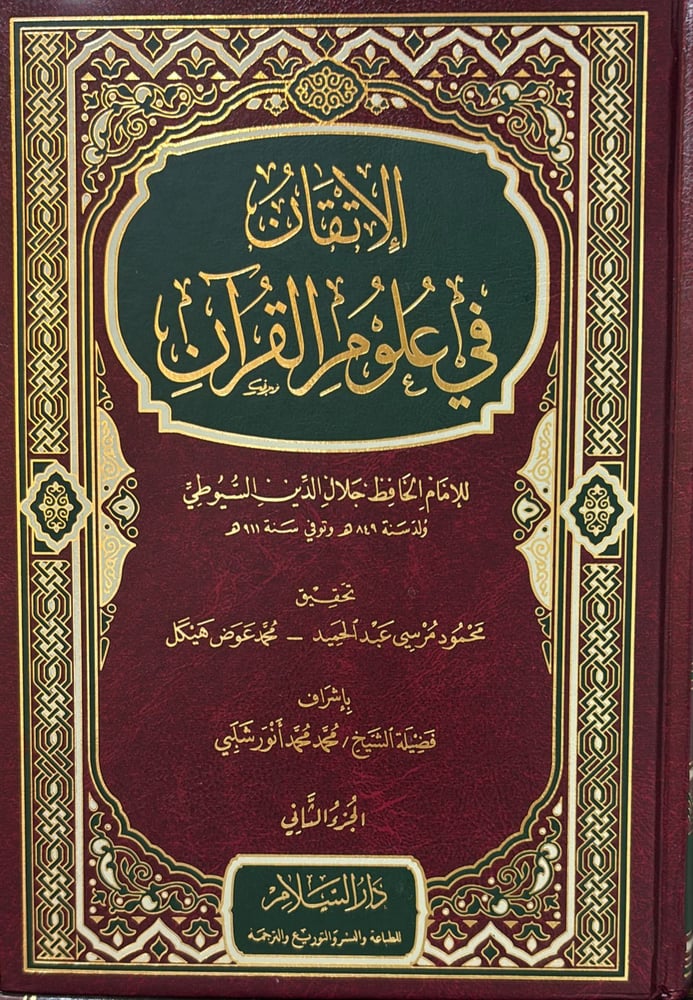
Mastery in Quranic Sciences 2/1
161ر.س
Product description
Excellence in Quranic Sciences 2/1 Jalal al-Din al-Suyuti Dar Al-Salaam Egypt Quranic sciences are the noblest of sciences and the most honorable of arts, with which a person is happy in this world and the Hereafter. Many writings have been compiled in this field and the classifications varied, and its most precious jewel was the book "Al-Itqan," which was the most comprehensive and inclusive among them, as its author delved into the seas of Quranic arts and extracted from them jewels and pearls, gathering scattered benefits and scattered issues. His book came with diverse purposes and different knowledge, far from ambiguity and complexity, characterized by comprehensiveness in subject matter and breadth of ideas. It included reasons for revelation, its time and place, from Meccan and Medinan, travel and residence, night and day, manners of carrying the Quran, then abrogation and abrogated, types of recitations, and methods of tafsir, relying on authentic sources and avoiding weak and feeble ones. He collected eighty types of Quranic sciences, and this book was a precious pearl among the jewels of Quranic studies, combining the reality of the name and the meaning.
**Index of Part One**
...Introduction of the verification...
...Introduction of the author...
...References of the author from books...
**First Type: On knowing Meccan and Medinan**
- Terminologies of scholars regarding Meccan and Medinan...
- Ibn al-Hisar's poem on the names of Meccan and Medinan surahs...
- Section on clarifying disputed surahs...
- Section mentioning some surahs that contain verses from both Meccan and Medinan...
- Section on what is excluded from Meccan and Medinan...
- Rules regarding Meccan and Medinan...
- Benefit mentioning what was revealed from the Muqattaʿat (disjointed letters) in Mecca...
- Alert mentioning other issues related to Meccan and Medinan...
**Second Type: On knowing Hadari and Safri**
**Third Type: On knowing Nahari and Layli**
- Branch on what was revealed between night and day...
**Fourth Type: On summer and winter**
**Fifth Type: On Faraʿshi (bedtime) and Numi (sleeping)**
**Sixth Type: On terrestrial and celestial**
**Seventh Type: On knowing the first revelation**
- Branch on the order of what was revealed from surahs...
- Poem by Al-Burhan Al-Jaʿbari on this matter...
- Branch on specific early revelations...
**Eighth Type: On knowing the last revelation**
- Alert on the ambiguous in this matter...
**Ninth Type: On the reason for revelation**
- Issues related to this matter...
- First issue: Benefits of knowing the reasons for revelation...
- Second issue: Disagreement among scholars: Is the generality of the word or the specific reason more important?
- Third issue: Sometimes verses are revealed for specific reasons...
- Fourth issue: Reasons for revelation can only be known through narration and hearing from trustworthy sources...
- Fifth issue: Mentioning multiple reasons for revelation of a single verse...
**Tenth Type: What was revealed from the Quran on the tongue of some companions**
- A sin in mentioning what was narrated from the Quran on the tongue of non-God, glory be to Him, such as the Prophet (peace be upon him) and Jibreel from the angels...
**Eleventh Type: Repetition of revelation**
- Alert on what is read in more than two ways in this chapter...
- Alert mentioning those who deny the repetition of the same verse...
**Twelfth Type: What is delayed in حكمه (ruling) from its نزول (revelation) and vice versa**
**Thirteenth Type: What was revealed in parts and what was revealed collectively**
**Fourteenth Type: What was revealed with accompaniment and what was revealed alone**
- Benefit mentioning some hadiths related to this matter...
**Fifteenth Type: What was revealed to some prophets and what was not revealed to anyone before the Prophet (peace be upon him)**
- Benefit mentioning the verses that were the proof shown to Yusuf (Joseph) (peace be upon him)...
**Sixteenth Type: How it was revealed**
- How the Quran was revealed from the preserved tablet...
- The secret of its collective revelation to the lowest heaven...
- Branch on its revelation according to need...
- How revelation and inspiration occur...
- Various benefits...
- Differences in opinions on the revelation of the Quran in seven letters...
- Scholars' opinions on whether the Ottoman Mushaf includes the seven letters...
**Seventeenth Type: On knowing its names and names of its surahs**
- Mentioning the reason for naming the compiled Quran as Mushaf...
- Section on quoting those who called the Quran by the names Torah or Gospel...
- Section on the names of surahs...
- Section on multiple names for some surahs...
- Note: Are the names fixed or based on apparent connections? And scholars' opinions on this...
- Section on giving one name to a group of surahs...
- Benefit on parsing the names of surahs...
- Conclusion on dividing the Quran into four parts: the seven long surahs, the Mueen, the Muthani, and the Mufassal...
**Eighteenth Type: On its collection and arrangement**
- Benefit on the different Mushafs sent by Uthman to the regions...
- Section on consensus that the arrangement of verses is fixed...
- Section on scholars' differing opinions on whether the arrangement of surahs is fixed or by the effort of the companions...
- Conclusion on the seven long surahs, Mueen, Muthani, and Mufassal surahs...
- Benefit on types of Mufassal...
- Note that the entire Quran is Mufassal...
- Benefit on the arrangement of the Mushaf of Ubayy and Ibn Masood, may Allah be pleased with them...
**Nineteenth Type: On the number of surahs, verses, words, and letters**
- Note on the number of surahs in Ubayy's Mushaf...
- Benefit on the wisdom behind segmenting the Quran into surahs...
- Section on counting the verses...
- Rules in this regard...
- Benefit on the benefits of knowing the number of verses...
- Another benefit on narrations related to this...
- Section on counting words in the Quran...
- Section on counting letters in the Quran...
- Benefit on discussing the position of half the Quran in terms of letters, words, verses, and surahs...
**Twentieth Type: On its memorizers and narrators**
- Note on verifying the name of Abi Zaid, one of the Ansar companions who compiled the Quran...
- Mention of the female companion involved in compiling the Quran...
- Section on those famous for recitation...
**Twenty-first Type: On the authentic and the transmitted from its chains of narration**
- Types of mutawatir (consecutive) and famous and solitary and strange and fabricated and inserted narrations...
- Mention what the author narrated from Ibn al-Jazari...
- Types of recitations...
- The ruling on mutawatir...
- The difference between the Quran and recitations...
- Explanation of the hadith: "The Quran was revealed in seven letters"...
- Rules resulting from differences in recitations...
- Disagreement among scholars on acting upon the odd (strange) recitation...
- Discussions on the directions of recitations and books written on this subject...
**Twenty-eighth Type: On Waqf (stopping) and Ibtida (beginning)**
- Section on types of Waqf...
- Various notes related to stopping...
- Rules...
- All that in the Quran from "Alladhi" and "Alladhina"...
- Ruling on stopping on the exception without the exception...
- "Kalla" in the Quran...
- "Bala" in the Quran...
- "Na'am" in the Quran...
- Section on how to stop at the ends of words...
- A rule mentioning scholars' consensus on the necessity of writing the Ottoman Mushaf...
**Twenty-ninth Type: On the connected and the separated (al-mawsool and al-mansoor)**
**Thirtieth Type: On the apparent and the implied (al-manzoor and al-mafhoom)**
**Thirty-first Type: On the forms of address in the Quran**
- Dividing the address in the Quran...
**Thirty-second Type: On its literal and metaphorical meanings**
- Types of metaphor...
- Section on various kinds of metaphor and their counts...
- Explanation of what is described as both literal and metaphorical depending on two considerations...
- Section on the intermediary between truth and metaphor...
- Metaphor of the metaphor...
**Thirty-third Type: On its allegories and hints**
- Types of allegories and hints...
- Definition of allegory and its causes...
- Succession...
- The difference between allegory and hints...
**Thirty-fourth Type: On its restriction and specificity**
- Types of restriction...
- Methods...
- Note on the benefit of mentioning the benefit of restriction when the object is presented first...
**Thirty-fifth Type: On brevity and elaboration**
- The difference between brevity and elaboration and equality...
- Types of brevity...
- Shortening...
- Omission...
- Rules for omission, truncation, and economy...
- Conditions for omission...
- Types of omission...
- Cutting...
- Sufficiency...
- Ambiguity...
- Reduction...
- Types of elaboration...
- Elaboration by expansion...
- Elaboration by increase and its types...
- First: entering a letter or more of emphasis...
- Second: entering extra letters...
- Third: artificial emphasis...
- Fourth: repetition...
- Fifth: description...
- Sixth: substitution...
- Seventh: clarifying statement...
- Eighth: repeating one synonym for another...
- Ninth: attaching the specific to the general...
- Tenth: attaching the general to the specific...
- Eleventh: clarification after ambiguity...
- Twelfth: explanation...
- Thirteenth: placing the apparent in the place of the hidden...
- Fourteenth: exaggeration...
- Fifteenth: footnoting...
- Sixteenth: consistency and contradiction...
- Seventeenth: completion...
- Eighteenth: completion...
- Nineteenth: exhaustiveness...
- Twentieth: objection...
- Twenty-first: reasoning...
**Fifty-seventh Type: On news and commands**
- Scholars' opinions on types of speech...
- Types of news and their meanings...
- Commands and their types...
- From the types of commands: order...
- From the types: prohibition...
- From the types: wishing...
- From the types: hoping...
- From the types: calling...
- From the types: oath...
- From the types: condition...
**Fifty-eighth Type: On the wonders of the Quran**
- General types of wonders...
- Types of suggestion...
- Usage...
- Turning...
- Consistency...
- Integration...
- Embedding...
- Astonishment...
- Power...
- Combining words with words and their harmony with meaning...
- Rebuttal and exception...
- Retelling...
- Replacement...
- Emphasis of praise with blame...
- Omission...
- Division...
- Composition...
- Joking...
- Purity...
- Repetition...
- Arrangement...
- Progression and regression...
- Inclusion...
- Jingles...
- Pairing...
- Exaggeration...
- Exact matching...
- Similarity...
- Pairing and separation...
- Pairing and division...
- Combining similar and different...
- Combining and dividing...
- Combining the same and different...
- Good sequencing...
- Self-reproach...
- Contradiction...
- Title...
- Highlights...
- Oath...
- Wordplay and dissemination...
- Similarity...
- Merging...
- Excessiveness...
- Exactness...
- Correspondence...
- Concealment...
- Review...
- Integrity...
- Creativity...
**Fifty-ninth Type: On pauses in verses**
- Scholars' opinions on this matter...
- Statements regarding rulings at the end of verses considering context...
- Types of pauses...
- Categories of pauses...
- Notes on various benefits...
**Sixtieth Type: On the beginnings of surahs**
**Sixty-first Type: On the endings of surahs**
**Sixty-second Type: On the connection between verses and surahs**
- Meaning of connection and its benefit...
- Causes of connection...
- Some verses whose connection is unclear...
- Connection of the beginnings and ends of surahs...
- Connection of the surahs starting with disjointed letters...
- Connection of surahs with their purposes...
- Benefits of connections in the Quran...
**Sixty-third Type: On the ambiguous verses**
**Sixty-fourth Type: On the miraculous nature of the Quran**
- Scholars' interest in understanding the aspects of the miraculous...
- Notes...
- First: The miraculous part of the Quran...
- Second: How to understand the miraculous...
- Third: Variations in eloquence within the Quran...
- Fourth: The wisdom behind the Quran's purity from poetry...
**Sixty-fifth Type: On sciences derived from the Quran**
**Sixty-sixth Type: On parables of the Quran**
- Section on types of parables in the Quran...
**Sixty-seventh Type: On the divisions of the Quran**
**Sixty-eighth Type: On debates in the Quran**
- Section on terms used in the science of debate...
- History and classification...
- The argument for necessity...
- Acceptance...
- Ijmal (generalization)...
- Transition...
- Contradiction...
- Matching the opponent to stumble...
**Sixty-ninth Type: On names, nicknames, and titles in the Quran**
- Names of prophets and messengers in the Quran...
- Names of angels...
- Names of companions...
- Names of pre-Prophetic figures other than prophets and messengers...
- Names of women...
- Names of disbelievers...
- Names of jinn...
- Names of tribes...
- Names of peoples with additional titles...
- Names of idols...
- Names of countries and places...
- Names of the afterlife places...
- Names of planets...
- Names of birds...
- Section: On nicknames and titles in the Quran...
**Seventieth Type: On ambiguous matters**
- Causes of ambiguity in the Quran...
- Section on verses containing ambiguous words and their explanations...
- Verses mentioning groups and their names...
**Seventy-first Type: On the names of those for whom the Quran was revealed**
- Names of prophets and messengers in the Quran...
- Names of angels...
- Names of companions...
- Names of early non-prophets and non-messengers...
- Names of women...
- Names of disbelievers...
- Names of jinn...
- Names of tribes...
- Names of peoples with additional titles...
- Names of idols...
- Names of countries and places...
- Names of the afterlife places...
- Names of planets...
- Names of birds...
- Section: On nicknames and titles of the Quran...
**Seventy-second Type: On the unclarified**
**Seventy-third Type: On the virtues and excellence of the Quran**
- First: On the virtue of the Quran overall...
- Second: On the virtue of specific surahs...
- Third: On the best and most virtuous parts of the Quran...
- Fourth: On the unique and special verses in the Quran...
- Fifth: On the special qualities of the Quran...
- The virtues of the Quran's charms and names of Allah...
- Rulings on writing the Quran in vessels...
- The script style in writing the Quran...
- Some rules in the script of the Mushaf:
- First rule: on omission...
- Second rule: on addition...
- Third rule: on hamza (glottal stop)...
- Fourth rule: on substitution...
- Fifth rule: on connection and separation...
- Sixth rule: where two readings are written on one...
- Branch on what is written in accordance with a strange recitation...
- Section on the etiquette of writing the Quran...
- Issue on dots and tashkeel (diacritics) in the Mushaf...
- Rulings on earning wages for writing the Mushaf...
- Other various rulings related to the Mushaf...
**Seventy-fourth Type: On its interpretation, explanation, and its honor and the need for it**
- Section on the necessity of tafsir...
- Section on the honor of tafsir...
**Seventy-fifth Type: On the conditions and manners of the interpreter**
- Main sources of tafsir...
- Sciences needed by the interpreter...
- Approaches to tafsir according to Ibn Abbas (may Allah be pleased with him)...
- Sciences of the Quran are three...
- Tafsir of the companions...
- Tafsir of Sufis...
- Section on what is required of the interpreter...
- Benefit from Ali ibn Abi Talib (may Allah be pleased with him) on tafsir...
**Seventy-sixth Type: On strange and rare tafsir**
**Seventy-seventh Type: On the ranks of the interpreters**
- Tafsir of the companions...
- Class of the Tabiʿun (successors)...
- Interpreters who came after them...
- Conclusion on what the Prophet (peace be upon him) narrated about tafsir...
- The Quranic chapters:
- Al-Baqarah,
- Al-Imran,
- An-Nisa,
- Al-Ma'idah,
- Al-An'am,
- Al-A'raf,
- Al-Anfal,
- At-Tawbah,
- Yunus,
- Hud,
- Yusuf,
- Ar-Ra'd,
- Ibrahim,
- Al-Hijr,
- An-Nahl,
- Al-Isra,
- Al-Kahf,
- Maryam,
- Ta-Ha,
- Al-Anbiya,
- Al-Hajj,
- Al-Mu'minun,
- An-Nur,
- Al-Furqan,
- Al-Qasas,
- Al-Ankabut,
- Luqman,
- As-Sajda,
- Al-Ahzab,
- Saba,
- Fatir,
- Ya-Sin,
- As-Saffat,
- Az-Zumar,
- Ghafir,
- Fussilat,
- Ash-Shura,
- Az-Zukhruf,
- Ad-Dukhan,
- Al-Ahqaf,
- Al-Fath,
- Al-Hujurat,
- Qaf,
- Adh-Dhariyat,
- At-Tur,
- An-Najm,
- Ar-Rahman,
- Al-Waqi'a,
- Al-Mumtahanah,
- At-Talaq,
- An-Nas,
- Al-Muzzammil,
- Al-Muddathir,
- An-Naba,
- At-Takwir,
- Al-Infitar,
- Al-Mutaffifin,
- Al-Inshiqaq,
- Al-Buruj,
- Al-Ala,
- Al-Fajr,
- Al-Balad,
- Ash-Shams,
- Al-'Amrash-Sharh,
- Az-Zalzala,
- Al-'Adiyat,
- Al-Humaza,
- Ar-Raʿiṭ,
- Al-Kawthar,
- An-Nasr,
- Al-Ikhlas,
- Al-Falaq,
- An-Nas,
- The story of Moses and Khidr...
- The story of the Faton...
- The story of the trumpet...
**Conclusion of the book**
**Index of Prophetic Hadiths**
**Index of poetry included in the book**
**Index of notable figures**
**Index of works cited by the author**

From Dammam
Questions you might have