
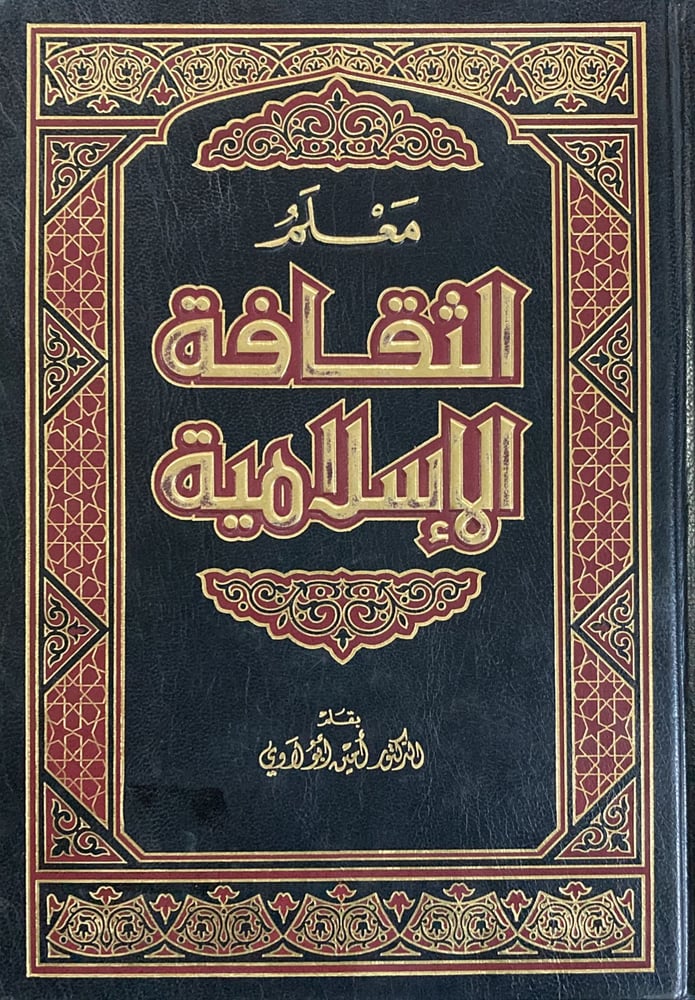

Islamic Culture Teacher
16ر.س
32.2ر.س-50%Product description
By Dr. Amin Abu Lawi
In the name of Allah, the Most Gracious, the Most Merciful
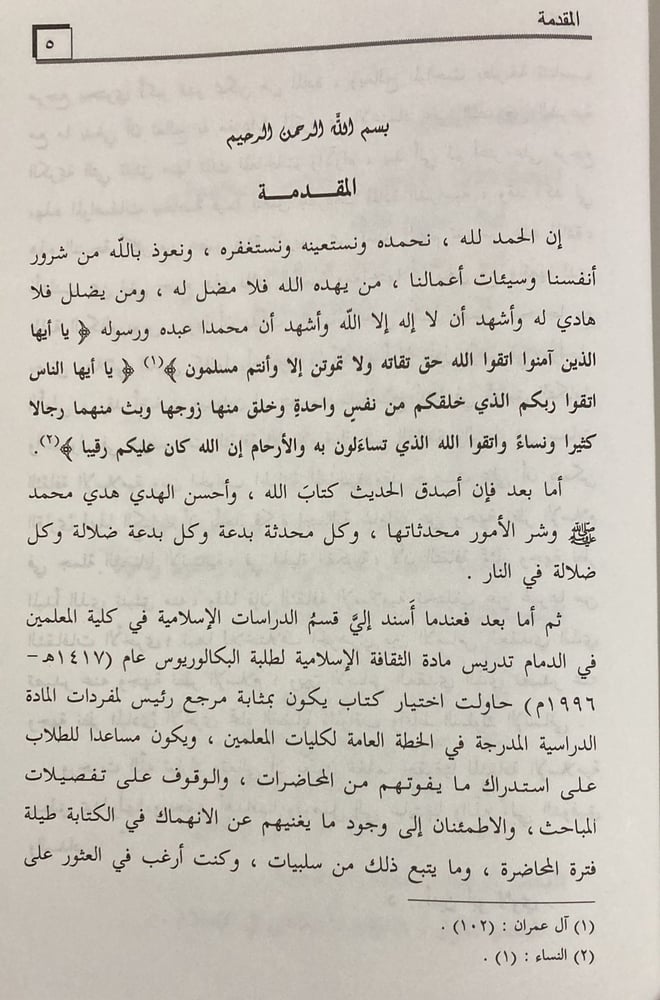
Introduction
All praise be to Allah, we praise Him, seek His help, and ask for His forgiveness. We seek refuge in Allah from the evil of ourselves and our wrongdoings. Whomsoever Allah guides, there is none to misguide him, and whomsoever He misguides, there is none to guide him. I bear witness that there is no deity but Allah, and I bear witness that Muhammad is His servant and Messenger.
O you who have believed, fear Allah as He should be feared, and do not die except as Muslims. And O mankind, fear your Lord who created you from a single soul and created from it its mate, and dispersed from both of them many men and women. And fear Allah, through whom you ask one another, and the wombs. Indeed, Allah is ever Watchful over you.
As for what follows: The most truthful speech is the Book of Allah, and the best guidance is the guidance of Muhammad. The worst of affairs are the newly invented matters, and every innovation is an innovation, and every innovation is misguidance, and every misguidance is in the Fire.
Then, as for what follows: When I was assigned to teach Islamic Culture to undergraduate students at the College of Teachers in Dammam in the year 1417 AH (1996 AD), I tried to choose a book that would serve as a main reference for the curriculum modules included in the general plan for the College of Teachers. It should assist students in catching up on what they miss from lectures, clarify the details of the topics, and reassure them that what is covered in the book suffices, thus avoiding the negatives associated with excessive writing during lectures.
I aimed to find a reference that contains the greatest possible amount of material, and addresses the topics in a manner appropriate to the content of the course, relying on the noble Islamic texts from which these treatments and opinions emanate. However, I did not find a reference meeting these specifications, especially regarding the curriculum modules. This was confirmed to me by several faculty members assigned to teach this course.
Therefore, I announced my intention to compile this scientific material and address it in a way that aligns with its reality among undergraduate students. As I began writing, I found myself in an awkward position with some colleagues who were taking what I wrote, step by step, in its early stages. I added two topics not included in the curriculum, hoping to achieve integration and comprehensiveness in the subjects of Islamic Culture, to benefit and connect the features of Islamic Culture with contemporary life aspects.
I was keen that the reader of this book could form a comprehensive general idea about Islam’s perspective on various human issues in life and thought. Because culture reflects the viewpoint of the principle from which it originates, Islamic culture differs from other cultures due to the fundamental difference in the doctrinal basis from which Islam’s perspective emanates, compared to the doctrinal basis of other principles regarding issues, attitudes, human behavior patterns, and conduct.
I pray to Allah, the Most High, that this work becomes a true marker of Islamic culture, expressing its meaning, achieving its goals, and reaching its ultimate purpose. And Allah is the grant of success and guidance.
Dr. Amin Abu Lawi

From Dammam