
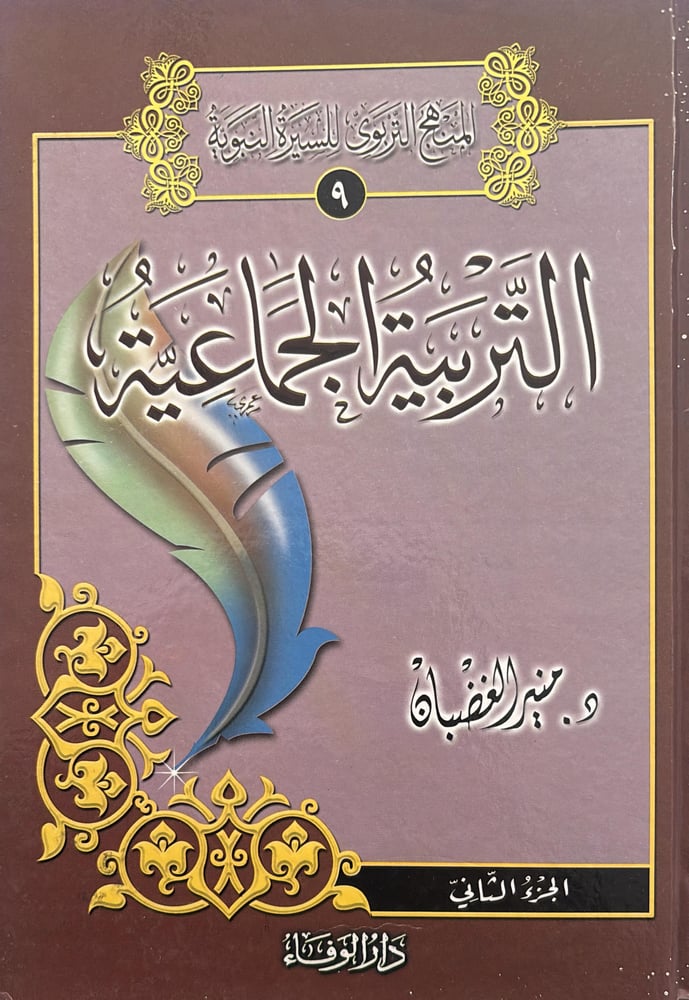
Group education
32ر.س
64ر.س-50%Out of Stock
Product description
Group Education
Munir Al-Ghadhban
Introduction to the topic of the book: Group education is one of the methods of Islamic education that contributes to building the personality of the Muslim individual in multiple aspects, which cannot be built except through a group with whom this individual is raised. Despite the importance of self-education, it does not create a sound human entity, but group education is necessary so that the person is truly and comprehensively educated. Due to the importance of this education, and because it is needed in all social classes, it was important to study this topic scientifically to clarify and make it clear to people. That is why this book was written.
The book studied in detail the foundational topic of group education as a successful educational method that meets the psychological needs of the individual, such as the need to live in a group. It consists of six chapters: the first was an introductory chapter to highlight the importance of the discussed topic, where the author explained that talking about group education has become an important matter needed by all society without exception. It is an effort based on applying God's way on earth, and everyone must undertake it and strive for it. The author also presented a set of points highlighting the importance of this study.
The second chapter of the book addressed the conceptual framework of group education, where the author defined the concept of group education, explaining each of its terms linguistically and terminologically, then defining it as a standalone term and concept. He clarified that group education is: developing the Islamic personality of the individual from all aspects—faith, intellect, body, psychology, and social—through an educational environment that includes a trainer and a group of learners, with positive interaction and exchange of experiences among them, through a specific methodology and followed-up methods aimed at strengthening Islamic brotherhood and love in Allah among them. He also discussed the status that group education holds in life in general and in Islam in particular.
Regarding the educational relationship between individuality and collectivism, the author believed that sound education based on the Quran and Sunnah should observe the two conflicting tendencies in human life: individualism and collectivism, and meet the demands of each with balance. He also discussed in this chapter how secular schools deal with these two tendencies, noting that some lean toward individualism to the point of repulsive selfishness, while others favor collectivism over the individual, eradicating the individual. He explained that Islam’s approach is balanced between them, harmonizing individuality and collectivism.
The third chapter of the book presented the status of this type of education in Islam, discussing group education through the Holy Quran, the authentic Sunnah, and the predecessors of this nation and their educators. It then listed a set of benefits gained from group education. The author discusses the pillars of group education in the fourth chapter, stating that this education rests on five basic pillars: methodology, educator, learners, systematic approach, and style. He discussed three of these in this chapter: starting with the educator, whom he considered the most important pillar in this educational process, mentioning his key qualities and common mistakes. Then he moved to discuss another pillar equally important—namely, the learners—highlighting the most important aspects of the learner’s personality that the educator should focus on during personality development. After that, he discussed the systematic approach on which group education is based and managed.
As a crucial pillar of group education, the author discussed in the fifth chapter the methods of group education, which he considered half of success in this educational process. He explained the concept of method, citing examples from the Quran and Sunnah, then listed ten methods of group education, including education by example, storytelling, dialogue, and others.
To clarify many general features of an effective educational group, the author concluded his book with a final chapter discussing its characteristics, regulations, and factors that hinder its performance.
This book establishes an elevated Islamic educational methodology beneficial for teachers and educators, whether parents or educational institutions. It also contributes to preparing a generation built on correct educational frameworks, capable of bearing responsibilities to the fullest, and ready to give and sacrifice for this religion. May Allah reward the author with the best reward and elevate his rank in the highest Paradise.

From Dammam