
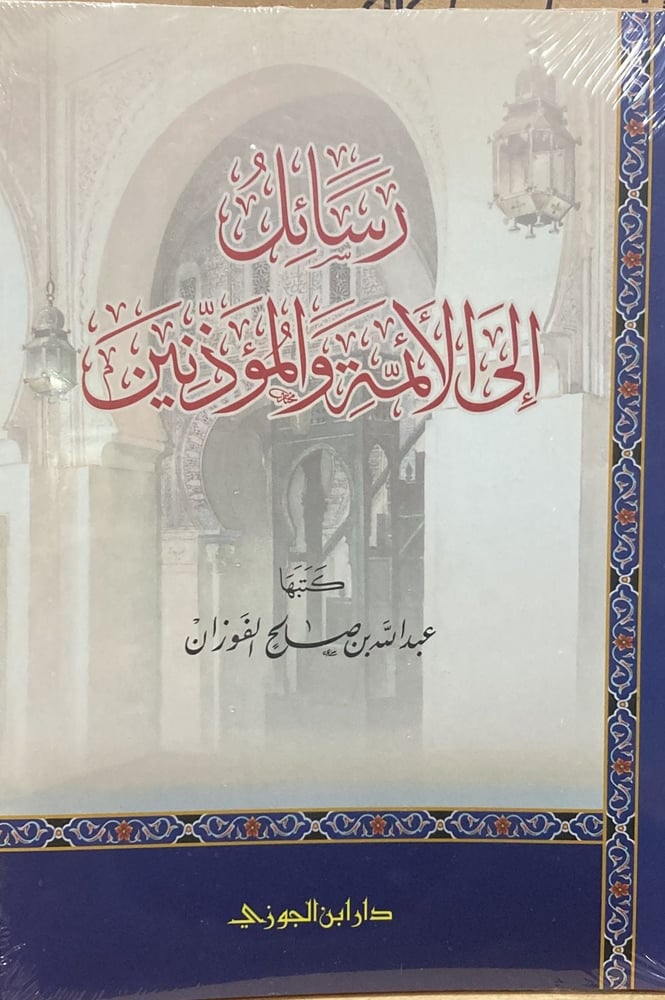


Messages to the Imams and Muezzins
25.30ر.س
Product description
Sheikh: Dr. Abdullah bin Saleh Al-Fawzan
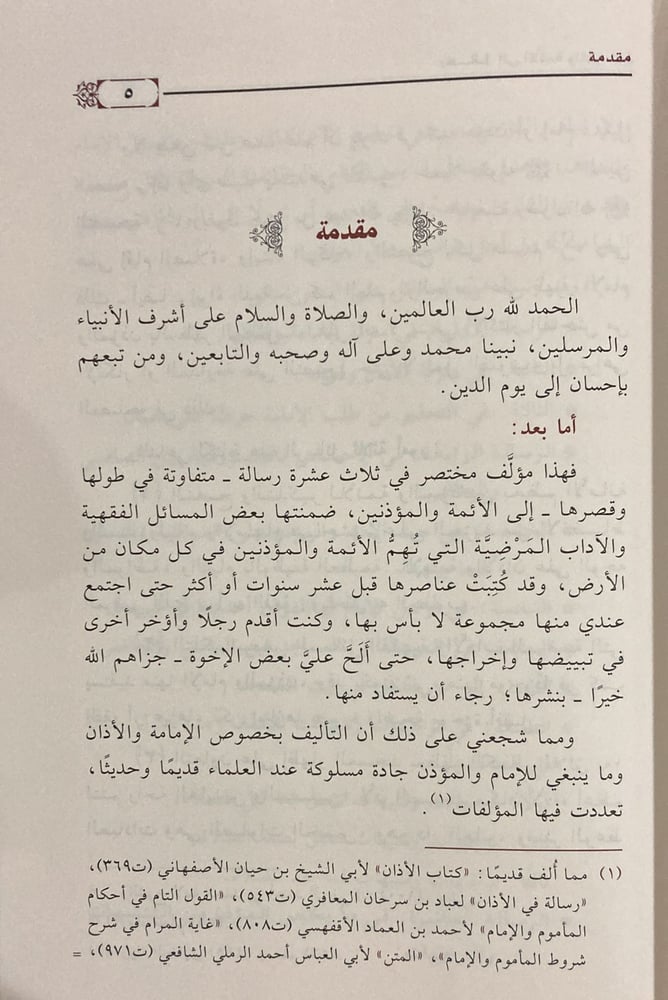
Introduction
Praise be to Allah, Lord of the worlds, and prayers and peace be upon the most honorable of prophets and messengers, our Prophet Muhammad, and upon his family, companions, followers, and those who follow them with goodness until the Day of Judgment.
As for what follows:
This is a concise compilation in thirteen messages — varying in length — addressed to imams and muezzins, containing some jurisprudential issues and commendable manners that concern imams and muezzins everywhere on earth. Its elements were written ten years ago or more, until I gathered a good collection of them. I used to prepare one and delay another in editing and publishing until some brothers — may Allah reward them well — urged me to publish them, hoping they would be beneficial.
What encouraged me to do so is that writing about imamate and the call to prayer, and what is appropriate for the imam and muezzin, is a well-trodden path among scholars, old and new. Many writings have been produced on this, and it is not permissible for someone with knowledge to hesitate in advising a muezzin or imam — if they accept advice — when they see something requiring alertness; acting according to His saying: "Religion is advice" (1), and the saying of Jarir ibn Abdullah: "I pledged allegiance to the Messenger of Allah to establish prayer, give zakat, and advise every Muslim." Also, this is to clear the conscience from concealing knowledge and to be keen on the appearance of the imam and muezzin in the proper manner, so that the burden is absolved, and the required is achieved.
It should not be excessive in criticizing or constantly advising to the point that hearts become tired; rather, the benefit in that should be considered.
The motivation for writing these messages is threefold:
(1) To advise and remind imams and muezzins of the great trust and responsibility, and to contribute to urging them towards more discipline and perseverance, and to perform the great duties — imamate and call to prayer — in a manner that absolves the conscience and fulfills the requirements.
(2) To remind of some jurisprudential issues and commendable manners that the imam and muezzin can benefit from. Some of these may be found in books of jurisprudence or others, but presenting them clearly and concisely is better.
(3) To cooperate in presenting the mosque in a perfect and appropriate appearance, so that worshippers and prayerers find comfort; because the mosque is a place for performing the greatest acts of worship, which are the five daily prayers, and it is a house of knowledge, a pulpit for preaching, guidance, and direction, and a place of worship, with the presence of the imam and muezzin, and not neglecting their duties. The reader may see some leniency in expression or a practical approach in some parts, for the sake of clarifying this purpose.
These messages are organized as follows:
First message: on the status and virtue of imamate.
Second: on the status and virtue of the call to prayer.
Third: warning against seeking imamate for the sake of money.
Fourth: on feeling the responsibility between the past and the present.
Fifth: urging the imam and muezzin to persevere and cooperate.
Sixth: delegating one of them or others to perform the duties.
Seventh: admonition in mosques between the past and the present.
Eighth: to those living in the mosque’s house.
Ninth: guidance and warnings for imams, and this is the longest message in this compilation:
First: guidance and warnings related to what precedes prayer.
Second: guidance and warnings related to the prayer’s characteristics.
Third: guidance and warnings after prayer.
* Tenth message: concerning the muezzin, with warnings and guidance:
First: warnings and guidance before the call to prayer.
Second: warnings and guidance during the call.
Third: warnings and guidance after the call.
Eleventh: to the role model: the imam of the mosque.
Twelfth: to the imam and the congregation of the mosque.
Thirteenth: on someone leading a congregation while they dislike it.
I did not burden the messages with presenting proofs or disputed issues, nor did I overload the footnotes with references, except for brief citations, or what is of importance in quotations, or what the reader might want to verify.
It should be taken into account that times have changed according to their people and new lifestyles brought about by modern civilization, which has had a significant impact on a great matter — worship, especially prayer. If this affects the discipline and perseverance of imams and muezzins, it also affects the congregation in the mosque, as seen in delays and lack of initiative to attend, even on the best days — Friday.
May Allah help!
And I ask Allah to benefit from it, to make it purely for His face. Indeed, He is Hearing, Near, and Responding.
Allah knows what I intended and what I gathered and authored; it is upon the tongue of every servant and his heart, and He is aware of his intention and effort.
"Indeed, I only intend reform as much as I am able, and my success is not but from Allah. Upon Him I rely, and to Him I turn." [Hud: 88]
Written by Abdullah bin Saleh Al-Fawzan
1444/2/16 AH
Alfozan.net@gmail.com

From Dammam