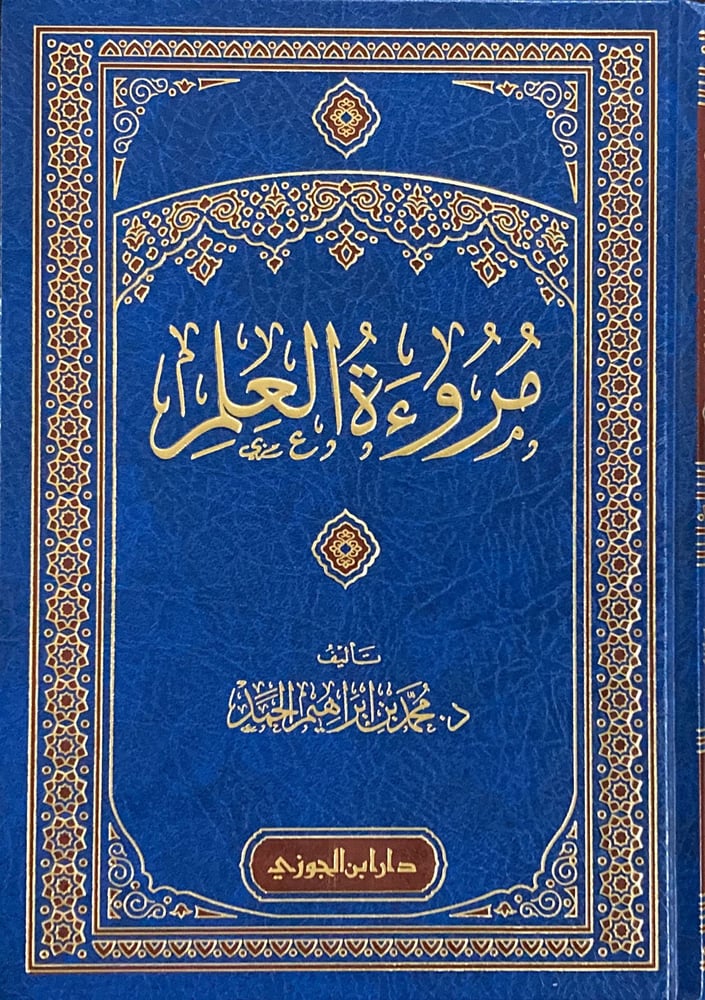


The nobility of knowledge
44.85ر.س
Product description
Authorship Dr. Muhammad Ibrahim Al-Hamad
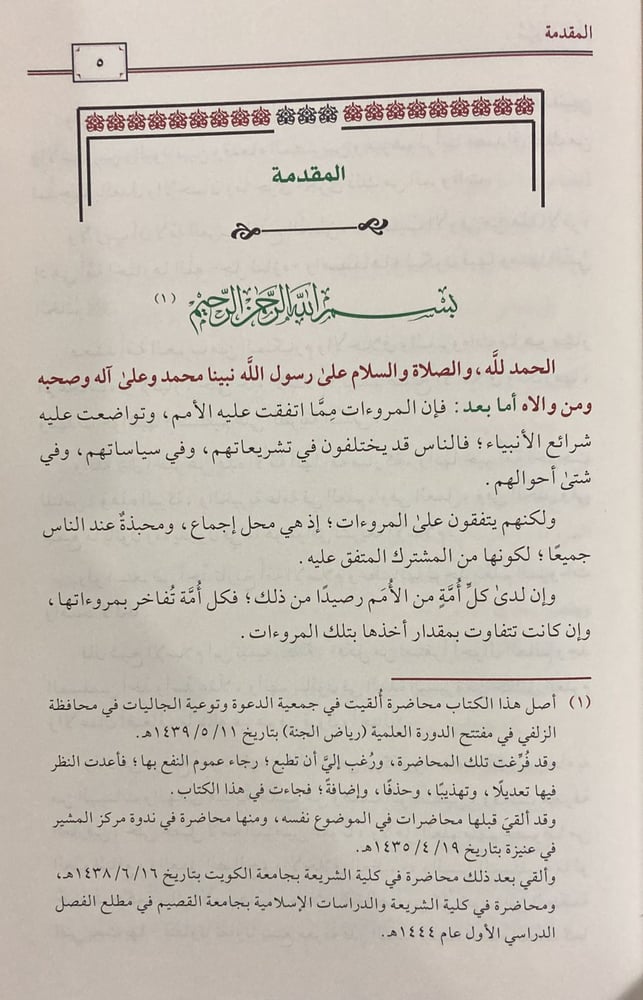
Introduction
In the name of Allah, the Most Gracious, the Most Merciful
Praise be to Allah, and blessings and peace be upon the Messenger of Allah, our Prophet Muhammad, and upon his family, companions, and those who follow him. To proceed:
Manners are among what nations agree upon, and the laws of the prophets have humbled themselves to; people may differ in their legislations, policies, and various circumstances. But they agree on manners; as they are a point of consensus, and preferred among all people, because they are among the shared and agreed-upon matters.
And every nation has a stockpile of that; each nation boasts of its manners, even though they vary in the extent to which they adopt those manners. If we examine—for example—the inscriptions and cuneiforms of the Chaldeans, Assyrians, Greeks, ancient Egyptians, and others, we would see the truth of that, praising them for justice, kindness, and similar manners.
There is no doubt that the Arab nation has the highest and most abundant share in this matter; for it is a nation chosen by Allah, Glorified and Exalted be He, and favored; so that the Prophet—peace be upon him—comes from among them.
Among the Arabs, there are admirable morals, virtues, and manners that evoke admiration and respect, until Islam came to perfect good morals and noble virtues, and to refine their edges so that they align with the best way.
And Allah does not tell us that this nation is a blessed nation, and that it is the best nation brought forth for mankind; this blessing and goodness are general in knowledge, work, morals, and everything they bring and leave, in accordance with Islamic law.
And if anyone reviews the history of the Islamic nation and its great figures, he will find the hallmark of manners clearly evident.
Sheikh Al-Islam Ibn Taymiyah, may Allah have mercy on him, said: “Whoever studies the conditions of the world will find that Muslims are the most intelligent and sharpest in reasoning, and they achieve in a short period of time from the truths of sciences and deeds what others attain over centuries and generations.”
And he said in another place: “Allah guided people by the blessing of Muhammad’s prophethood, and by what came with him of clear signs and guidance, a guidance beyond description by describers, surpassing the knowledge of the knowing, until his nation—believers in general—and among them scholars—specifically—attained useful knowledge, righteous deeds, great morals, and straight Sunnahs, which if all the wisdom of all nations in knowledge and action were gathered, they would be unable to measure the worth of their proportion; so all praise be to Allah as our Lord loves and is pleased.”
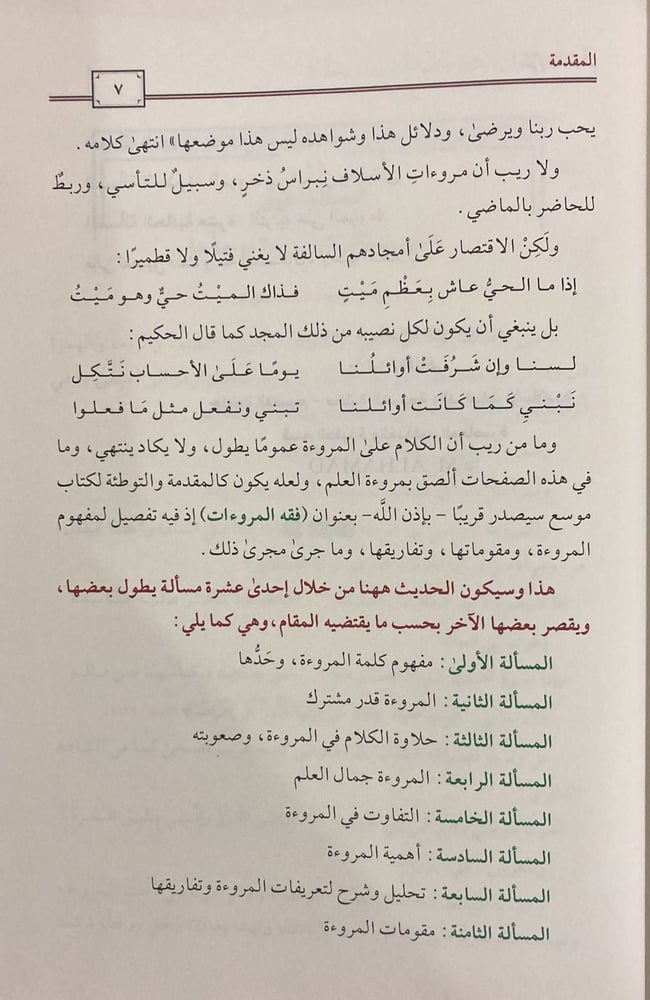
And the evidence and signs of this are not the place for here, end of his words.
There is no doubt that the manners of ancestors are a beacon of wealth, a way of emulation, and a link between the present and the past. But relying solely on their past glories does not suffice: if the living live on the bones of the dead, then that dead is alive and that is death.
It should be that each one has his share of that glory, as the wise said: “We, even if our ancestors were honored one day by lineage, do not rely on that; we build as our ancestors built, and do what they did.”
Undoubtedly, talking about manners in general is lengthy and almost endless. What is contained in these pages is most closely related to the manners of knowledge, and perhaps it is an introduction and prelude to an extensive book soon to be published—by the permission of Allah—entitled “Jurisprudence of Manners,” which will detail the concept of manners, their components, their types, and related matters.
The discussion here will be through eleven issues, some lengthy and some brief, depending on the context, as follows:
First issue: The concept of the word “manners” and its definition
Second issue: Manners as a shared value
Third issue: The sweetness and difficulty of talking about manners
Fourth issue: The beauty of knowledge through manners
Fifth issue: Variations in manners
Sixth issue: The importance of manners
Seventh issue: An analysis and explanation of definitions and types of manners
Eighth issue: Components of manners
Ninth issue: Virtues of manners
Tenth issue: Manners between character and behavior
Eleventh issue: Education on manners
To elaborate on these, and Allah is the Helper and upon Him we rely.
The Manners of Knowledge
Muhammad bin Ibrahim Al-Hamad
10/1/1445 AH
Qassim University - College of Sharia and Islamic Studies - Department of Creed and Contemporary Sects

From Dammam